
4 September 2026 · 6 min read
Yoga for Standing All Day: Stretches for Feet, Legs and Back
By Pure Lifestyle Yoga. Reviewed by Master Samresh Keshyap, Founder, yoga therapy and body alignment.
Introduction
Standing for long hours is a regular part of life for many people, including teachers, healthcare professionals, retail workers, fitness instructors, hospitality staff and others whose jobs require them to stay on their feet throughout the day. Although standing is a natural activity, remaining in the same position for extended periods can leave your feet aching, your calves feeling tight and your lower back uncomfortable.
If you often finish your workday with tired legs, stiff ankles or a heavy feeling in your feet, incorporating gentle yoga into your daily routine may help you feel more comfortable and relaxed.
Yoga for standing all day focuses on gentle stretches, mindful breathing and movements that support flexibility, mobility and relaxation. You do not need to be an experienced yoga practitioner to get started. A few simple poses performed consistently can become a valuable part of your self-care routine.
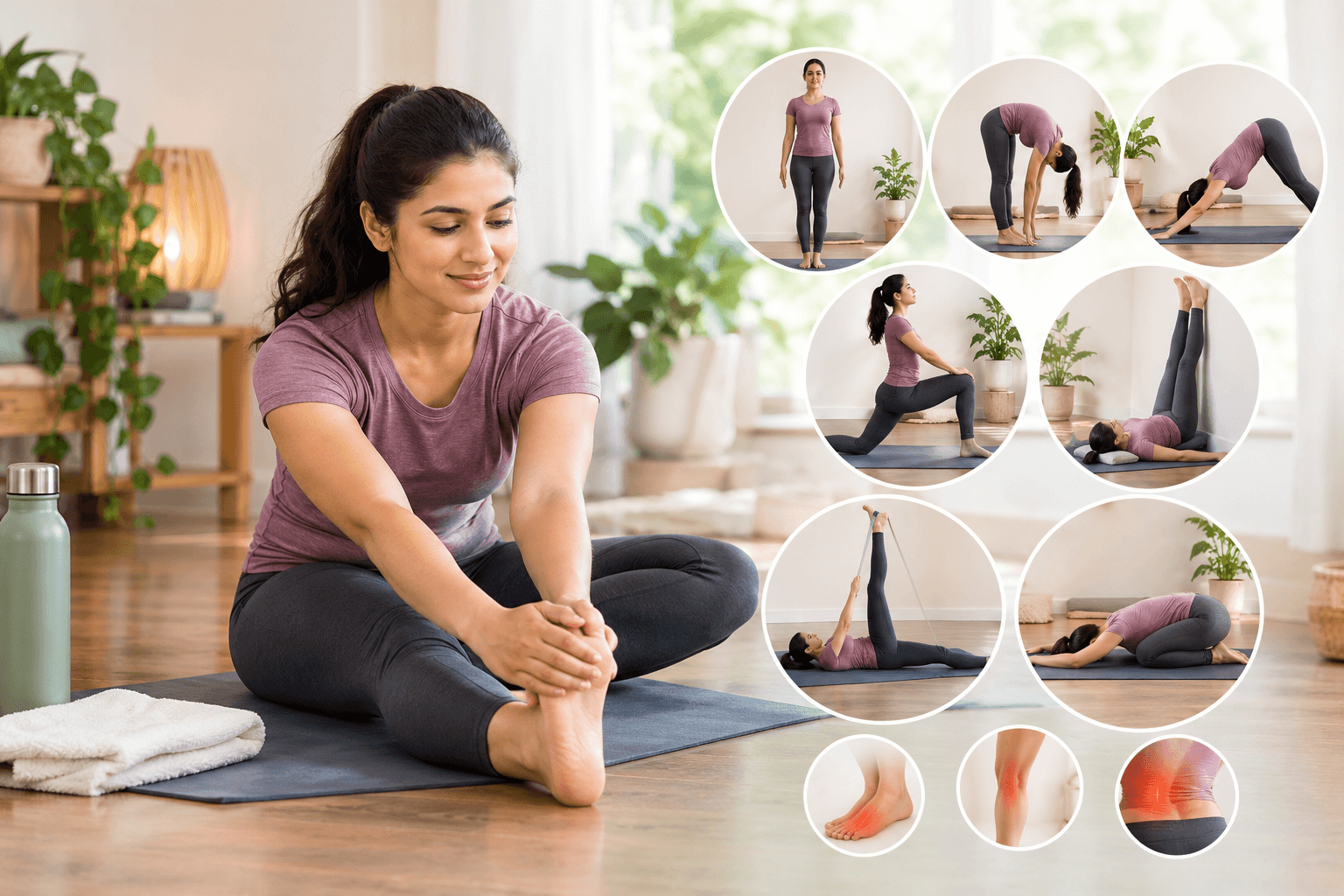
In this guide, we will explore the benefits of yoga for people who stand for long hours, the best stretches for tired feet, legs and back, and a simple routine you can follow after work.
Why Does Standing All Day Make Your Body Tired?
Standing for extended periods can place continuous demands on your muscles and joints. When you remain in one position for too long, certain muscles may become fatigued while others remain tight or underused.
Common discomforts associated with prolonged standing include:
Tired feet: Your feet support your body weight throughout the day, which can contribute to soreness and discomfort.
Tight calves: The calf muscles help control ankle movement and support standing and walking. They may feel stiff after long periods of activity.
Ankle stiffness: Limited movement throughout the day can make your ankles feel less mobile.
Lower back discomfort: Prolonged standing, particularly in an awkward or fixed posture, can contribute to muscular fatigue and back discomfort.
Hip tightness: Keeping your hips in similar positions for extended periods may leave the surrounding muscles feeling tight.
General fatigue: Long working hours on your feet can leave your body feeling tired and your mind ready for rest.
The good news is that gentle movement, regular position changes, appropriate footwear and short recovery breaks can help you manage these challenges.
Benefits of Yoga for Standing All Day
A gentle yoga practice can support your body in several ways when your daily routine involves prolonged standing.
1. Helps Stretch Tired Feet and Calves
Foot and calf stretches gently move the muscles and tissues that work throughout the day. Regular stretching may improve flexibility and help reduce the sensation of tightness.
2. Supports Lower Back Comfort
Gentle spinal movements and supported resting poses can help ease muscular tension and encourage more comfortable movement after a long workday.
3. Improves Flexibility and Mobility
Yoga combines controlled movements with stretches that target the ankles, calves, hamstrings, hips and back. Maintaining mobility can make everyday movements feel easier.
4. Encourages Relaxation
Slow breathing and restorative yoga poses encourage you to pause, release unnecessary muscular tension and transition from a busy workday to a calmer evening.
5. Promotes Body Awareness
Yoga helps you notice how you stand, distribute your weight and respond to physical discomfort. This awareness can encourage you to change positions more frequently and take breaks when needed.
Note: Yoga can support general comfort and mobility, but it is not a substitute for medical assessment when pain is persistent or severe.
7 Best Yoga Poses for Standing All Day
The following yoga poses are suitable starting points for many beginners. Choose comfortable movements, breathe naturally and avoid forcing your body into deep stretches.
1. Mountain Pose (Tadasana)
Best for: Posture awareness and balanced standing.
Mountain Pose may look simple, but it helps you become more aware of how your weight is distributed across your feet.
How to practise:
Stand with your feet about hip-width apart.
Keep your knees relaxed rather than locked.
Distribute your weight comfortably across both feet.
Lengthen your spine and relax your shoulders.
Let your arms rest naturally by your sides.
Breathe slowly for 30–60 seconds.
Benefits: Tadasana encourages awareness of standing posture and weight distribution. It can be especially useful for people who tend to lean heavily onto one leg.
Beginner tip: Practise near a wall or sturdy chair if you need additional support.
2. Standing Forward Bend (Uttanasana)
Best for: Stretching the hamstrings and relaxing the back.
Standing Forward Bend gently stretches the back of the legs and may help relieve a feeling of tightness after prolonged standing.
How to practise:
Stand with your feet hip-width apart.
Keep a slight bend in your knees.
Hinge forward from your hips, allowing your upper body to move towards your thighs.
Rest your hands on your thighs, shins or a yoga block.
Let your head and neck relax without pulling on them.
Hold for 20–30 seconds while breathing comfortably.
Rise slowly, using your legs for support.
Benefits: This pose stretches the hamstrings and encourages comfortable movement through the hips and back.
Beginner tip: Bend your knees generously and use a chair or blocks rather than trying to touch the floor.
3. Downward-Facing Dog (Adho Mukha Svanasana)
Best for: Stretching the calves, hamstrings and shoulders.
Downward-Facing Dog is a familiar yoga pose that lengthens the back of the body. It can be a useful addition to a post-work stretching routine.
How to practise:
Begin on your hands and knees.
Place your hands shoulder-width apart and your knees under your hips.
Tuck your toes and gently lift your hips upwards and backwards.
Keep your knees bent if your hamstrings or calves feel tight.
Press through your hands while allowing your spine to lengthen.
Hold for 15–30 seconds, breathing naturally.
Lower your knees to rest.
Benefits: The pose stretches the calves and hamstrings while encouraging shoulder and spinal mobility.
Beginner tip: You do not need to press your heels onto the floor. A comfortable, lengthened spine matters more than straight legs.
4. Low Lunge (Anjaneyasana)
Best for: Stretching the front of the hips and thighs.
Standing for long periods can leave the hips feeling stiff, particularly when your movement is limited during the workday. A supported Low Lunge gently opens the front of the hip.
How to practise:
Start on your hands and knees.
Step your right foot forward between your hands.
Lower your left knee onto a folded blanket.
Place your hands on your right thigh or on yoga blocks.
Gently shift your hips forward until you feel a mild stretch at the front of your left hip.
Keep your torso upright and breathe slowly.
Hold for 20–30 seconds, then switch sides.
Benefits: This pose targets the hip flexors and encourages hip mobility.
Beginner tip: Use padding under your knee and avoid sinking deeply into the stretch.
5. Legs-Up-the-Wall Pose (Viparita Karani)
Best for: Relaxing tired legs after work.
Legs-Up-the-Wall is a restorative yoga pose that allows you to rest in a supported position after spending hours on your feet.
How to practise:
Sit sideways next to a wall.
Gently lie back and swing your legs upwards onto the wall.
Move your hips closer to or farther from the wall until you feel comfortable.
Rest your arms by your sides with your palms facing upwards.
Relax your shoulders and breathe slowly.
Stay for 3–5 minutes if comfortable.
Bend your knees and roll gently onto your side before sitting up.
Benefits: This supported position encourages relaxation and may temporarily ease the feeling of tired legs.
Beginner tip: Place a folded blanket under your head if needed. Stop if you expe
This article is general information about yoga practice, not medical advice. If you have a health condition or an injury, or you are pregnant, please speak to your doctor before beginning and tell your teacher.
Would you like a teacher to guide you? See yoga for back and neck stiffness with Pure Lifestyle Yoga.
Enjoy writing like this?
Considered pieces on practice and wellbeing — never a marketing blast.