

22 August 2026 · 9 min read
Yoga for Back Pain: Best Poses for Beginners
By pure Lifestyle Yoga
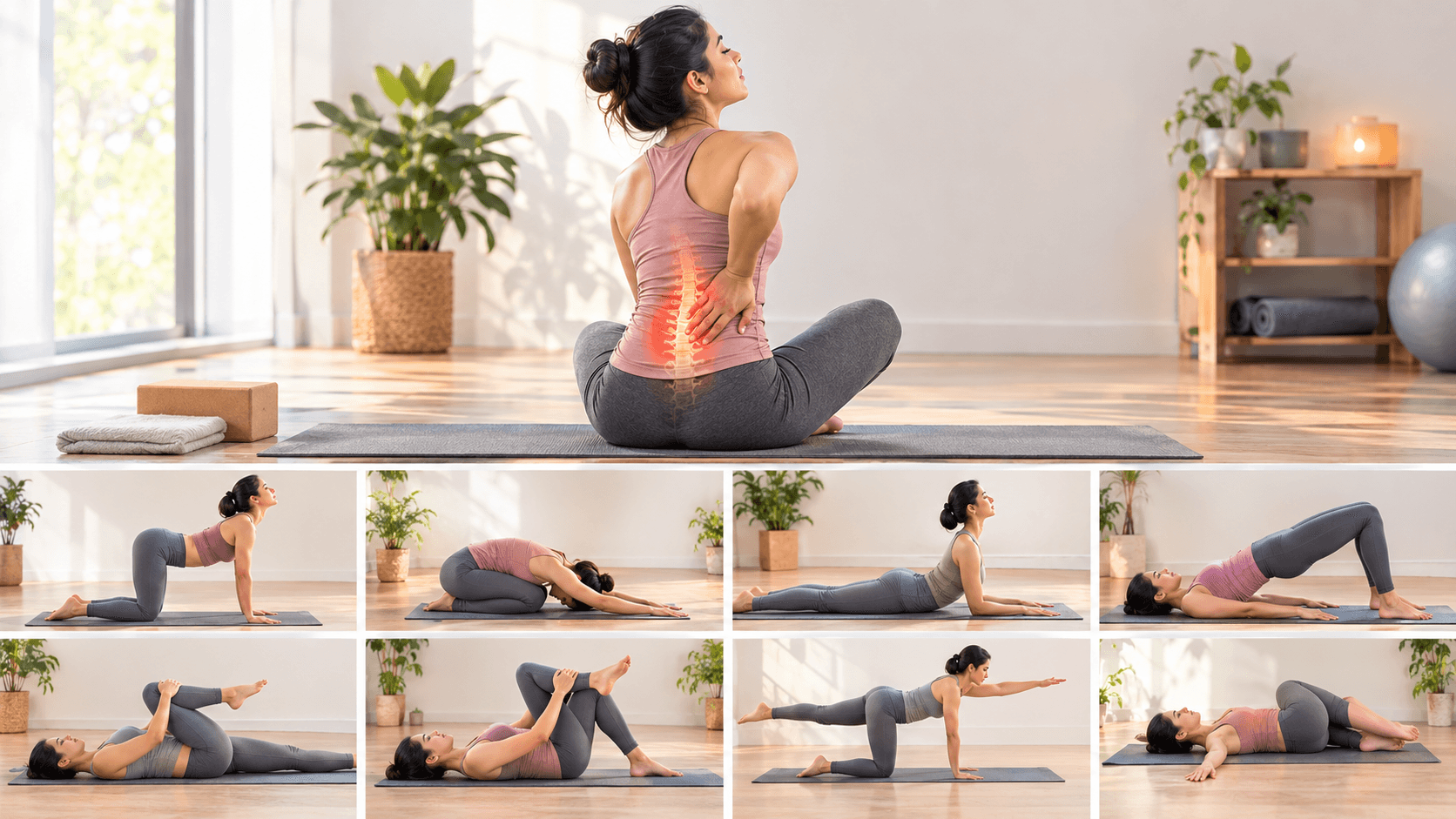
Yoga for Back Pain: Best Poses for Beginners
Back pain is a common problem that can affect people of different ages and lifestyles. Long hours of sitting, poor posture, limited movement, muscle tightness, and everyday stress can all contribute to discomfort in the back.
For many people, gentle movement and regular exercise can be an important part of maintaining a healthy and mobile body. Yoga for back pain combines controlled movement, stretching, breathing, and body awareness, making it a popular practice for people who want to improve their flexibility and movement.
If you are new to yoga, you don't need to start with difficult poses. There are several beginner-friendly yoga poses for back pain that can be practiced gently and mindfully.
In this guide, we will explore some of the best yoga poses for beginners, along with helpful tips for creating a safe and simple yoga routine.
Can Yoga Help With Back Pain?
Yoga may help some people manage back discomfort by encouraging gentle movement, flexibility, strength, relaxation, and better awareness of posture and body positioning.
However, back pain can have many different causes. Yoga is not a replacement for medical diagnosis or treatment, particularly when pain is severe, persistent, or associated with other symptoms.
The goal of a beginner yoga practice should be comfortable, controlled movement rather than forcing the body into a particular position.
8 Best Yoga Poses for Back Pain
1. Cat-Cow Pose (Marjaryasana-Bitilasana)
Cat-Cow is one of the simplest movements to include in a yoga routine for back pain.
Begin on your hands and knees with your wrists under your shoulders and knees under your hips. Slowly move between a gentle arch and a rounded spine while coordinating the movement with your breathing.
Benefits:
- Encourages gentle spinal movement
- Helps improve body awareness
- Provides a gentle warm-up
- Encourages coordinated breathing and movement
Move slowly and stay within a comfortable range of motion.
2. Child's Pose (Balasana)
Child's Pose is a gentle resting posture that can be used during a beginner yoga session.
Start on your knees and gradually bring your hips toward your heels. Extend your arms forward or place them alongside your body, depending on what feels comfortable.
Benefits:
- Encourages relaxation
- Provides a gentle stretch
- Allows you to slow down your breathing
- Can be used as a resting position between movements
If reaching the floor is uncomfortable, use a cushion, folded blanket, or yoga bolster for support.
3. Sphinx Pose
Sphinx Pose is a gentle back-extension posture that may be suitable for some beginners.
Lie on your stomach and place your forearms on the floor with your elbows approximately beneath your shoulders. Gently lift your chest while keeping your shoulders relaxed.
Benefits:
- Encourages gentle spinal extension
- Opens the front of the body
- Helps develop awareness of posture
- Can be incorporated into a gentle yoga sequence
Do not force the backbend. If the position increases your discomfort, come out of the pose.
4. Bridge Pose (Setu Bandhasana)
Bridge Pose can be included in a beginner yoga practice to work on the hips, legs, and core while encouraging controlled movement of the spine.
Lie on your back with your knees bent and feet comfortably placed on the floor. Slowly lift your hips while keeping the movement controlled, then gently lower them.
Benefits:
- Strengthens the lower body
- Encourages hip mobility
- Develops body awareness
- Adds strengthening movement to a yoga routine
Keep the movement comfortable and avoid pushing your hips higher than you can control.
5. Supine Knee-to-Chest Pose
This gentle pose can be practiced while lying on your back.
Bend one knee and slowly bring it toward your chest while keeping the other leg comfortable. You can then switch sides. If it feels comfortable, both knees can be brought toward the chest.
Benefits:
- Provides gentle movement around the hips and lower back
- Encourages relaxation
- Can be a comfortable floor-based movement for beginners
Avoid pulling aggressively on the knee. Let the movement remain gentle.
6. Reclining Figure-Four Stretch
Tight hips can sometimes affect how the body moves, so gentle hip mobility can be a useful part of a balanced yoga practice.
Lie on your back, bend both knees, and place one ankle over the opposite thigh. Slowly bring the legs toward you only as far as comfortable.
Benefits:
- Gently stretches the hip area
- Encourages hip mobility
- Can complement a beginner yoga routine
- Helps promote awareness of tension in the hips
Keep the movement controlled and avoid forcing the stretch.
7. Bird Dog
Bird Dog is a simple movement that combines balance, core control, and body awareness.
Start on your hands and knees. Slowly extend one arm and the opposite leg while maintaining a stable position. Return to the starting position and switch sides.
Benefits:
- Builds core and back-body awareness
- Encourages stability
- Improves coordination
- Supports controlled movement
Start with small movements if maintaining balance is difficult.
8. Supine Spinal Twist
A gentle reclining twist can be a relaxing way to finish a beginner yoga routine.
Lie on your back with your knees bent. Slowly allow your knees to move toward one side while keeping your shoulders comfortable. Return to the center and repeat on the other side.
Benefits:
- Encourages gentle spinal movement
- Promotes relaxation
- Provides movement through the torso
- Can be useful as part of a cool-down
Never force your knees toward the floor. Use a cushion underneath them if additional support is needed.
A Simple 15-Minute Yoga Routine for Beginners
If you are new to yoga, start with a short and comfortable sequence.
Try this beginner-friendly routine:
2 minutes: Gentle breathing
2 minutes: Cat-Cow Pose
2 minutes: Child's Pose
2 minutes: Sphinx Pose
2 minutes: Bridge Pose
2 minutes: Knee-to-Chest Pose
2 minutes: Bird Dog
1 minute: Relaxation and deep breathing
Move slowly throughout the routine and take breaks whenever necessary.
Remember, the objective isn't to complete every pose perfectly. Comfort, controlled movement, and consistency are more important than flexibility.
Yoga Tips for Beginners With Back Pain
Start Slowly
If you are new to yoga, begin with gentle movements. Your body may need time to adapt to a new routine.
Focus on Your Breathing
Slow and comfortable breathing can help you stay focused and avoid rushing through movements.
Don't Force Stretching
A deeper stretch isn't necessarily a better stretch. Stop or modify a movement if you experience pain or significant discomfort.
Use Yoga Props
Yoga blocks, cushions, bolsters, and folded blankets can make certain poses more comfortable and accessible.
Maintain Good Posture
During everyday activities, pay attention to how you sit, stand, lift, and move. Yoga can help develop greater awareness of body positioning.
Practice Consistently
Instead of doing an intense session occasionally, consider building a gentle and sustainable routine that fits your lifestyle.
Common Mistakes to Avoid
When practicing yoga for back pain, beginners should avoid treating yoga as a competition.
Some common mistakes include:
- Forcing a stretch
- Holding your breath
- Moving too quickly
- Trying advanced poses too soon
- Ignoring pain
- Comparing your flexibility with others
- Practicing without appropriate guidance when you have an existing injury
Yoga should work with your body rather than against it.
When Should You Avoid Yoga for Back Pain?
Not all back pain should be managed with a home yoga routine.
Seek appropriate medical advice if your back pain is severe, persistent, worsening, or follows an accident or injury. You should also seek professional evaluation if back pain occurs with symptoms such as significant weakness, numbness, difficulty walking, or changes in bladder or bowel control.
If you have a diagnosed back condition or are recovering from an injury, speak with your healthcare professional or a qualified yoga professional about appropriate modifications before beginning a new practice.
Is Yoga Good for Beginners With Back Pain?
Gentle yoga may be appropriate for some beginners, but the right practice depends on the individual and the cause of their back pain.
Start with simple movements such as Cat-Cow, Child's Pose, gentle breathing, and supported floor exercises. As your comfort and confidence improve, you can gradually develop a more complete yoga routine.
If a particular pose causes pain, don't force yourself to continue. Modify the pose or choose another movement.
How Often Should You Practice Yoga for Back Pain?
There is no single routine that works for everyone.
A beginner may start with a short session several times a week and gradually develop a consistent practice. Even a 10–15 minute yoga routine can be a useful starting point if it feels comfortable and fits into your schedule.
Consistency and appropriate movement are more important than practicing for long periods.
Frequently Asked Questions About Yoga for Back Pain
1. Which yoga pose is best for back pain?
There isn't one yoga pose that is best for everyone. Gentle poses such as Cat-Cow, Child's Pose, and supported movements may be suitable for some people, depending on the cause of their discomfort.
2. Can beginners do yoga for back pain?
Yes, many beginners can practice gentle yoga, but the routine should be appropriate for their individual condition and comfort level.
3. How long should I practice yoga for back pain?
Beginners can start with around 10–15 minutes of gentle movement and gradually adjust the duration according to their comfort and goals.
4. Can I do yoga at home for back pain?
Yes, many gentle yoga movements can be practiced at home. However, if you have an existing injury or medical condition, professional guidance may be helpful.
5. Should I do yoga if a pose causes back pain?
No. You should not force a pose that causes pain. Stop the movement and consider modifying it or seeking guidance from a qualified professional.
6. Can yoga improve flexibility?
Regular yoga practice can help improve flexibility and mobility for many people. Progress is gradual, so avoid forcing stretches.
7. Is yoga a treatment for back pain?
Yoga can be one part of a healthy movement routine, but it should not be considered a universal treatment for back pain. The cause and severity of the pain should be considered first.
Build a Healthier Relationship With Movement
Back care doesn't have to mean complicated workouts or difficult yoga poses. A mindful and beginner-friendly practice can help you become more aware of how your body moves while encouraging flexibility, strength, relaxation, and consistency.
At Pure Lifestyle Yoga, the focus is on making yoga accessible and adaptable to different lifestyles and experience levels. Whether you prefer At Home Yoga, Online Yoga, Group Yoga, or Corporate Yoga, choosing the right style of practice can make it easier to build a sustainable yoga routine.
Start gently, listen to your body, breathe mindfully, and give yourself time to progress.
Ready to begin your yoga journey?
Explore Pure Lifestyle Yoga programs and discover a practice that fits your lifestyle, goals, and comfort level.
Enjoy writing like this?
Considered pieces on practice and wellbeing — never a marketing blast.