
3 September 2026 · 14 min read
Breath and Movement in Yoga: How to Coordinate Them
By Pure Lifestyle Yoga. Reviewed by Harshita Raghav, Yoga Teacher, breathwork and meditation.
Introduction
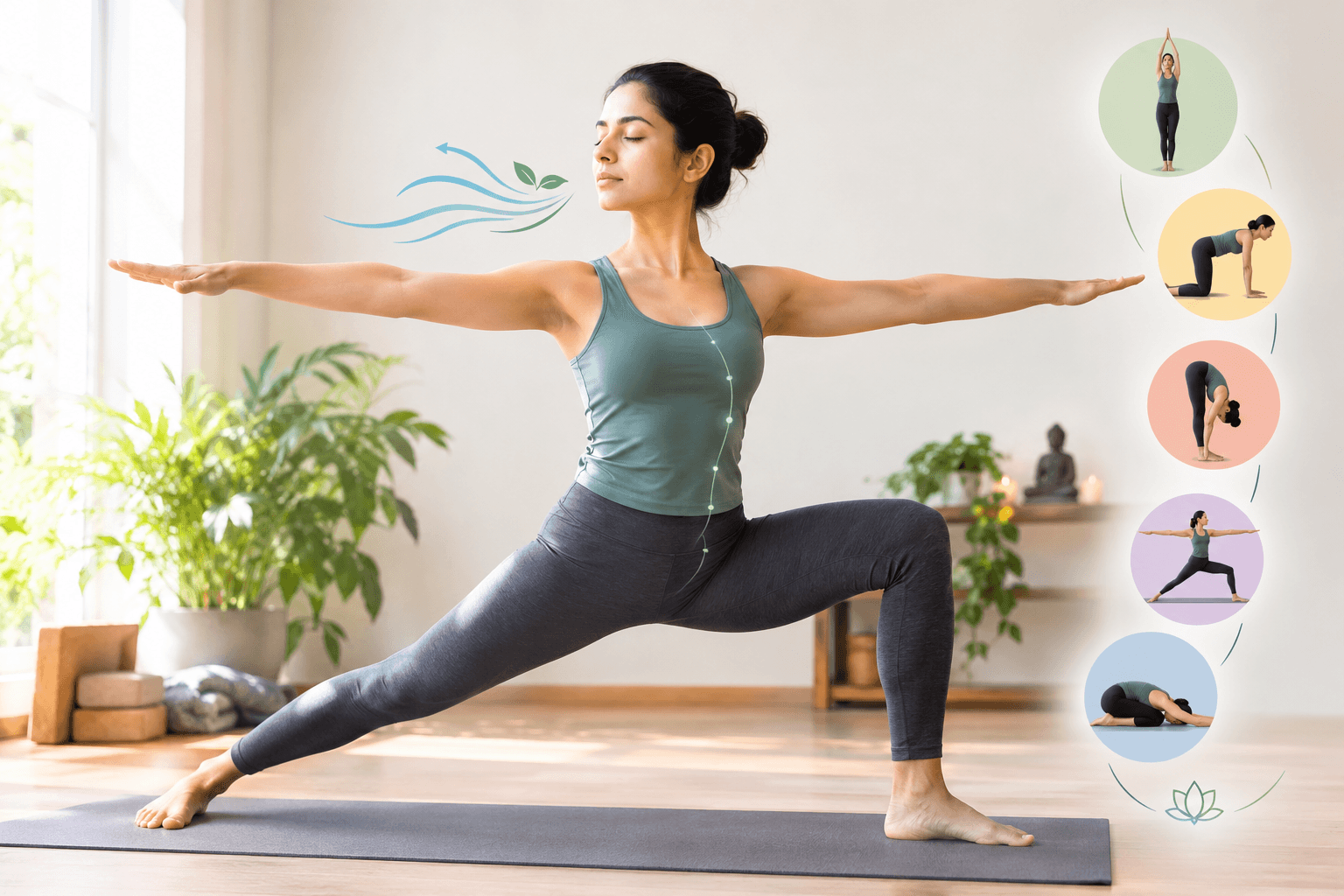
Yoga is more than a series of physical postures. It is a mindful practice that brings together movement, breathing, concentration, and awareness. One of the most important elements of yoga is learning how to coordinate your breath with your movements.
When you practise breath and movement in yoga together, each posture can become an opportunity to connect with your body and focus on the present moment. Instead of moving quickly from one pose to another, you begin to notice your breathing rhythm, physical sensations, and the way your body responds to each movement.
For beginners, this coordination may feel unfamiliar at first. However, with regular practice, it can become a natural part of your yoga routine.
At Pure Lifestyle Yoga, we believe that mindful movement and conscious breathing can help make yoga a more enjoyable and meaningful experience. In this guide, you will discover why breath coordination matters, how it works, which yoga poses can help you practise it, and how to incorporate it into your daily routine.
What Is the Connection Between Breath and Movement in Yoga?
Breath and movement coordination means matching your breathing with the physical movements you make during yoga.
In many yoga traditions, practitioners inhale during certain movements and exhale during others. The exact pattern depends on the posture, the style of yoga, and the instructor's guidance.
For example:
Inhale: You might lift your arms, lengthen your spine, or gently open your chest.
Exhale: You might fold forward, deepen a comfortable stretch, or return to a relaxed position.
These are common patterns rather than strict rules. Some poses require a different breathing approach, and your comfort should always take priority.
The aim is not to force your breath into a particular rhythm. Instead, you learn to move at a pace that allows your breathing to remain smooth and comfortable.
When breathing and movement work together, yoga can become less about achieving a perfect posture and more about developing awareness of your body and mind.
Why Is Breath Coordination Important in Yoga?
Breathing is something we do automatically, but yoga encourages us to become more aware of this natural process.
Coordinating breath with movement offers several potential benefits for your practice.
1. Improves Mind-Body Awareness
When you pay attention to your breathing while moving, you become more aware of your posture, muscle engagement, and physical sensations.
This awareness can help you recognise when a movement feels comfortable and when you need to modify it.
Over time, mindful movement may also help you become more attentive to your body's needs during everyday activities.
2. Encourages Relaxation
Slow, comfortable breathing can support the body's relaxation response. Combining it with gentle yoga movements may help you unwind after a busy day.
Rather than rushing through poses, you can use each breath as a reminder to release unnecessary tension and remain present.
Yoga is not a guaranteed treatment for stress or anxiety, but it can be a useful part of a balanced wellness routine.
3. Supports Better Concentration
Following your breath gives your attention a simple point of focus.
When your mind wanders, you can gently bring your attention back to the next inhale or exhale. This can make your practice feel more focused and help reduce distractions during a session.
The goal is not to stop every thought but to practise returning your attention to the present moment.
4. Helps Develop Movement Control
Moving in coordination with your breath encourages a slower, more deliberate approach to yoga.
You may begin to notice whether you are rushing through a transition, holding unnecessary tension, or moving beyond a comfortable range.
This awareness can help you make more controlled adjustments and practise postures with greater care.
5. Makes Yoga Feel More Natural
Breath coordination can create a smoother rhythm between different postures.
Instead of treating each pose as a separate exercise, you begin to experience your practice as a connected sequence of movements.
This is particularly noticeable in flowing styles of yoga, where transitions between poses are often coordinated with inhalations and exhalations.
How Breathing Works During Yoga Practice
Understanding the basic breathing patterns can make yoga easier to follow, especially if you are a beginner.
Inhalation: Creating Space
Inhalation is the process of breathing air into your lungs. During yoga, a comfortable inhale may accompany movements such as:
Raising your arms overhead.
Lengthening your spine.
Opening your chest gently.
Preparing for a balanced posture.
Allow your ribs and abdomen to move naturally as you breathe. You do not need to take an unusually deep breath.
Exhalation: Moving with Control
Exhalation is the process of breathing air out of your lungs. It may accompany movements such as:
Folding forward comfortably.
Lowering your arms.
Returning from a posture.
Settling into a resting position.
Let the breath leave naturally. Avoid pushing out all the air or tightening your body unnecessarily.
Natural Breathing: Your Foundation
Not every movement needs a perfectly timed inhalation or exhalation. Some poses are held for several breaths, while others require you to breathe naturally throughout the posture.
If coordinating the breath with movement becomes confusing, return to normal breathing first. Comfort and consistency are more important than following a rigid pattern.
Five Yoga Poses to Practise Breath and Movement Coordination
The following beginner-friendly poses can help you explore the relationship between breathing and movement.
1. Cat-Cow Pose (Marjaryasana-Bitilasana)
Cat-Cow is a gentle movement sequence that coordinates breathing with spinal movement.
How to practise:
Begin on your hands and knees, with your wrists approximately beneath your shoulders and knees beneath your hips.
As you inhale, gently tilt your pelvis and lift your chest into Cow Pose, keeping your neck comfortable.
As you exhale, round your back gently into Cat Pose.
Continue alternating between the two positions at a comfortable pace.
Why it helps: This sequence encourages awareness of spinal movement and provides a simple way to practise matching movement with breathing.
Beginner tip: Keep the movement small if your wrists, knees, or back feel uncomfortable. You can also practise seated spinal movements in a chair.
2. Mountain Pose (Tadasana)
Mountain Pose may look simple, but it offers an excellent opportunity to develop breathing awareness.
How to practise:
Stand with your feet comfortably positioned and your weight distributed evenly.
Allow your shoulders to relax and keep your knees soft.
Breathe naturally while noticing your posture.
If comfortable, inhale as you slowly raise your arms and exhale as you lower them.
Why it helps: Mountain Pose encourages balance, posture awareness, and a steady connection with your breathing.
Beginner tip: Stand near a wall or chair if you need additional support.
3. Standing Forward Fold (Uttanasana)
A forward fold can help you explore a slower pace of movement and comfortable breathing.
How to practise:
Stand with your feet about hip-width apart.
Inhale and gently lengthen your spine.
Exhale as you hinge forward from your hips, bending your knees as needed.
Let your head and neck relax without forcing the stretch.
Breathe comfortably before slowly returning to standing.
Why it helps: This posture provides an opportunity to practise moving slowly and noticing physical sensations during a forward fold.
Beginner tip: Keep your knees bent and place your hands on your thighs or on yoga blocks. Avoid the pose if it aggravates an existing injury or causes discomfort.
4. Warrior II (Virabhadrasana II)
Warrior II combines balance, strength, and focused breathing.
How to practise:
Stand with your feet comfortably apart.
Turn one foot outward and bend the front knee only as far as comfortable.
Extend your arms to the sides while keeping your shoulders relaxed.
Maintain a steady, natural breathing rhythm.
Hold the posture for several comfortable breaths, then switch sides.
Why it helps: Warrior II encourages you to maintain awareness of your breath while holding a stable posture.
Beginner tip: Use a shorter stance and keep the front knee aligned comfortably with your foot. Do not force a deep bend.
5. Child's Pose (Balasana)
Child's Pose is a resting posture that can help you reconnect with natural breathing.
How to practise:
Begin on your hands and knees.
Move your hips gently towards your heels, only as far as comfortable.
Rest your forehead on a cushion or yoga block if needed.
Allow your arms to rest comfortably.
Notice the natural movement of your ribs and abdomen as you breathe.
Why it helps: Child's Pose offers an opportunity to slow down, relax, and observe your breathing without needing to coordinate a complicated movement.
Beginner tip: Place a cushion between your thighs and calves or choose a supported seated position if kneeling is uncomfortable.
How to Build a Simple Breath-and-Movement Yoga Routine
You do not need an hour-long session to begin practising breath coordination. A short, consistent routine can provide a useful starting point.
Here is a simple 10–15 minute sequence for beginners.
Step 1: Settle and Breathe — 2 Minutes
Sit comfortably or stand in Mountain Pose.
Allow your breathing to remain natural. Notice the sensation of air entering and leaving your body without trying to change your breath.
Step 2: Practise Cat-Cow — 2 Minutes
Move gently between Cat and Cow Pose, using your inhalation and exhalation as guides.
Start slowly. If the timing feels difficult, make smaller movements and return to a natural breathing rhythm.
Step 3: Explore Standing Movement — 3 Minutes
Practise Mountain Pose with gentle arm raises, followed by a comfortable forward fold if suitable.
Pay attention to how you transition between positions rather than trying to achieve a deep stretch.
Step 4: Hold Warrior II — 2–4 Minutes
Practise Warrior II on both sides, allowing several natural breaths in each position.
Adjust your stance whenever necessary. If you notice that you are holding your breath, ease out of the pose and relax.
Step 5: Finish with Rest — 2–3 Minutes
Sit comfortably or rest in a supported version of Child's Pose or Savasana.
Allow your breathing to settle naturally and notice how you feel after moving with greater awareness.
You can shorten or extend this sequence according to your comfort, experience, and available time.
Common Mistakes to Avoid When Coordinating Breath and Movement
Learning to coordinate your breath takes practice. These common mistakes are worth avoiding.
1. Forcing Deep Breaths
Taking excessively deep breaths can feel uncomfortable and may cause dizziness.
Better approach: Breathe smoothly and naturally. Increase the depth of your breathing only if it feels comfortable.
2. Holding Your Breath During Difficult Poses
People sometimes hold their breath when concentrating or exerting effort.
Better approach: Choose an easier variation and check whether you can breathe comfortably while maintaining the posture.
3. Moving Too Quickly
Rushing through transitions can make it difficult to notice your breathing and maintain control.
Better approach: Slow down and allow each movement to follow a comfortable rhythm.
4. Trying to Match Every Breath Perfectly
Breathing patterns differ between yoga styles and individual practitioners. Treating every inhale or exhale as a strict rule can create unnecessary tension.
Better approach: Use common breathing patterns as a guide, but follow your instructor's directions and your body's needs.
5. Ignoring Discomfort
Stretching beyond your comfortable range or forcing a posture can undermine a safe practice.
Better approach: Modify or stop a movement that causes pain, dizziness, or unusual breathlessness. Seek qualified guidance if you are unsure how to adapt a pose.
The Role of Pranayama in Breath Awareness
Pranayama is a traditional yogic practice concerned with the regulation and awareness of breathing.
While breath-and-movement coordination focuses on how you breathe during physical postures, pranayama may involve dedicated breathing practices performed while sitting or resting.
Beginners can start by observing their natural breathing rhythm before exploring more structured techniques.
A simple starting exercise is to sit comfortably and notice each inhalation and exhalation for one or two minutes. There is no need to hold your breath or force a particular breathing ratio.
Some pranayama practices involve breath retention or more vigorous breathing techniques. These may not be suitable for everyone, so beginners should learn them from a qualified instructor and adapt them to their needs.
How Often Should You Practise Breath Coordination?
Consistency matters more than the length or intensity of each session.
If you are new to yoga, consider practising breath awareness for five to ten minutes several times a week. As your confidence develops, you can incorporate it into longer sessions.
Here are a few practical tips:
Start small: Begin with one or two poses rather than a complicated sequence.
Practise regularly: Choose a schedule that fits comfortably into your daily routine.
Stay patient: Coordination may feel unfamiliar initially, and that is completely normal.
Notice your progress: Pay attention to whether you feel more aware of your movements and breathing.
Allow yourself to rest: Rest days and gentle sessions are valuable parts of a sustainable practice.
There is no single perfect breathing rhythm for everyone. The aim is to develop a comfortable and attentive relationship between breath and movement.
Benefits Beyond the Yoga Mat
The awareness you develop during yoga may also be useful in everyday situations.
For example, noticing your breathing can remind you to pause during a busy workday, relax your shoulders while sitting at a desk, or approach a challenging task with greater attention.
Mindful breathing can also provide a simple moment of reflection before beginning a new activity.
These experiences vary from person to person, and breath coordination is not a substitute for medical or mental health care. Nevertheless, it can be a practical way to introduce more mindful moments into everyday life.
Frequently Asked Questions (FAQs)
1. Why is breath and movement coordination important in yoga?
Coordinating breathing with movement can help practitioners develop body awareness, focus, and smoother transitions between poses. It also encourages a more mindful approach to physical practice.
2. Should I inhale or exhale during yoga poses?
A common guideline is to inhale during movements that lengthen the spine or open the chest and exhale during movements such as forward folds. However, breathing patterns vary by pose and yoga tradition. Follow qualified instruction and breathe comfortably.
3. Can beginners learn breath coordination?
Yes. Beginners can start with simple exercises such as Cat-Cow, gentle arm raises, and seated breath awareness. Start slowly and avoid forcing your breathing.
4. How long does it take to coordinate breathing with yoga movements?
There is no fixed timeline. Some people find basic coordination easy, while others need more practice. Regular, comfortable sessions can help you become more familiar with the process.
5. What should I do if I cannot match my breathing to my movements?
Return to your natural breathing rhythm and make smaller, slower movements. You can practise breathing and movement separately before combining them.
6. Can breath coordination help with stress?
Gentle yoga and comfortable breathing may support relaxation and help some people manage everyday stress. Individual experiences vary, and these practices should not replace professional care when needed.
7. Is pranayama the same as breathing during yoga poses?
Not exactly. Breath coordination connects breathing with physical movement, while pranayama generally refers to traditional yogic breathing practices that may be practised separately from postures.
8. Do I need special equipment to practise breath coordination?
No. Comfortable clothing and a suitable space are enough to begin. A yoga mat, chair, cushions, or blocks may provide extra comfort and support.
Conclusion: Let Your Breath Guide Your Yoga Practice
Breath and movement are two essential elements of a mindful yoga practice. When you learn to coordinate them comfortably, yoga can become a more connected experience that encourages awareness, concentration, and controlled movement.
You do not need perfect timing, advanced poses, or complicated breathing techniques to get started. Simple movements, natural breathing, and a few minutes of focused attention can provide a meaningful foundation.
Begin with poses that feel accessible, respect your body's limits, and allow your coordination to develop gradually.
At Pure Lifestyle Yoga, we encourage you to approach every session with patience, curiosity, and care. Let your breath support your movement, and allow your yoga practice to grow at your own pace.
Ready to deepen your yoga practice? Explore beginner-friendly yoga sessions and discover how mindful breathing and movement can become part of your everyday wellness routine.
Disclaimer
This article is intended for general educational and wellness purposes only. Yoga and breathing exercises may not be suitable for everyone. Avoid forcing your breath or holding it unless following appropriate qualified guidance. Stop if you experience dizziness, pain, or breathing discomfort. Consult a qualified healthcare professional or yoga instructor if you have a health condition, injury, or concerns about practising safely.
This article is general information about yoga practice, not medical advice. If you have a health condition or an injury, or you are pregnant, please speak to your doctor before beginning and tell your teacher.
Would you like a teacher to guide you? See yoga for stress in Gurugram with Pure Lifestyle Yoga.
Enjoy writing like this?
Considered pieces on practice and wellbeing — never a marketing blast.