

29 August 2026 · 11 min read
Yoga and Meditation for Better Sleep: A Relaxing Nighttime Routine
By Pure Lifestyle Yoga
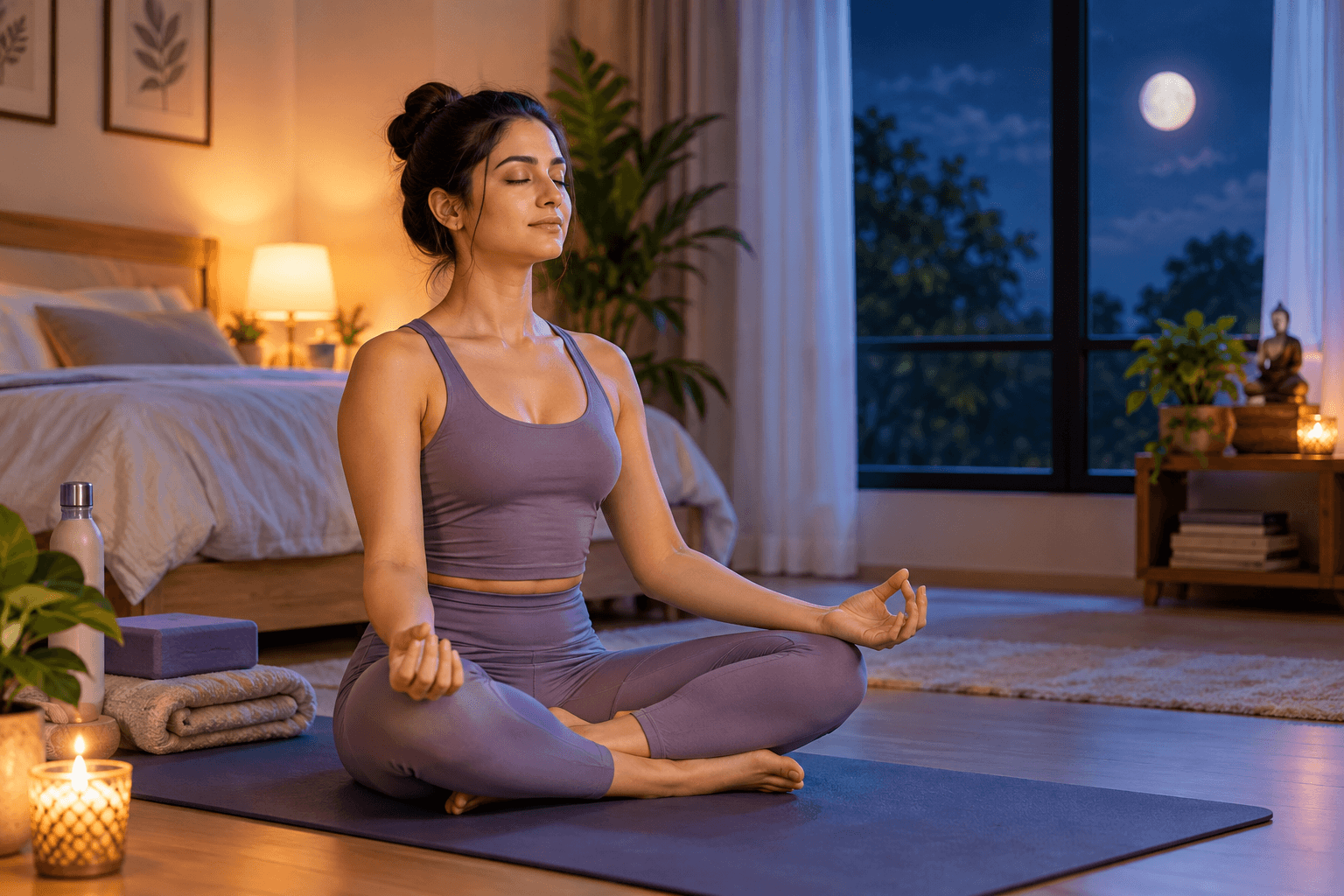
Yoga and Meditation for Better Sleep: A Relaxing Nighttime Routine
A good night's sleep is essential for maintaining physical health, emotional balance, and mental well-being. However, busy schedules, daily stress, excessive screen time, and racing thoughts can make it difficult to relax at the end of the day. If you often find yourself lying awake at night, yoga and meditation for better sleep may help you create a peaceful bedtime routine.
Yoga combines gentle physical movements, controlled breathing, and mindfulness to help the body unwind. Meditation encourages mental relaxation and helps you become more aware of your thoughts without getting caught up in them. Together, these practices can support a calmer transition from a busy day to a restful night.
In this guide, you will discover how yoga and meditation may improve sleep quality, which poses are suitable for bedtime, and how to follow a simple nighttime yoga routine at home.
What Is the Connection Between Yoga, Meditation, and Sleep?
Sleep is influenced by several factors, including stress levels, daily habits, physical activity, and your sleep environment. When your mind remains active or your body feels tense, settling down for sleep can become challenging.
Gentle yoga and meditation offer a practical way to slow down before bedtime. Relaxing movements may ease everyday muscle tension, while slow breathing and mindfulness can help reduce feelings of stress and mental restlessness.
Regular relaxation practices may support better sleep quality and help you establish a consistent bedtime routine. However, results vary from person to person, and yoga is not a substitute for medical treatment when sleep problems persist.
Benefits of Yoga and Meditation for Better Sleep
1. Helps Reduce Everyday Stress
Stress is one of the common reasons people struggle to fall asleep. Thoughts about work, family responsibilities, and tomorrow's tasks can keep the mind active long after bedtime.
Gentle yoga and meditation encourage you to focus on the present moment. Slow movements and mindful breathing can help you release tension and create a more peaceful state of mind before sleeping.
2. Relaxes Tight and Tired Muscles
Sitting for long hours, working at a desk, or engaging in physically demanding activities can leave your shoulders, back, and hips feeling tight.
Restorative yoga poses gently stretch these areas without requiring an intense workout. Practising them in the evening may help your body feel more comfortable when you lie down.
3. Encourages Mindful Breathing
Breathing often becomes shallow or irregular when you feel stressed. Slow, comfortable breathing can encourage relaxation and help you shift your attention away from distracting thoughts.
A few minutes of mindful breathing before bed can become a simple signal that your day is coming to an end.
4. Supports a Consistent Sleep Routine
Repeating the same calming activities every night helps establish a predictable bedtime ritual. Over time, activities such as gentle stretching, meditation, and reading may become cues that prepare you for sleep.
Consistency matters more than the length of your practice. Even a short routine can be useful when performed regularly.
5. Promotes Mental Calmness
Meditation teaches you to notice thoughts without judging them or feeling compelled to respond to every thought immediately.
Instead of worrying about falling asleep, you can gently return your attention to your breathing or the sensations in your body. This can make bedtime feel less stressful.
7 Best Yoga Poses for Better Sleep
You do not need advanced yoga skills to practice bedtime yoga. The following poses are gentle options for beginners. Move slowly, breathe naturally, and avoid any position that causes pain.
1. Child's Pose (Bal asana)
Child's Pose is a restful position that gently stretches the back, hips, and thighs.
How to practice:
Kneel on your yoga mat and bring your big toes together.
Separate your knees to a comfortable width.
Slowly lower your torso towards your thighs.
Rest your forehead on a cushion or the mat.
Breathe gently for 5–10 comfortable breaths.
Sleep benefit: This restorative pose offers an opportunity to slow down and release some of the tension accumulated throughout the day.
2. Legs-Up-the-Wall Pose (Viparita Karani)
This supported pose allows you to rest on your back while placing your legs against a wall.
How to practice:
Sit sideways beside a wall.
Gently turn onto your back and bring your legs up the wall.
Adjust your distance from the wall until you feel comfortable.
Rest your arms beside your body and breathe naturally for 2–5 minutes.
Sleep benefit: The supported position provides a gentle opportunity for rest after a long day of standing or walking.
Tip: If this position causes discomfort, try resting your calves on a chair instead. Avoid it if your health condition makes leg elevation unsuitable.
3. Reclining Bound Angle Pose (Supta Buddha Kon asana)
This gentle, supported pose opens the hips while allowing the upper body to rest.
How to practice:
Lie comfortably on your back.
Bring the soles of your feet together.
Allow your knees to move outward without forcing them down.
Place cushions beneath your knees for support.
Remain here for 1–3 minutes while breathing naturally.
Sleep benefit: The supported posture encourages stillness and can be a relaxing addition to your evening routine.
4. Cat-Cow Stretch (Marjaryasana-Bitilasana)
Cat-Cow is a gentle movement that helps mobilize the spine and release stiffness.
How to practice:
Start on your hands and knees.
Inhale and gently lift your chest while allowing your back to arch comfortably.
Exhale and round your back gently.
Repeat for 5–8 slow cycles.
Sleep benefit: This movement may help ease stiffness after sitting for long periods and prepare your body for more restful poses.
5. Seated Forward Bend (Paschimott anasana)
A gentle seated forward bend stretches the back of the body.
How to practice:
Sit with your legs extended in front of you.
Bend your knees slightly if your hamstrings feel tight.
Inhale and lengthen your spine.
Exhale and hinge forward from your hips as far as comfortable.
Rest your hands on your legs or use a cushion for support.
Hold for 5–8 comfortable breaths.
Sleep benefit: A slow, supported stretch can help you unwind without the stimulation of an intense workout.
Avoid forcing the stretch or rounding your back excessively.
6. Supine Spinal Twist
This gentle twist provides a relaxing movement for the back and hips.
How to practice:
Lie on your back with your knees bent.
Slowly lower both knees towards one side.
Keep your shoulders relaxed and supported.
Hold for 5–8 comfortable breaths.
Return to the center and repeat on the other side.
Sleep benefit: The slow, controlled movement can help reduce feelings of stiffness and encourage a relaxed transition towards bedtime.
7. Corpse Pose (Savasana)
Savasana is one of the simplest ways to finish a bedtime yoga session.
How to practice:
Lie on your back with your legs comfortably apart.
Let your arms rest beside your body, palms facing upwards.
Close your eyes if comfortable.
Relax your jaw, shoulders, hands, and legs.
Breathe naturally for 3–5 minutes.
Sleep benefit: Savasana gives you time to remain still, observe your breathing, and release the effort of the day.
A Simple 15-Minute Nighttime Yoga Routine
You can follow this beginner-friendly routine approximately 20–30 minutes before going to bed. Adjust the timing according to your comfort and schedule.
TimePracticePurpose2 minutes Slow, mindful breathing Settle your attention2 minutes Cat-Cow Stretch Gently mobilize the spine2 minutes Child's Pose Encourage relaxation2 minutes Reclining Bound Angle Pose Rest and release tension2 minutes Supine Spinal Twist Gently stretch the back2 minutes Legs-Up-the-Wall Pose Rest in a supported position3 minutes Savasana or body-scan meditation Finish with stillness
You can replace any uncomfortable pose with a supported resting position. The goal is not to complete every movement perfectly; it is to create a comfortable and calming experience.
How to Practice Meditation Before Bed
Meditation does not require special equipment or advanced training. A quiet space and a few uninterrupted minutes are enough to begin.
Step 1: Find a Comfortable Position
Sit on your bed with your back supported, or lie down in a comfortable position. Keep your body relaxed and allow your eyes to close if you wish.
Step 2: Focus on Your Breathing
Notice the natural rhythm of your inhalation and exhalation. Avoid trying to breathe deeply or forcefully. Simply observe each breath as it comes and goes.
Step 3: Relax Your Body Gradually
Bring your attention to your forehead, jaw, shoulders, hands, stomach, and legs. Notice any tension and allow those areas to soften where possible.
Step 4: Let Thoughts Pass
Your mind may wander towards unfinished tasks or tomorrow's responsibilities. This is normal. Acknowledge each thought without judging yourself, then gently return your attention to your breathing.
Step 5: Finish Without Rushing
Continue for 3–5 minutes or longer if comfortable. If you feel sleepy, there is no need to force yourself to remain alert.
Practicing regularly can help you develop a more familiar and manageable bedtime relaxation habit.
Evening Breathing Exercises for Better Sleep
Breathing exercises can complement gentle yoga and meditation.
Slow, Natural Breathing
Sit or lie comfortably. Breathe in gently through your nose and allow your exhalation to remain slow and unforced. Continue for 2–3 minutes.
Gentle Belly Breathing
Place one hand on your abdomen. As you inhale, notice your abdomen moving naturally. As you exhale, allow it to settle. Keep each breath comfortable and avoid taking exaggerated breaths.
Mindful Breath Counting
Count each natural exhalation from one to ten, then begin again. If you lose count, simply restart without frustration.
Important: Stop any breathing exercise if you feel dizzy, short of breath, or uncomfortable. Avoid forceful breathing, prolonged breath-holding, or practices that make you feel anxious.
Healthy Bedtime Habits That Complement Yoga
Yoga and meditation are more helpful when combined with healthy sleep habits.
Maintain a regular sleep schedule: Try to go to bed and wake up at consistent times, including on weekends.
Reduce screen time before bed: Put away your phone and other bright screens before your planned bedtime.
Create a peaceful sleep environment: Keep your bedroom dark, quiet, and comfortably cool.
Avoid heavy meals close to bedtime: Give yourself time to feel comfortable before lying down.
Limit late-day caffeine: Coffee, tea, energy drinks, and other sources of caffeine may interfere with sleep.
Choose gentle evening activities: Reading, listening to calming music, or taking a warm bath can complement your yoga practice.
Avoid intense late-night workouts if they leave you energized: Choose movements that help you feel relaxed rather than stimulated.
Remember that individual sleep needs vary. A relaxing routine should support your lifestyle rather than become another source of pressure.
Common Mistakes to Avoid During Bedtime Yoga
To make your nighttime practice more comfortable, keep these points in mind:
1. Practicing too intensely: Vigorous exercise or deep stretching may leave you feeling stimulated or uncomfortable. Choose gentle movements.
2. Forcing difficult poses: Yoga should not cause sharp pain. Use cushions, bend your knees, and modify poses whenever needed.
3. Expecting instant results: A single session may feel relaxing, but improvements in sleep habits often require consistency and patience.
4. Checking your phone repeatedly: Notifications and bright screens can distract you from your relaxation routine.
5. Worrying about meditation: Your mind does not need to become completely empty. Simply returning to your breath when you get distracted is part of the practice.
Who Can Benefit from Nighttime Yoga and Meditation?
A gentle nighttime routine may be suitable for beginners, students, working professionals, and people who want to relax after a busy day.
People who experience everyday stress, muscle stiffness, or difficulty switching off mentally may find these practices particularly useful.
However, certain poses may not be appropriate for everyone. If you are pregnant, recovering from an injury, or managing a medical condition, seek guidance from a qualified yoga professional or healthcare provider about suitable modifications.
If you regularly struggle to fall asleep, wake frequently during the night, experience significant daytime tiredness, or have symptoms such as loud snoring and gasping during sleep, consult a healthcare professional. Persistent insomnia may require specific treatment, and yoga should be considered a complementary practice rather than a replacement.
Frequently Asked Questions (FAQs)
1. Is yoga good for better sleep?
Yoga may help support sleep quality by encouraging relaxation, reducing stress, and easing physical tension. Research suggests potential benefits, although results vary and yoga does not work equally well for everyone.
2. Which yoga pose is best before sleeping?
Child's Pose, Savasana, and supported Legs-Up-the-Wall Pose are popular gentle options. The best pose is one that feels comfortable and allows you to relax without strain.
3. How long should I practice yoga before bed?
You can start with 10–15 minutes of gentle yoga and meditation. Even a shorter session may help establish a relaxing routine when practiced consistently.
Enjoy writing like this?
Considered pieces on practice and wellbeing — never a marketing blast.