
1 September 2026 · 12 min read
Balancing Chakras with Yoga: A Guide to the Seven Chakras
By Pure Lifestyle Yoga. Reviewed by Suman Sangwan, Senior Yoga Instructor, prenatal and postnatal yoga.
Introduction
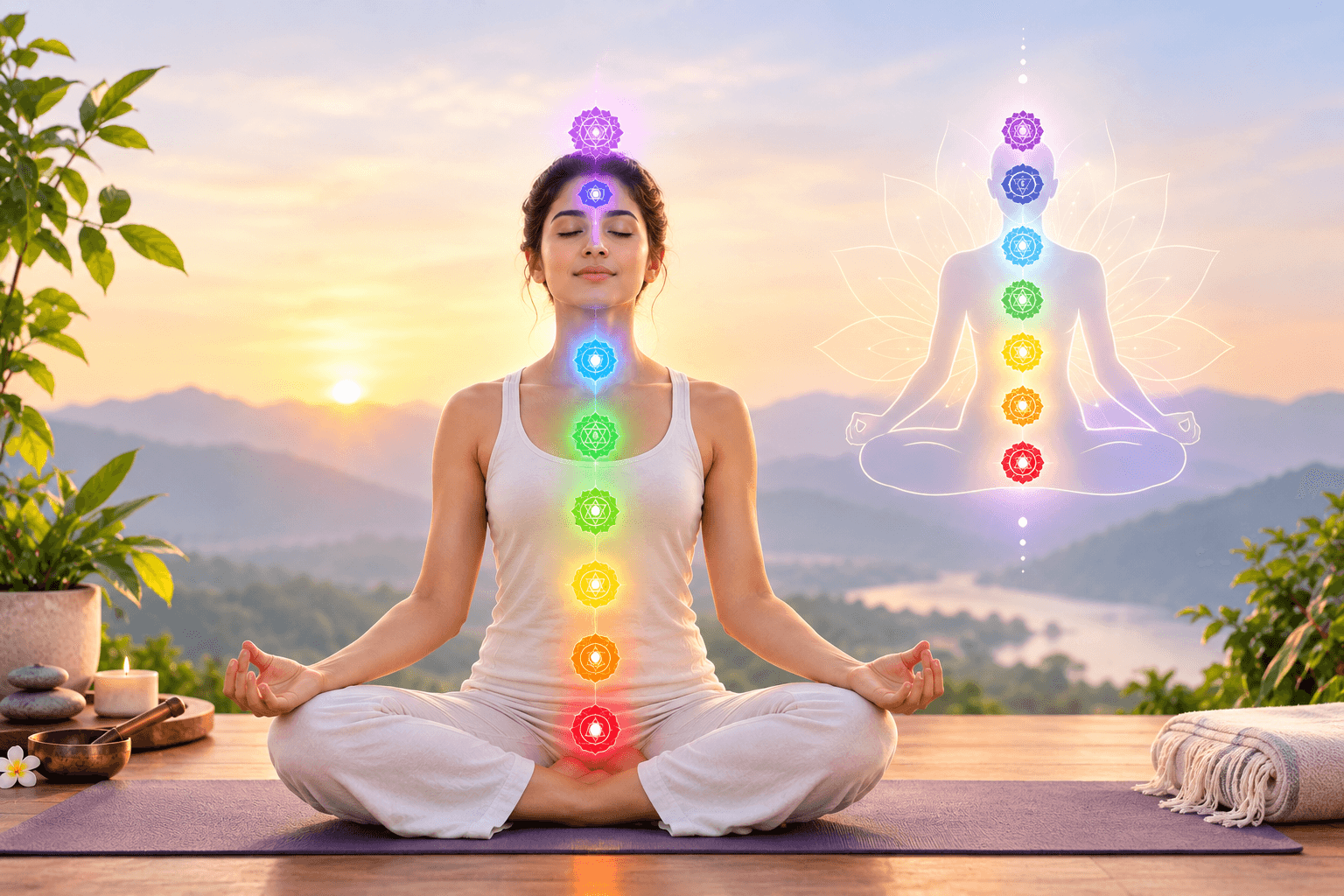
Yoga is more than a physical practice. It offers an opportunity to connect with your body, understand your emotions, and develop greater awareness of your thoughts and feelings. One traditional concept associated with yoga and meditation is the chakra system, which describes seven main energy centres along the body's central axis.
The idea of balancing chakras with yoga combines traditional chakra philosophy with physical postures, breathing exercises, and meditation. Each chakra is associated with different themes, such as stability, creativity, confidence, love, communication, intuition, and spiritual awareness.
Whether you are new to yoga or have an established practice, exploring the seven chakras can provide a meaningful framework for reflection and mindfulness.
In this guide, we will explore the seven chakras, their traditional meanings, beginner-friendly yoga poses, and ways to incorporate chakra-inspired practices into your daily wellness routine.
What Are Chakras in Yoga?
The word chakra comes from Sanskrit and means “wheel.” In several Indian spiritual traditions, chakras are described as subtle energy centres associated with different aspects of human experience.
The commonly discussed system includes seven major chakras, extending from the base of the spine to the crown of the head.
Each chakra is traditionally associated with a particular colour, symbolic meaning, and area of personal development. Yoga practitioners may use these associations as a focus for meditation, breathing, visualisation, and mindful movement.
It is important to understand that chakras belong to traditional spiritual and philosophical systems. They are not scientifically established anatomical structures, and chakra balancing has not been demonstrated to treat medical conditions.
However, yoga and mindfulness practices may support relaxation, body awareness, and emotional well-being when incorporated into a balanced lifestyle.
The Seven Chakras and Their Meaning
1. Root Chakra (Muladhara) — Stability and Grounding
Location: Base of the spine
Traditional colour: Red
Associated themes: Stability, safety, grounding, and connection with the physical world.
The root chakra is traditionally considered the foundation of the chakra system. It represents the feeling of being grounded and connected to your surroundings.
When exploring this chakra through yoga, the focus is on feeling stable, present, and supported.
Best yoga poses for the root chakra:
Mountain Pose (Tadasana): Encourages awareness of your feet, posture, and connection with the ground.
Tree Pose (Vrikshasana): Provides an opportunity to practise balance and concentration.
Warrior I (Virabhadrasana I): Encourages stability and confident movement.
Practice tip: Stand comfortably with your feet grounded. Notice the sensation of your feet touching the floor and take several slow, natural breaths.
2. Sacral Chakra (Svadhisthana) — Creativity and Flow
Location: Lower abdomen
Traditional colour: Orange
Associated themes: Creativity, pleasure, emotional expression, and adaptability.
The sacral chakra is associated with the ability to experience emotions, explore creativity, and adapt to life's changes.
A chakra-inspired yoga practice can use gentle hip movements and flowing sequences to encourage physical ease and mindful awareness.
Best yoga poses for the sacral chakra:
Bound Angle Pose (Baddha Konasana): Encourages a gentle stretch around the hips and inner thighs.
Goddess Pose (Utkata Konasana): Develops awareness of the lower body and controlled movement.
Cat-Cow Pose (Marjaryasana-Bitilasana): Introduces gentle movement through the spine.
Practice tip: Move slowly through comfortable hip-opening movements and notice how your body feels without forcing a stretch.
3. Solar Plexus Chakra (Manipura) — Confidence and Personal Power
Location: Upper abdomen
Traditional colour: Yellow
Associated themes: Confidence, motivation, determination, and personal growth.
The solar plexus chakra is traditionally connected with confidence and the ability to take purposeful action.
Yoga poses that involve controlled movement, stability, and mindful engagement may provide an opportunity to reflect on your sense of determination and self-confidence.
Best yoga poses for the solar plexus chakra:
Boat Pose (Navasana): Challenges balance and core engagement; beginners can keep their knees bent.
Warrior II (Virabhadrasana II): Encourages stable posture and focused attention.
Plank Pose: Develops strength and body awareness when practised with suitable modifications.
Practice tip: Choose a comfortable pose, breathe steadily, and focus on what you can do rather than comparing yourself with others.
4. Heart Chakra (Anahata) — Love and Compassion
Location: Centre of the chest
Traditional colour: Green
Associated themes: Compassion, kindness, connection, and emotional openness.
The heart chakra represents love, compassion, and the balance between caring for yourself and connecting with others.
Heart-opening yoga poses can help you explore comfortable chest and shoulder movement while practising mindful breathing.
Best yoga poses for the heart chakra:
Cobra Pose (Bhujangasana): Gently opens the front of the body when performed with appropriate spinal support.
Bridge Pose (Setu Bandhasana): Encourages controlled hip lifting and chest opening.
Supported Fish Pose variation: Uses cushions or a bolster to support a comfortable chest-opening position.
Practice tip: Sit comfortably, place a hand over your chest if that feels natural, and breathe gently while reflecting on gratitude or kindness.
5. Throat Chakra (Vishuddha) — Communication and Expression
Location: Throat region
Traditional colour: Blue
Associated themes: Communication, honesty, listening, and self-expression.
The throat chakra is traditionally associated with expressing thoughts and feelings clearly and listening with attention.
A chakra-inspired practice may include mindful breathing, gentle neck movements, and chanting or humming as a focus for concentration.
Best yoga poses for the throat chakra:
Supported Fish Pose variation: Encourages gentle chest opening without forcing the neck.
Seated Meditation: Provides time for reflection and mindful breathing.
Cat-Cow Pose: Coordinates movement and breath while keeping the neck comfortable.
Practice tip: Try a few minutes of quiet reflection or gentle humming. Keep your neck relaxed and avoid putting pressure on the throat.
6. Third Eye Chakra (Ajna) — Intuition and Awareness
Location: Between the eyebrows
Traditional colour: Indigo
Associated themes: Intuition, insight, concentration, and self-reflection.
The third eye chakra is traditionally linked with inner awareness and the ability to observe thoughts and experiences.
Meditation and focused breathing can complement this chakra-inspired practice by encouraging attention to the present moment.
Best yoga practices for the third eye chakra:
Easy Pose (Sukhasana): Provides a comfortable position for meditation.
Child's Pose (Balasana): Offers a quiet opportunity for inward reflection when comfortable.
Mindful Breathing: Directs attention towards the natural rhythm of your breath.
Practice tip: Close your eyes if comfortable and observe your thoughts without judging them. If closing your eyes causes discomfort or affects your balance, keep them softly open.
7. Crown Chakra (Sahasrara) — Awareness and Spiritual Connection
Location: Crown of the head
Traditional colour: Violet or white
Associated themes: Spiritual awareness, contemplation, connection, and a sense of purpose.
The crown chakra is traditionally considered the highest chakra in the seven-chakra system. It represents spiritual reflection and a broader sense of connection with life.
Practices associated with this chakra often focus less on physical postures and more on meditation, stillness, and mindful awareness.
Best yoga practices for the crown chakra:
Seated Meditation: Encourages stillness and focused attention.
Savasana (Corpse Pose): Allows the body to rest in a comfortable, supported position.
Mindful Breathing: Helps bring attention back to the present moment.
Practice tip: Spend a few quiet minutes noticing your breathing and allowing thoughts to come and go naturally.
How to Balance the Seven Chakras with Yoga
A chakra-inspired yoga routine does not need to be complicated. You can explore the seven traditional chakra themes through a combination of movement, breathing, and meditation.
Here is a simple sequence for beginners.
Step 1: Begin with Grounding
Start in Mountain Pose or a comfortable seated position. Feel your feet or sitting bones supported and notice your breathing.
Step 2: Introduce Gentle Movement
Practise Cat-Cow, Bound Angle Pose, and a comfortable Warrior variation. Move slowly and remain within your comfortable range of motion.
Step 3: Explore Strength and Openness
Choose a suitable strength-building pose, such as a modified Plank, followed by a gentle chest-opening posture. Modify or skip any movement that causes discomfort.
Step 4: Focus on Breathing
Sit comfortably and allow your breath to move naturally. If helpful, gently lengthen your exhalation without straining or holding your breath.
Step 5: Finish with Meditation
End with a few minutes of seated meditation or Savasana. Reflect on qualities such as stability, creativity, confidence, compassion, communication, awareness, and purpose.
You can practise this sequence for 10–20 minutes, adjusting the duration and poses according to your experience and comfort.
Benefits of Chakra-Inspired Yoga Practice
Although the chakra system itself is a traditional spiritual framework rather than a scientifically established anatomical system, yoga and meditation may offer several general wellness benefits.
1. Greater Mind-Body Awareness
Mindful yoga encourages you to notice physical sensations, breathing patterns, and changes in your attention. This awareness can help you make more informed choices about movement and rest.
2. Relaxation and Stress Management
Slow movement, comfortable breathing, and meditation may support relaxation and help you manage everyday stress as part of a broader wellness routine.
3. Improved Flexibility and Mobility
Appropriate yoga poses can help you explore your range of motion and develop flexibility over time. Results depend on your practice, individual ability, and consistency.
4. Better Concentration
Meditation and focused movement provide opportunities to practise directing attention towards one activity at a time.
5. Emotional Reflection and Self-Awareness
Reflecting on traditional chakra themes may help you explore personal values, emotions, relationships, and goals. These reflective benefits should not be confused with a medical treatment for emotional or mental health conditions.
Common Mistakes to Avoid During Chakra Yoga
To make your practice more comfortable and sustainable, keep these points in mind:
Forcing difficult poses: Choose modifications instead of pushing your body beyond its limits.
Expecting instant chakra alignment: Treat chakra balancing as a personal or spiritual practice rather than a guaranteed physical result.
Ignoring breathing discomfort: Breathe naturally and stop any technique that causes dizziness or distress.
Practising without appropriate support: Use a chair, wall, blocks, or cushions when necessary.
Focusing only on symbolism: Pay attention to the actual physical and mental experience of your practice.
Ignoring medical needs: Yoga should complement, not replace, appropriate medical care.
If you have an injury, a chronic health condition, balance difficulties, or concerns about a pose, consult a qualified healthcare professional or appropriately trained yoga instructor.
Tips for Building a Consistent Chakra Yoga Routine
Consistency is often more useful than trying to complete a long or challenging session.
Here are a few ways to create a sustainable practice:
Start small: Begin with 10 minutes and increase the duration gradually if comfortable.
Choose an intention: Focus on one traditional chakra theme at a time, such as grounding or compassion.
Combine movement with breathing: Coordinate gentle movements with your natural breathing rhythm.
Create a peaceful environment: Choose a comfortable, quiet space where you can practise without distractions.
Keep a reflection journal: After each session, write down how you feel physically and what you noticed during meditation.
Respect your body's limits: Rest when needed and modify poses according to your ability.
You do not need to experience anything extraordinary during your practice. A few minutes of mindful movement and reflection can be valuable in their own right.
Conclusion: Explore the Seven Chakras Through Yoga
Balancing chakras with yoga offers a traditional framework for exploring different aspects of personal growth, from grounding and confidence to compassion and spiritual awareness.
By combining suitable yoga poses, mindful breathing, and meditation, you can create a practice that supports physical movement, relaxation, and self-reflection.
Remember that yoga is a personal journey. There is no need to master every pose or follow a perfect routine. Start where you are, move with awareness, and allow your practice to develop naturally.
At Pure Lifestyle Yoga, we believe that well-being begins with mindful choices, consistent practice, and respect for your individual needs. Explore yoga at your own pace and discover how mindful movement can become a meaningful part of your daily life.
Ready to begin your yoga journey? Explore beginner-friendly yoga sessions and build a practice that supports your personal wellness goals.
Frequently Asked Questions (FAQs)
1. What are the seven chakras in yoga?
The seven commonly described chakras are the Root, Sacral, Solar Plexus, Heart, Throat, Third Eye, and Crown chakras. Each has traditional symbolic associations with different aspects of life and personal development.
2. Can yoga help balance chakras?
Some yoga practitioners use poses, breathing exercises, and meditation as part of a traditional chakra-balancing practice. The chakra system is a spiritual framework, and there is no established scientific evidence that yoga physically balances chakras as anatomical energy centres.
3. Which yoga poses are best for chakra balancing?
Commonly used poses include Mountain Pose for grounding, Bound Angle Pose for the sacral chakra, Warrior II for the solar plexus chakra, Cobra Pose for the heart chakra, seated meditation for the third eye chakra, and Savasana for the crown chakra. These associations vary between traditions.
4. How often should I practise chakra yoga?
Beginners can start with 10–15 minutes a few times per week and gradually adjust their practice according to their comfort and schedule. A shorter, consistent practice can be easier to maintain than a demanding routine.
5. Can beginners practise chakra yoga at home?
Yes. Beginners can explore a simple chakra-inspired routine at home using a yoga mat and comfortable clothing. Choose accessible poses, use support where needed, and follow qualified instruction if you are unsure about a movement.
6. What is the difference between chakra yoga and regular yoga?
Chakra yoga places additional emphasis on the traditional symbolism of the seven chakras. Other yoga classes may focus more directly on posture, flexibility, strength, breathing, relaxation, or meditation. The approach depends on the instructor and tradition.
7. Do I need special equipment for chakra yoga?
No special equipment is required. A yoga mat is useful, while cushions, blocks, and blankets can provide additional comfort and support.
Disclaimer: This article is intended for general educational and wellness purposes. Chakra associations are drawn from traditional spiritual frameworks and are not medical diagnoses or scientifically established energy structures. Yoga is not a substitute for professional medical advice or treatment.
This article is general information about yoga practice, not medical advice. If you have a health condition or an injury, or you are pregnant, please speak to your doctor before beginning and tell your teacher.
Would you like a teacher to guide you? See The Pure Method with Pure Lifestyle Yoga.
Enjoy writing like this?
Considered pieces on practice and wellbeing — never a marketing blast.