

20 August 2026 · 6 min read
5 Yoga Drills to Build a Stronger Chakrasana: Prepare Your Body Before the Wheel Pose
By pure Lifestyle Yoga
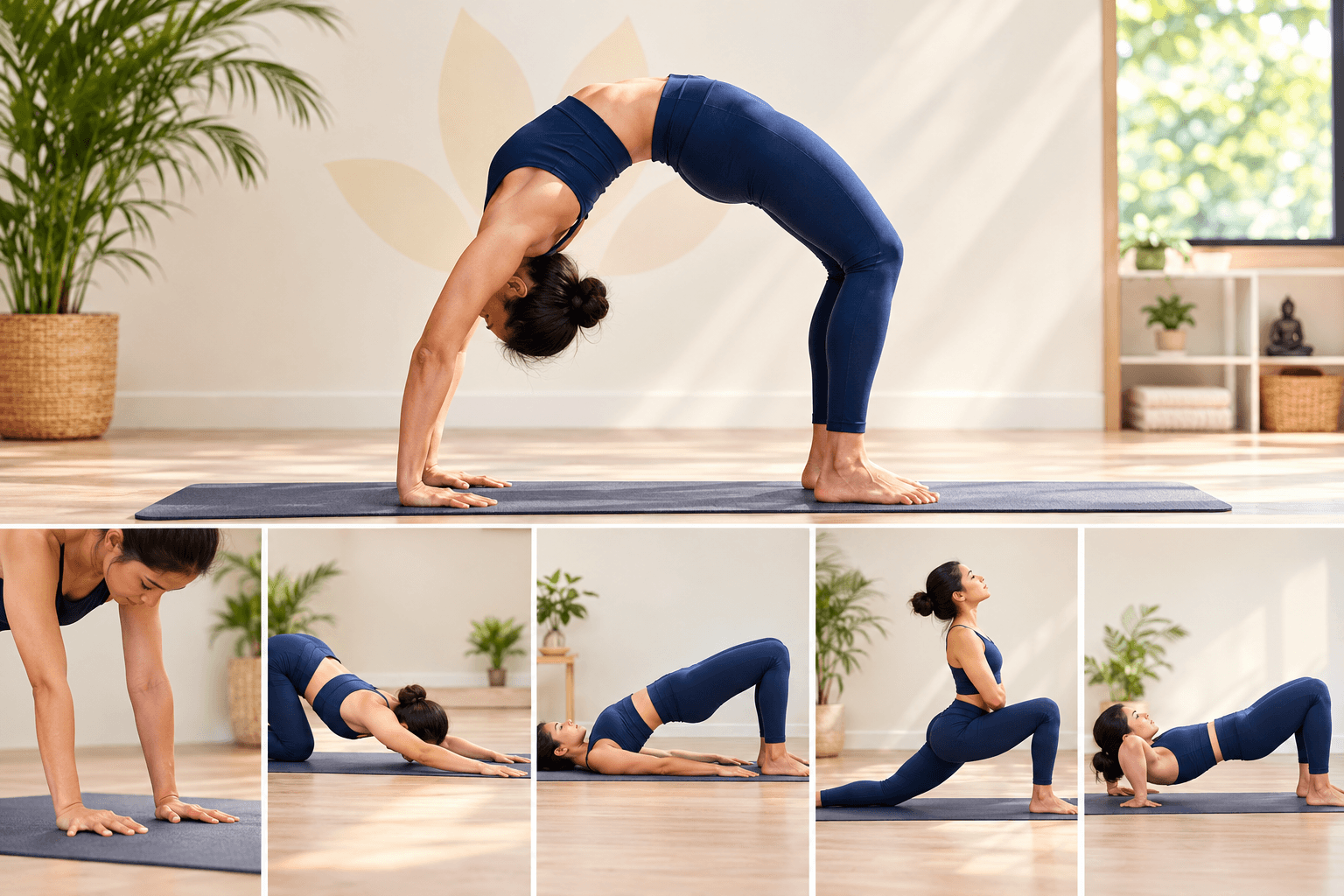
5 Yoga Drills to Build a Stronger Chakrasana
Chakrasana, also known as Wheel Pose or Urdhva Dhanurasana, is one of the most energising and challenging backbends in yoga. It requires much more than simply bending your back. A strong Chakrasana depends on adequate shoulder mobility, wrist strength, hip flexibility, spinal mobility, leg strength and core stability.
If you find Chakrasana difficult, forcing yourself deeper into the pose is usually not the best approach. Instead, prepare your body gradually with targeted yoga drills.
As the saying goes:
Don’t force the wheel. Prepare the body first.
Here are five effective drills that can help you develop the mobility, strength and confidence needed for a stronger Chakrasana.
1. Wrist and Palm Preparation
Your hands carry a significant amount of your body weight during Chakrasana. Therefore, preparing the wrists before attempting the pose is extremely important.
How to practise:
- Come into a comfortable tabletop position.
- Place your palms firmly on the mat.
- Spread your fingers wide.
- Gently shift your shoulders forward over your wrists.
- Move back to your starting position.
- Repeat slowly several times.
- You can also turn your fingers slightly outward and gently explore wrist mobility.
Why it helps
This drill prepares the wrists and palms for weight-bearing while helping you become more comfortable with the hand position required in Wheel Pose.
Tip: Keep the movement controlled. If you experience sharp wrist pain, stop and modify the exercise.
2. Shoulder Opening With Puppy Pose
Limited shoulder mobility can make Chakrasana feel extremely difficult. When the shoulders cannot open sufficiently, the body may compensate by putting excessive pressure on the lower back.
Puppy Pose (Uttana Shishosana) is a useful preparation exercise for opening the shoulders and upper back.
How to practise:
- Begin in tabletop position.
- Keep your hips above your knees.
- Slowly walk your hands forward.
- Allow your chest to move toward the floor.
- Keep your arms extended.
- Breathe slowly and comfortably.
- Hold for several breaths.
Why it helps
Regular shoulder-opening work can help improve the range of motion needed to position the arms more comfortably in Chakrasana.
Beginner modification: Place a cushion or folded blanket under your chest if reaching the floor feels too intense.
3. Setu Bandhasana – Bridge Pose
Before progressing to a full Wheel Pose, practise Setu Bandhasana (Bridge Pose).
Bridge Pose strengthens several muscle groups involved in Chakrasana while allowing you to experience spinal extension in a more accessible position.
How to practise:
- Lie on your back.
- Bend your knees and place your feet on the mat.
- Keep your feet approximately hip-width apart.
- Place your arms beside your body.
- Press your feet into the floor.
- Slowly lift your hips.
- Engage your glutes and legs.
- Keep your breathing steady.
- Lower down slowly.
Why it helps
Bridge Pose can help develop:
- Leg strength
- Glute strength
- Hip extension
- Spinal mobility
- Back-body awareness
Practising Bridge Pose consistently can create a stronger foundation before attempting a deeper backbend.
4. Hip Flexor and Quadriceps Opening
Tight hips and quadriceps can make backbending feel restricted.
A gentle low lunge or a supported quad stretch can help prepare the front of your hips and thighs.
How to practise:
- Step one foot forward into a low lunge.
- Bring the back knee onto the mat.
- Keep your chest lifted.
- Gently move your hips forward.
- Keep your pelvis controlled rather than pushing aggressively.
- Hold for several comfortable breaths.
- Repeat on the other side.
Why it helps
Opening the front of the hips can make it easier to create extension through the entire body instead of trying to achieve the backbend primarily from the lower spine.
Remember: Flexibility should develop gradually. Avoid bouncing or forcing the stretch.
5. Supported Chakrasana Preparation
Once your wrists, shoulders, hips and legs are adequately prepared, you can begin practising the movement pattern of Chakrasana.
Lie on your back and bring your feet toward your hips. Place your hands beside your ears with your fingers pointing toward your shoulders.
Instead of immediately pushing into the full pose, focus first on:
- Correct hand placement
- Firm foot placement
- Engaged legs
- Active shoulders
- Steady breathing
You can practise lifting your hips and upper body progressively rather than forcing yourself into the deepest version of the pose.
Why it helps
This approach allows you to understand the mechanics of Wheel Pose while developing strength and confidence progressively.
Why You Shouldn't Force Chakrasana
One of the biggest mistakes beginners make is trying to achieve a deeper backbend before developing the necessary mobility and strength.
Chakrasana involves multiple areas of the body working together:
Mobility → Strength → Stability → Confidence → Progress
If one area is restricted, another area may compensate.
For example, insufficient shoulder mobility may cause you to rely excessively on your lower back. Similarly, weak legs can make it harder to create a stable foundation.
The goal isn't simply to make your backbend look deeper. The goal is to develop a strong, controlled and comfortable Chakrasana.
Chakrasana Benefits
When practised appropriately and with proper preparation, Chakrasana can be an energising addition to a yoga practice.
Potential benefits include:
- Improves overall body awareness
- Strengthens the legs and arms
- Challenges core stability
- Encourages shoulder and hip mobility
- Develops back-body strength
- Improves balance and coordination
- Can create an energising feeling after practice
- Builds confidence in challenging yoga postures
However, Chakrasana is an advanced posture for many practitioners and should be approached progressively.
A Simple Chakrasana Preparation Routine
If you're working toward a stronger Wheel Pose, try this sequence:
Yoga DrillSuggested PracticeWrist Preparation1–2 minutesPuppy Pose5–8 breathsBridge Pose3–5 repetitionsLow Lunge5–8 breaths per sideChakrasana Preparation2–3 gentle attempts
Always prioritise quality over depth.
Chakrasana for Beginners: Important Tips
If you are new to Chakrasana, keep these points in mind:
1. Warm up first
Never jump directly into a deep backbend without preparing your body.
2. Don't force flexibility
Your range of motion will improve gradually with consistent practice.
3. Keep your legs active
Strong, engaged legs provide an important foundation for the pose.
4. Focus on your shoulders
Shoulder mobility is an important part of creating a comfortable Wheel Pose.
5. Breathe
Avoid holding your breath while attempting the pose.
6. Use modifications
Props, wall support or guidance from a qualified yoga teacher can make the learning process more controlled.
7. Listen to your body
Muscular effort and stretching sensations can be normal, but sharp or sudden pain is a reason to stop.
How Often Should You Practise Chakrasana Preparation?
You don't need to practise the full Wheel Pose every day.
Instead, focus on consistent preparation. Wrist mobility, shoulder opening, hip mobility, leg strengthening and Bridge Pose can be incorporated into your regular yoga routine.
With time, your body can develop the combination of mobility, strength and stability required for a more confident Chakrasana.
Final Thoughts
A stronger Chakrasana isn't built by forcing your body into a deeper backbend. It is built through consistent preparation, mindful movement and patience.
Start with your wrists. Open your shoulders. Strengthen your legs and core. Create mobility through your hips. Then gradually work toward the full Wheel Pose.
Remember:
Mobility. Strength. Stability. Confidence. Progress.
Your yoga practice is not about rushing toward the final pose. It's about preparing your body and building a sustainable practice along the way.
Ready to deepen your yoga practice? Explore guided yoga sessions with Pure Lifestyle Yoga and learn how to build strength, flexibility and confidence through mindful movement.
Enjoy writing like this?
Considered pieces on practice and wellbeing — never a marketing blast.