

11 July 2026 · 8 min read
How Yoga Helps Us Understand Human Nature: The Key to Living a More Conscious Life
By Pure Lifestyle Yoga
When Mohamed Salah scored against Chelsea in 2019, millions expected the celebration that usually follows a spectacular goal—a sprint across the pitch, clenched fists, or a roar to the crowd.
Instead, one of football's greatest players did something unexpected.
He stood on one leg.
He joined his palms.
He closed his eyes.
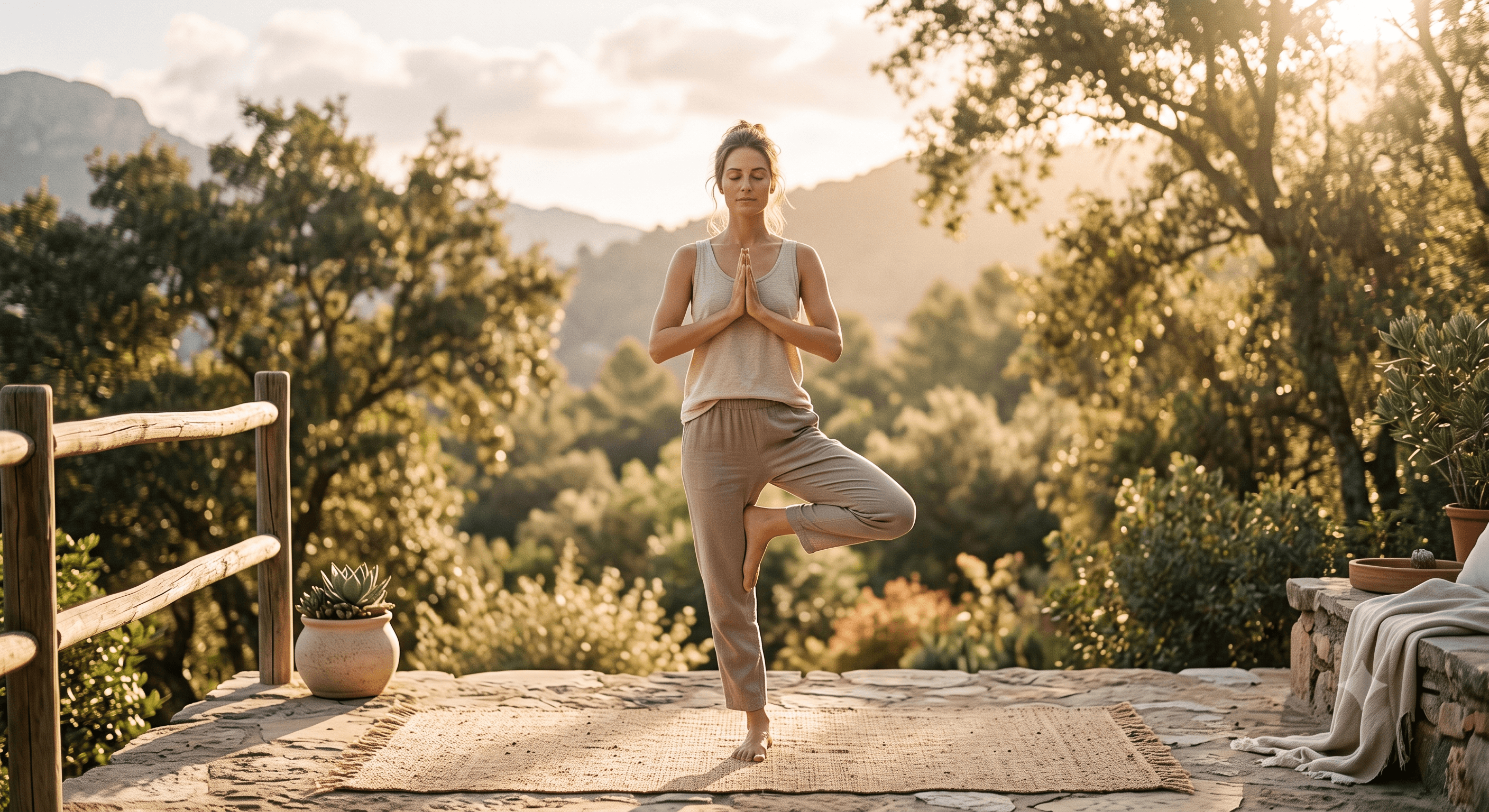
It was Vrikshasana, the Tree Pose.
When journalists later asked about the celebration, Salah smiled and simply said,
I am a yoga man! I do yoga.
Years later, speaking about his routine, he added,
Of course I do a lot of yoga and also meditation—it helps a lot.
At first glance, it looked like a unique goal celebration.
But perhaps it revealed something much deeper.
Why would one of the world's most accomplished athletes choose a yogic posture in one of football's most emotionally charged moments?
The answer has very little to do with flexibility.
It has everything to do with understanding human nature.
Yoga Is More Than Exercise—It Is a Study of Human Nature
Most people discover yoga through movement.
They come looking for better posture, improved flexibility, reduced stress, or relief from physical discomfort.
Those benefits are real, and modern research continues to support them.
But if we look at yoga through the lens of its original purpose, we discover something far more profound.
Yoga was never simply about changing the body.
It was about understanding the person living inside it.
Long before psychology became a scientific discipline, yogic thinkers were observing the patterns of the human mind. They explored why people suffer, why desires never seem fully satisfied, why fear shapes decisions, and why external success doesn't always create inner peace.
In many ways, yoga is one of humanity's oldest explorations of human behaviour, consciousness, and self-awareness.
It asks a timeless question:
Before trying to change your life, have you taken the time to understand yourself?
Why Understanding Human Nature Matters More Than Ever
We live in an age overflowing with information.
We understand technology better than any generation before us. We can access knowledge from almost anywhere, communicate across continents instantly, and solve problems that once seemed impossible.
Yet despite all this progress, many of us still struggle with the same questions people have asked for centuries.
Why do we overthink?
Why do we react emotionally even when we know better?
Why do we compare ourselves with others?
Why does success sometimes leave us feeling strangely empty?
These aren't technological problems.
They're human ones.
The world around us has changed dramatically.
Human nature hasn't.
The tools are different, but our minds continue to wrestle with the same emotions—fear, ambition, attachment, jealousy, hope, love, uncertainty, and the desire to belong.
This is precisely why the philosophy of yoga continues to resonate in modern life. It doesn't focus on the trends of a particular century. Instead, it explores the timeless patterns that shape every human being.
The Greatest Discovery Is Self-Awareness
One of the most beautiful ideas in yoga is Svadhyaya, often translated as self-study.
Unlike self-criticism, self-study begins with curiosity.
Why does one person's opinion affect us so deeply while another's barely matters?
Why do we keep repeating habits we promised to leave behind?
Why do we seek approval from others even when we know it cannot create lasting happiness?
These questions don't have quick answers.
Nor does yoga pretend they do.
Instead, it teaches us to observe ourselves without judgment.
This simple shift changes everything.
When we become aware of our thoughts, we stop believing every thought is true.
When we become aware of our emotions, we create space before reacting.
When we become aware of our habits, we realise they are patterns—not our identity.
This is why self-awareness through yoga is so transformative.
Understanding ourselves becomes the first step toward changing ourselves.
The Mind Is Meant to Be Observed, Not Obeyed
Much of modern life trains us to react instantly.
A notification appears, and we check it.
Someone criticises us, and we defend ourselves.
A challenge arises, and our minds immediately predict the worst.
Over time, reaction becomes habit.
Yoga interrupts that cycle.
The opening verse of the Yoga Sutras describes yoga as the calming of the fluctuations of the mind. It isn't about stopping thoughts altogether. It is about developing enough awareness to recognise that we don't have to follow every thought wherever it leads.
This is one of yoga's greatest contributions to mental clarity and emotional balance.
It teaches us that there is a difference between experiencing an emotion and becoming controlled by it.
That distinction quietly transforms the way we work, communicate, lead, and live.
What Mohamed Salah Understood Beyond the Football Pitch
When people hear that elite athletes practise yoga, they often assume the reason is flexibility.
Certainly, mobility, recovery, and injury prevention matter.
But athletes at the highest level know something else.
Performance begins long before competition.
It begins in the mind.
Reflecting on his own practice, Mohamed Salah explained that yoga and meditation help him stay focused, emotionally balanced, and mentally prepared.
That perspective is remarkably aligned with the philosophy of yoga.
Yoga doesn't ask us to eliminate emotion.
It asks us to understand it.
It doesn't promise a life without pressure.
It helps us remain steady within pressure.
Tree Pose itself carries a quiet lesson.
A tree doesn't become stable because the wind stops blowing.
It becomes stable because its roots are deep.
The same is true for us.
External circumstances will continue to change. Success and failure will come and go. Expectations will rise and fall.
Yoga helps us develop roots that are not easily shaken.
Perhaps that is what Salah's celebration represented—not simply a yoga posture, but a reminder that true strength begins within.

Image Credit: The Telegraph. Used with attribution for editorial purposes.
How Yoga Helps Us Live a More Conscious Life
When we understand our own nature, our relationship with life begins to change.
We listen more carefully.
We respond instead of reacting.
We become less interested in proving ourselves and more interested in improving ourselves.
We begin making decisions from clarity rather than impulse.
This is what conscious living looks like.
It isn't about perfection.
It isn't about becoming someone else.
It is about becoming more aware of who we already are.
Yoga supports this journey not through philosophy alone, but through practice.
Every breath teaches presence.
Every posture teaches patience.
Every meditation teaches observation.
Gradually, these lessons leave the yoga mat and enter everyday life—our relationships, careers, conversations, and decisions.
That is when yoga stops being something we do.
It becomes the way we live.
Yoga and Modern Life: More Relevant Than Ever
The challenges of modern life are unlikely to disappear.
Work will remain demanding.
Technology will continue evolving.
Distractions will become even more sophisticated.
The question, then, isn't how to escape modern life.
It is how to live wisely within it.
This is why yoga continues to matter—not because it offers an escape from reality, but because it teaches us how to meet reality with greater awareness.
The more deeply we understand human nature, the more compassion we develop for ourselves and others.
The more we understand our own mind, the less likely we are to be controlled by it.
And the more conscious we become, the more meaningful our lives naturally begin to feel.
The Real Practice Begins After You Leave the Mat
The true measure of yoga isn't how long you can hold a posture.
It is how you respond when life tests your patience.
Can you remain calm in disagreement?
Can you pause before reacting in anger?
Can you stay grounded when success inflates the ego or failure challenges your confidence?
These moments are where yoga reveals its greatest value.
Because yoga has never been about mastering difficult poses.
It has always been about mastering ourselves.
At Pure Lifestyle Yoga, we believe every practice is an invitation to understand yourself a little more deeply. Through movement, breathwork, meditation, and mindful awareness, yoga becomes more than a wellness routine—it becomes a lifelong journey of self-discovery.
In the end, understanding human nature isn't about finding all the answers.
It's about asking better questions.
And perhaps the most important question yoga encourages us to ask is the simplest one of all:
Who am I, beneath the noise of everyday life?
When we begin exploring that question with honesty and patience, something remarkable happens.
We don't just become better at yoga.
We become better at being human.
Frequently Asked Questions
Is yoga only a form of physical exercise?
No. While yoga improves strength, flexibility, and balance, its traditional purpose is much broader. Yoga is a holistic practice that cultivates self-awareness, mindfulness, emotional resilience, and mental clarity alongside physical health.
How does yoga help us understand human nature?
Yoga encourages us to observe our thoughts, emotions, habits, and reactions without judgment. This process of self-study, known as Svadhyaya, helps us recognize patterns in our behavior and make more conscious choices.
Can yoga improve mental clarity and emotional balance?
Yes. Regular yoga and meditation practices can reduce stress, improve focus, enhance emotional regulation, and develop a calmer, more balanced mindset. These benefits are supported by both traditional yogic philosophy and modern scientific research.
Why is self-awareness important in yoga?
Self-awareness is the foundation of yoga. By understanding how the mind responds to challenges, emotions, and daily experiences, we develop greater resilience, healthier relationships, and a more conscious way of living.
Enjoy writing like this?
Considered pieces on practice and wellbeing — never a marketing blast.