

19 July 2026 · 5 min read
Hip Flexors and Desk Life: The Biomechanics of Sitting All Day
By Pure Lifestyle Yoga
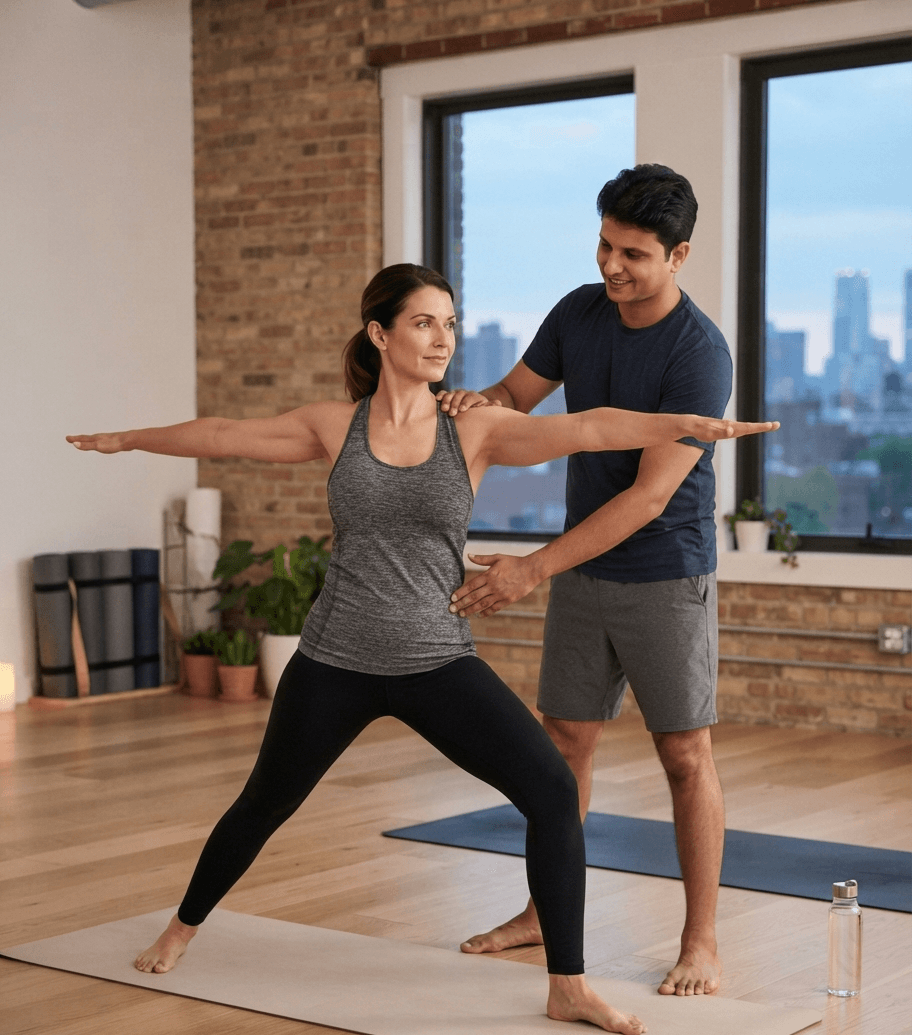
The average professional sits for over nine hours a day — commuting, at a desk, then again on the sofa. The body wasn't built for this posture, and the hips are where the cost shows up first. Understanding the biomechanics of prolonged sitting isn't academic curiosity; it's the starting point for correcting the posture, back pain, and restricted mobility that so many office workers accept as normal. This is where precision yoga, grounded in an understanding of how the body actually moves, earns its place as more than a wellness trend.
The Biomechanics of Prolonged Sitting
Sitting places the hip flexors — primarily the iliopsoas group — in a permanently shortened position. Held there for hours daily, these muscles adapt by tightening, a phenomenon biomechanists call adaptive shortening. At the same time, the glutes, which should stabilise the pelvis during standing and walking, sit in a lengthened, under activated state. This is a well-documented pattern in movement science: reciprocal inhibition, where a tight muscle actively suppresses the activation of its opposing muscle group. The result is a pelvis that tilts anteriorly by default, altering the alignment of everything above it.
How Tight Hip Flexors Affect Posture and Pain
An anteriorly tilted pelvis changes the curve of the lumbar spine, increasing compressive load on the lower back with every step and every hour spent standing. This is one of the most consistent, evidence-backed links between desk jobs and chronic lower back pain: it's rarely the back itself that's the root cause, but the hips pulling it out of alignment. Tight hip flexors also limit hip extension, which shortens stride length, reduces glute engagement during walking, and can contribute to knee and lower-back compensation patterns over time.
● Anterior pelvic tilt increases lumbar lordosis and lower back strain
● Reduced hip extension shortens stride and limits functional mobility
● Underactive glutes shift load onto the lower back and hamstrings during standing movement
● Chronic tightness can restrict rotation, affecting everything from gait to spinal mobility
Restoring Balance Through Precision Yoga
Precision yoga approaches hip tightness as a functional movement problem, not a flexibility problem alone. Rather than generic stretching, it combines targeted hip flexor release with glute activation work, rebuilding the balance between the muscles that have gone quiet and the ones that have overworked. This is the distinction that separates yoga for desk workers from a five-minute stretch break: it's designed to retrain the movement pattern, not just relieve the sensation of tightness for an afternoon.
Practical Stretches & Posture Tips
● Low Lunge (Anjaneyasana) — 30 seconds per side, directly lengthens the iliopsoas
● Figure-4 stretch (seated or supine) — releases the glutes and outer hip rotators
● Cat-Cow flow — restores lumbar mobility compressed by hours of sitting
● Pigeon Pose — deep hip opener for chronic tightness, best performed after light warm-up
● Every 45–60 minutes, stand and perform 5 hip circles in each direction to interrupt static loading
Office Wellness: Building Movement Into the Workday
Correcting desk-driven hip tightness isn't only about what happens on the mat — it's about interrupting the sitting pattern itself throughout the day.
● Set a movement reminder every 45–60 minutes rather than relying on memory
● Adjust chair height so hips sit slightly above knee level, reducing flexor compression ● Take calls standing or walking when possible, a small but cumulative biomechanical win
● Book a personalized yoga assessment to identify your specific compensation patterns rather than guessing
Key Takeaways
Remember This
● Prolonged sitting shortens hip flexors and inhibits the glutes, tilting the pelvis out of neutral
● This misalignment is a leading, evidence-supported contributor to desk-related lower back pain
● Precision yoga retrains the whole movement pattern, not just the sensation of tightness
● Small, consistent interruptions to sitting matter as much as any single stretch
● A personalized assessment identifies your specific pattern, rather than applying a generic fix
Frequently Asked Questions
Q. Can tight hip flexors really cause lower back pain?
Yes. Shortened hip flexors tilt the pelvis anteriorly, which increases the curve and compressive load on the lumbar spine — one of the most common biomechanical contributors to desk-related back pain.
Q. How quickly do hip flexors tighten from sitting?
Adaptive shortening can begin within weeks of consistent prolonged sitting, though the degree varies with individual posture, activity level, and chair setup.
Q. Is stretching alone enough to fix the problem?
Stretching helps, but lasting correction typically requires both releasing the tight hip flexors and re-activating the underused glutes — addressing the full movement pattern.
Q. How often should I stretch during a workday?
A. A short mobility break every 45–60 minutes is more effective than one long stretch session at the end of the day, since it interrupts static loading throughout.
Q. What's the difference between precision yoga and a general stretching routine?
A. Precision yoga is built around your specific movement pattern and compensation points, identified through an assessment, rather than a one-size-fits-all sequence.
Q. Can desk-related hip tightness affect more than the back?
A. Yes — it can influence knee alignment, stride length, and even shoulder posture, since the body compensates for pelvic misalignment throughout the kinetic chain.
Conclusion: Understanding the Body You Sit In
Desk life isn't going away, but the biomechanical cost of it doesn't have to be permanent. Understanding why tight hip flexors, an inhibited posterior chain, and low back strain show up together is the first step toward correcting them — and precision yoga offers a way to retrain the pattern rather than simply manage the discomfort. At Pure Lifestyle Yoga, our approach begins with understanding exactly how your body has adapted to your day, so the practice we build can undo it.
Enjoy writing like this?
Considered pieces on practice and wellbeing — never a marketing blast.