

20 June 2026 · 6 min read
Yoga Habits That Support Healthy Aging Without Intense Exercise
By Pure Lifestyle Yoga
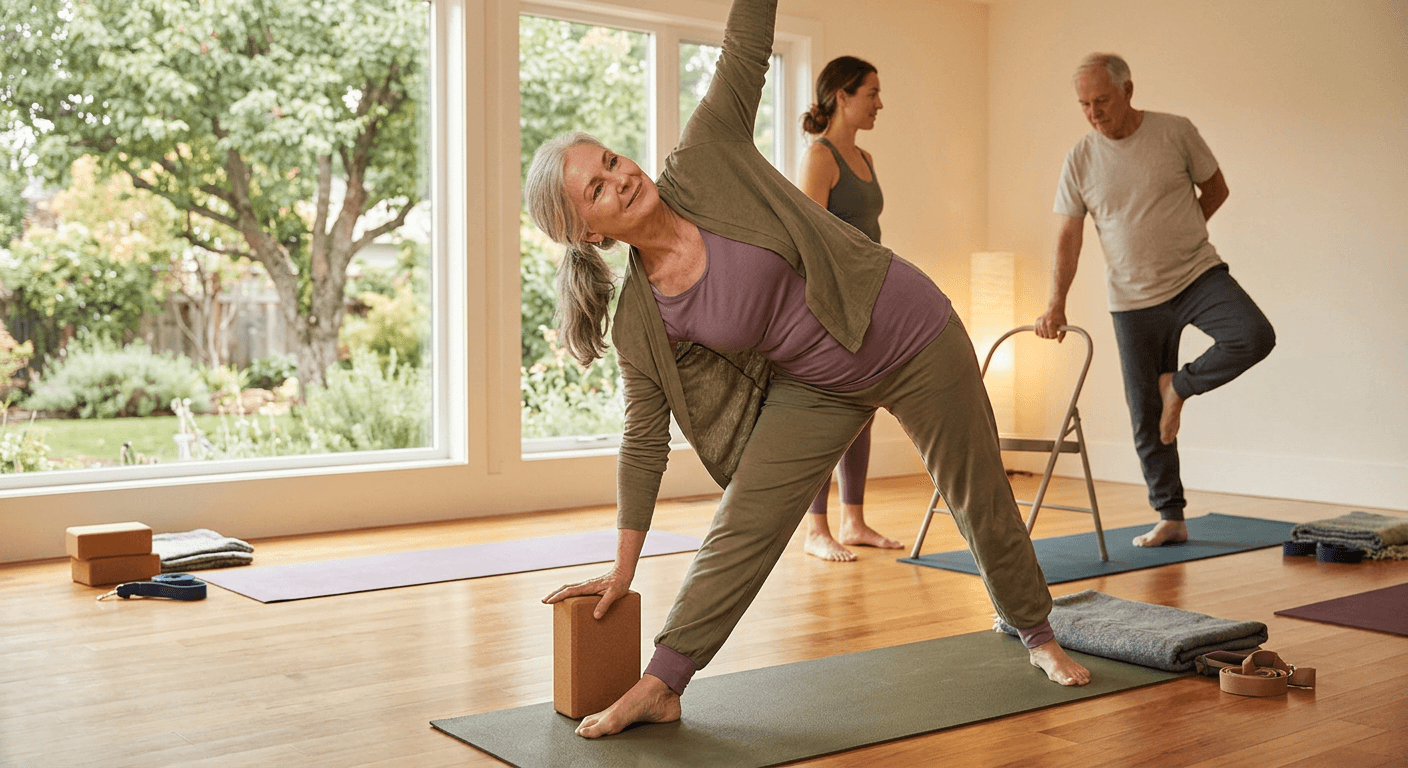
Yoga Habits That Support Healthy Aging Without Intense Exercise
Introduction
There comes a point when health stops being about looking fit and starts being about staying capable.
For many people in their 40s, 50s, and beyond, the goal is no longer to run marathons, chase extreme fitness challenges, or spend hours in the gym.
Instead, the focus shifts to something far more valuable.
Can you travel comfortably?
Can you keep up with a demanding career?
Can you enjoy time with your family without constantly feeling tired?
Can your body support the lifestyle you've worked so hard to build?
These are the questions that matter.
The reality is that healthy aging doesn't require punishing workouts or intense exercise routines. In fact, some of the most powerful habits for long-term well-being are surprisingly simple.
This is where yoga stands apart.
Yoga isn't about pushing harder as you age. It's about moving smarter, recovering better, and maintaining the physical and mental resilience that allows you to continue living life on your terms.
Why Many Successful People Are Rethinking Fitness After 45
In your 20s and 30s, the body often forgives poor habits.
You can skip recovery, ignore stress, sleep less than you should, and still function reasonably well.
After 45, things change.
Many professionals begin noticing:
- Stiffness after long meetings or flights
- Reduced energy levels
- Slower recovery from exercise
- Poor sleep quality
- Tight hips, shoulders, and back
- Increased stress despite professional success
Ironically, this often happens at a stage when people have achieved many of their career and financial goals.
The challenge is no longer building success.
It's having the health and vitality to enjoy it.
The Truth About Healthy Aging
Healthy aging isn't about avoiding every wrinkle or trying to feel 25 forever.
It's about preserving the qualities that allow you to live well.
These include:
- Mobility
- Balance
- Strength
- Energy
- Mental clarity
- Emotional resilience
- Independence
The good news is that these qualities can be supported through small, consistent habits.
And unlike intense exercise programs, yoga can be sustained for decades.
Why Yoga Works So Well for Long-Term Health
One reason yoga has remained relevant for thousands of years is its simplicity.
It addresses many of the factors that influence how we age:
- Movement
- Breathing
- Stress management
- Recovery
- Body awareness
Rather than focusing on a single aspect of fitness, yoga helps support the entire system.
For busy professionals, that efficiency matters.
You don't need another demanding commitment.
You need practices that fit into real life.
1. Start Your Day by Waking Up Your Body
Many people reach for their phone before their feet touch the floor.
A better habit?
Spend five minutes reconnecting with your body.
Simple movements for the:
- Neck
- Shoulders
- Spine
- Hips
can help reduce stiffness and improve circulation.
Think of it as preparing your body for the day ahead—just as you would warm up a high-performance vehicle before a long drive.
2. Prioritize Mobility Over Intensity
One of the biggest mistakes people make as they age is focusing only on exercise and ignoring mobility.
You can have strong muscles and still struggle to move comfortably.
Maintaining mobility helps with everyday activities such as:
- Walking
- Traveling
- Climbing stairs
- Getting in and out of a car
- Carrying luggage
- Playing with grandchildren
Yoga helps preserve the freedom of movement that many people take for granted until it starts disappearing.
3. Learn to Use Your Breath as a Recovery Tool
Most successful professionals spend years learning how to manage businesses, teams, and finances.
Very few learn how to manage their nervous system.
Breathwork is one of the most underrated aspects of yoga.
Simple breathing practices can help:
- Reduce stress
- Improve focus
- Promote relaxation
- Support emotional balance
A few minutes of conscious breathing can often have a greater impact on your day than another cup of coffee.
4. Move Throughout the Day
A one-hour workout cannot fully compensate for ten hours of sitting.
Modern lifestyles encourage prolonged periods of inactivity.
The body, however, is designed to move.
Try incorporating small movement breaks throughout your day:
- Stand up between meetings
- Stretch your shoulders
- Walk while taking calls
- Open up the hips after long periods of sitting
These small actions help maintain mobility and reduce accumulated tension.
5. Make Balance Training a Priority
Balance is one of the first physical abilities that tends to decline with age.
Unfortunately, most people don't notice until it becomes a problem.
Yoga naturally incorporates balance-focused postures that help improve:
- Coordination
- Stability
- Body awareness
- Confidence in movement
Good balance isn't just about preventing falls.
It's about preserving independence.
6. Respect Recovery as Much as Productivity
Many high achievers are excellent at working hard.
Fewer are skilled at recovering well.
Yet recovery becomes increasingly important as we age.
Yoga encourages practices that support recovery through:
- Gentle movement
- Breath awareness
- Relaxation
- Mindfulness
Recovery isn't laziness.
It's maintenance.
And every high-performing system requires maintenance.
7. End the Day by Slowing Down
Most professionals spend their days in a constant state of stimulation.
Emails.
Meetings.
Deadlines.
Notifications.
The body rarely receives a signal that it's safe to relax.
A short evening yoga practice can help create that transition.
Even 10 minutes of gentle stretching and mindful breathing may help:
- Release physical tension
- Calm the mind
- Improve sleep quality
- Support recovery
Over time, these benefits accumulate.
The Bigger Picture: Aging Well Is About Freedom
When people think about longevity, they often focus on lifespan.
But for many successful individuals, the real goal is freedom.
The freedom to travel where you want.
The freedom to remain active.
The freedom to enjoy family, hobbies, and experiences without being limited by your body.
That freedom depends on the choices you make today.
Yoga isn't about becoming more flexible than everyone else.
It's about preserving the mobility, energy, and resilience that allow you to continue living fully.
Summary
Healthy aging doesn't require extreme fitness routines or exhausting workouts.
In many cases, small daily habits can have a greater long-term impact.
Yoga supports healthy aging by helping maintain:
- Mobility
- Balance
- Strength
- Stress resilience
- Recovery
- Overall well-being
For adults over 45, these qualities often matter far more than chasing fitness trends.
Because ultimately, the goal isn't simply to live longer.
It's to remain capable, independent, and energized enough to enjoy the life you've spent years creating.
Frequently Asked Questions (FAQs)
Is yoga enough for healthy aging?
Yoga can be an excellent part of a healthy aging routine because it supports mobility, balance, flexibility, stress management, and recovery. Many people combine it with walking or strength training for a well-rounded approach.
Can I start yoga after 50?
Absolutely. Yoga can be adapted to different fitness levels and physical abilities, making it accessible at almost any age.
How much yoga is needed for healthy aging?
Even 10–20 minutes of consistent practice several times a week can provide meaningful benefits over time.
Why is mobility important as we age?
Mobility supports independence and helps make everyday activities such as walking, traveling, climbing stairs, and maintaining good posture easier and more comfortable.
What type of yoga is best after 45?
Gentle styles such as Hatha Yoga, therapeutic yoga, and restorative yoga are often well-suited for supporting long-term health and well-being.
References
- National Institutes of Health (NIH)
- Harvard Health Publishing
- International Journal of Yoga
- American College of Sports Medicine
- Frontiers in Aging Neuroscience
- Journal of Alternative and Complementary Medicine
Enjoy writing like this?
Considered pieces on practice and wellbeing — never a marketing blast.