

14 July 2026 · 4 min read
Yoga for Frozen Shoulder: A Gentle, Structured Path to Mobility | Private Yoga at Home Gurugram
By Pure Lifestyle Yoga
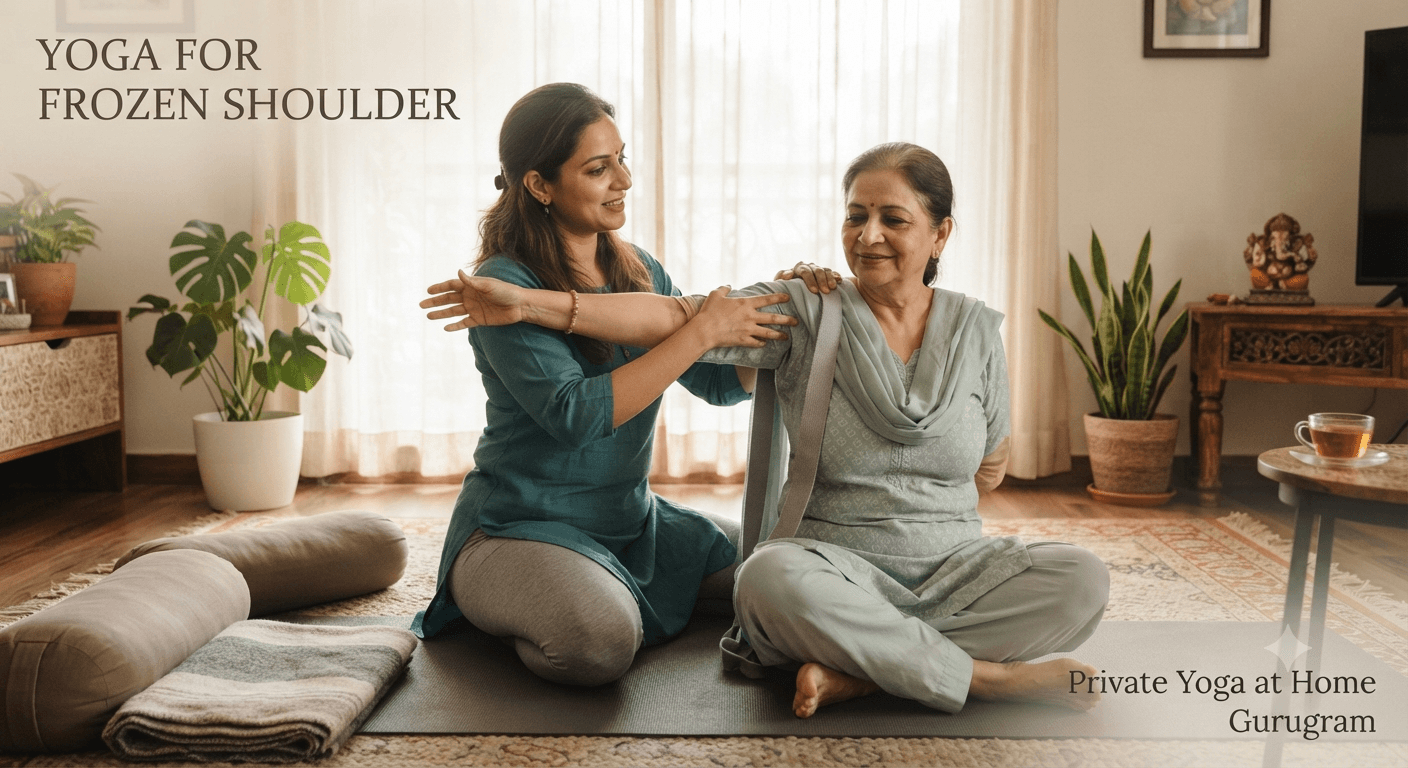
Frozen shoulder can make even the simplest daily tasks—reaching for a shelf, fastening a seatbelt, or putting on a shirt—feel frustrating and painful. While medication may help reduce discomfort temporarily, lasting recovery often requires restoring movement gradually and safely. This is where private yoga at home Gurugram, yoga therapist at home Gurugram, corporate yoga Gurugram, senior citizen yoga at Gurugram, online yoga classes India, and Indian yogis online session provide a holistic approach to rebuilding mobility and confidence.
Unlike aggressive stretching or high-impact exercise, yoga emphasizes mindful movement, proper alignment, and breath awareness. With a structured practice designed around your body's limitations, you can improve flexibility, reduce stiffness, and regain functional shoulder movement without unnecessary strain.
What Is Frozen Shoulder?
Frozen shoulder, medically known as adhesive capsulitis, is a condition in which the shoulder joint becomes stiff, painful, and progressively difficult to move. The connective tissue surrounding the shoulder joint thickens and tightens, restricting its normal range of motion.
The condition generally develops in three stages:
1. Freezing Stage
This is the most painful stage. Shoulder pain gradually increases, especially during movement or while sleeping. As discomfort grows, people naturally avoid moving the joint, which further reduces mobility.
2. Frozen Stage
Pain may begin to decrease, but stiffness becomes more noticeable. Everyday tasks like combing your hair, reaching overhead, or lifting objects become challenging.
3. Thawing Stage
Mobility slowly returns over several months. With appropriate rehabilitation, many people regain significant function, although recovery often requires patience and consistent practice.
Why Does Frozen Shoulder Develop?
Although frozen shoulder can affect anyone, several factors increase the likelihood of developing it.
Common causes include:
- Diabetes
- Shoulder injuries
- Rotator cuff problems
- Surgery requiring prolonged arm immobilization
- Poor posture
- Sedentary lifestyle
- Aging
- Hormonal changes
Professionals who spend long hours working at computers may also experience shoulder stiffness due to prolonged sitting and poor ergonomic habits.
Why Gentle Movement Matters More Than Force
Many people believe they should "push through the pain" to regain shoulder movement. Unfortunately, forcing the joint often increases inflammation and delays recovery.
Yoga takes a completely different approach.
Rather than forcing flexibility, yoga encourages gradual movement within a comfortable range. Controlled breathing helps relax surrounding muscles, allowing the shoulder to move more freely over time.
This gentle progression reduces fear of movement while improving circulation around the affected joint.
How Yoga Supports Frozen Shoulder Recovery
Yoga is not simply about stretching. It combines mindful movement, breathing techniques, posture correction, and relaxation to support the body's natural healing process.
Private Yoga at Home Gurugram: Personalized Recovery in Your Own Space
Recovering from frozen shoulder requires individualized attention. A posture or movement that benefits one person may not be appropriate for another.
With private yoga at home Gurugram, your instructor evaluates your current mobility, pain levels, medical history, and recovery goals before creating a personalized program.
Sessions conducted at home also eliminate travel-related discomfort and allow you to practice in a familiar, comfortable environment.
Benefits include:
- Individualized instruction
- Safe progression of movements
- Continuous posture correction
- Flexible scheduling
- Greater consistency in practice
Yoga Therapist at Home Gurugram: Expert Guidance for Safe Rehabilitation
When recovering from an orthopedic condition, professional supervision becomes essential.
A Pure LifeStyleYoga, understands how to modify postures according to your stage of recovery. Instead of focusing on advanced poses, therapeutic yoga emphasizes:
- Gentle joint mobilization
- Improved circulation
- Breath-led movement
- Muscle relaxation
- Shoulder stabilization
- Gradual restoration of flexibility
Every session is adjusted according to your comfort level, ensuring steady improvement without aggravating symptoms.
The Role of Breathwork in Healing
Many people associate yoga only with physical postures, but breathing plays an equally important role.
When we experience pain, we instinctively tense our muscles and hold our breath. This protective response often increases stiffness.
Breathing techniques practiced during yoga help:
- Relax surrounding muscles
- Improve oxygen delivery
- Reduce stress hormones
- Calm the nervous system
- Increase body awareness
As breathing becomes slower and deeper, movement often becomes smoother and less painful.
Correcting Posture to Reduce Shoulder Strain
Modern lifestyles contribute significantly to shoulder dysfunction.
Hours spent working on laptops, looking at mobile devices, or driving create rounded shoulders and forward head posture.
Over time, these habits place unnecessary stress on the shoulder joint.
Yoga helps restore healthy posture by strengthening the muscles that support the upper back while gently opening the chest and shoulders.
Better posture not only reduces discomfort but also improves long-term shoulder function.
Building Confidence Through Small Wins
One of the greatest challenges during frozen shoulder recovery is frustration.
Progress often feels slow.
Yoga encourages a different mindset.
Instead of measuring success by dramatic improvements, each session celebrates small achievements—lifting the arm a little higher, moving with less discomfort, or sleeping more comfortably.
These gradual improvements build confidence and encourage long-term consistency.
Enjoy writing like this?
Considered pieces on practice and wellbeing — never a marketing blast.