

13 May 2026 · 5 min read
Why Your Body Feels Constantly Tired Even After Rest
By Pure Lifestyle Yoga
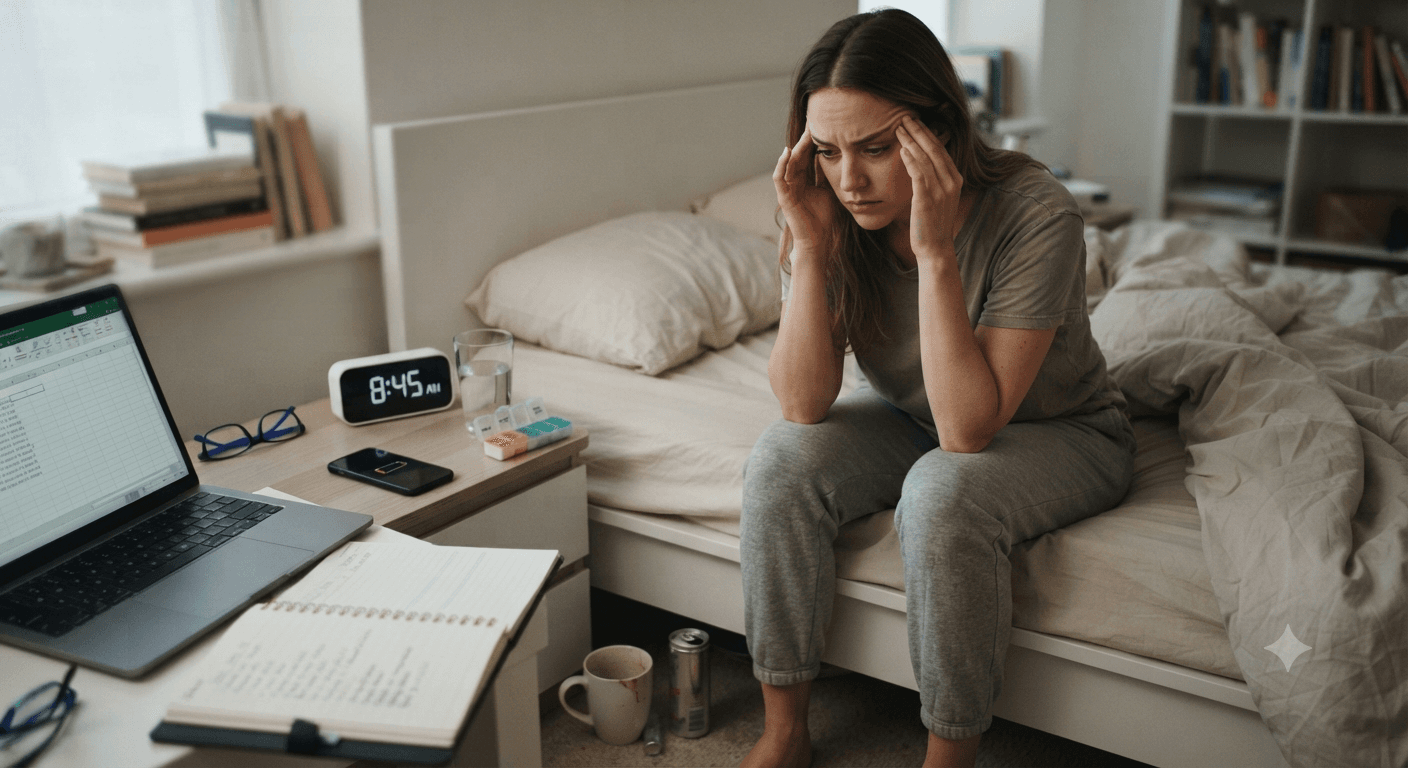
You sleep for seven or eight hours.
You try to eat well.
You take occasional breaks.
Yet your body still feels heavy.
Your mind feels overstimulated.
Your energy never fully returns.
This form of fatigue has become increasingly common among entrepreneurs, professionals, executives, creators, and high-performing individuals living under constant stimulation.
Many continue functioning efficiently while quietly carrying a nervous system that has not fully recovered in months.
The problem is not always lack of sleep.
In many cases, the body is experiencing chronic stress accumulation, nervous system overload, poor recovery regulation, and continuous mental activation.
At Pure Lifestyle Yoga, we view fatigue differently.
Not as weakness.
Not as laziness.
But as a physiological signal that the body has remained in survival mode for too long.
The Reality of Modern Fatigue
Today’s exhaustion is rarely caused by physical labor alone.
Most modern lifestyles involve:
- prolonged screen exposure
- excessive cognitive stimulation
- constant multitasking
- prolonged sitting
- digital interruptions
- emotional pressure without recovery cycles
The body may appear physically rested while internally remaining in a prolonged stress-response state.
Over time, this continuous activation can contribute to:
- low energy levels
- brain fog
- muscular tightness
- shallow breathing
- emotional irritability
- poor sleep quality
- reduced concentration
- nervous system fatigue
Many individuals normalize these symptoms because they have lived with them for years.
But constant exhaustion should never become your baseline.
Why Sleep Alone Is Not Enough
One of the biggest misconceptions about fatigue is assuming that sleep automatically equals recovery.
True recovery is neurological—not just physical.
A person may sleep for eight hours while still waking up mentally exhausted because the nervous system never fully shifted into a restorative state.
Late-night screen exposure, work stress, mental overstimulation, irregular schedules, and continuous cognitive activity can keep the body internally alert—even during sleep.
The result becomes familiar:
- waking up tired
- needing caffeine to function
- experiencing daytime energy crashes
- feeling mentally “on” all the time
Recovery requires more than rest.
It requires regulation.
The Nervous System and Chronic Stress
The human body is designed to handle stress temporarily.
But modern living often keeps individuals in a prolonged “fight or flight” state.
When stress becomes chronic, the nervous system remains continuously activated.
Over time, this may affect:
- sleep quality
- emotional balance
- concentration
- hormonal regulation
- muscular recovery
- energy production
The body slowly begins prioritizing survival instead of restoration.
This is why many high-performing individuals appear productive externally while internally feeling depleted.
Their nervous system never receives enough recovery signals.
How Breathing Patterns Affect Energy Levels
Breathing changes dramatically under stress.
Many individuals unconsciously develop:
- shallow breathing
- chest-dominant breathing
- jaw tension
- neck tightness
- rapid breathing patterns
The body interprets shallow breathing as a signal of stress or urgency.
This creates a continuous low-grade stress response inside the system.
Over time, inefficient breathing patterns may contribute to:
- fatigue
- anxiety
- reduced focus
- poor sleep quality
- muscular tightness
This is where therapeutic yoga and breath regulation become transformative.
At Pure Lifestyle Yoga, breathwork is approached as nervous system science—not simply relaxation.
Slow, structured breathing practices may help:
- calm mental overstimulation
- regulate stress response
- improve recovery quality
- enhance emotional balance
- support mental clarity
In many cases, the breath reveals nervous system imbalance before the mind consciously recognizes it.
High Performance Without Recovery Creates Burnout
Modern culture rewards constant availability.
People are celebrated for:
- working continuously
- staying digitally connected
- pushing through exhaustion
- ignoring body signals
But functioning without recovery eventually creates physiological imbalance.
The body accumulates:
- muscular tension
- emotional fatigue
- nervous system overload
- mental burnout
- reduced resilience
The issue is not ambition.
The issue is the absence of recovery cycles.
Without regulation and decompression, the body eventually forces a slowdown through:
- chronic fatigue
- anxiety symptoms
- sleep disruption
- burnout
- emotional instability
How Therapeutic Yoga Supports Deep Recovery
Yoga is often misunderstood as only stretching or flexibility training.
At Pure Lifestyle Yoga, therapeutic yoga is designed as a structured recovery system.
A precision-guided practice may support:
- nervous system regulation
- mobility and circulation
- breathing efficiency
- muscular relaxation
- mental decompression
- emotional balance
- recovery optimization
More importantly, it introduces intentional slowing down into lifestyles built around constant stimulation.
This matters because chronic exhaustion is not always caused by doing too much physically.
Often, it comes from never allowing the nervous system to truly recover.
Yogic Practices That May Help Reduce Fatigue
Diaphragmatic Breathing
Slow abdominal breathing helps reduce excessive chest breathing patterns commonly associated with stress and nervous system activation.
Even a few minutes of consistent practice may improve calmness and recovery response.
Gentle Mobility-Based Yoga
Exhausted bodies do not always benefit from aggressive exercise.
In many cases, slow and mindful movement supports recovery more effectively.
Gentle spinal mobility, restorative postures, hip-opening practices, and breath-led movement may help release accumulated tension.
Guided Relaxation & Yoga Nidra
Deep relaxation practices help reduce mental overstimulation and improve nervous system recovery.
For many high-performing individuals, learning how to consciously relax becomes one of the most valuable wellness skills.
Evening Recovery Rituals
Recovery begins before sleep starts.
Simple evening habits may significantly improve recovery quality:
- reduced screen exposure
- calming breathwork
- gentle stretching
- mindful silence
- nervous system decompression before bedtime
The Difference Between Being Busy and Being Well
Many individuals today are highly stimulated—but poorly recovered.
There is a difference between functioning and genuinely feeling well.
True wellness is not merely the absence of illness.
It is the ability to feel:
- mentally clear
- physically energized
- emotionally balanced
- physiologically regulated
Modern lifestyles often prioritize output while neglecting restoration.
Eventually, the body responds through exhaustion, tension, irritability, poor sleep, and burnout.
Final Reflection
Rest is not only about sleeping more.
Sometimes it is about teaching the body how to slow down again.
A nervous system that remains constantly alert cannot fully recover—regardless of how many hours are spent in bed.
Yoga, when practiced intelligently and consistently, offers more than physical movement.
It creates space for:
- recovery
- regulation
- awareness
- resilience
- sustainable energy
And in a world built around constant stimulation, deep recovery may become the ultimate luxury.
Pure Lifestyle Yoga
Private. Structured. Result-Driven.
By Appointment Only
WhatsApp: +91 9310379955
Enjoy writing like this?
Considered pieces on practice and wellbeing — never a marketing blast.