

23 August 2026 · 10 min read
Walking Yoga: Benefits, Beginner Routine & Why It’s Trending in 2026
By pure Lifestyle Yoga
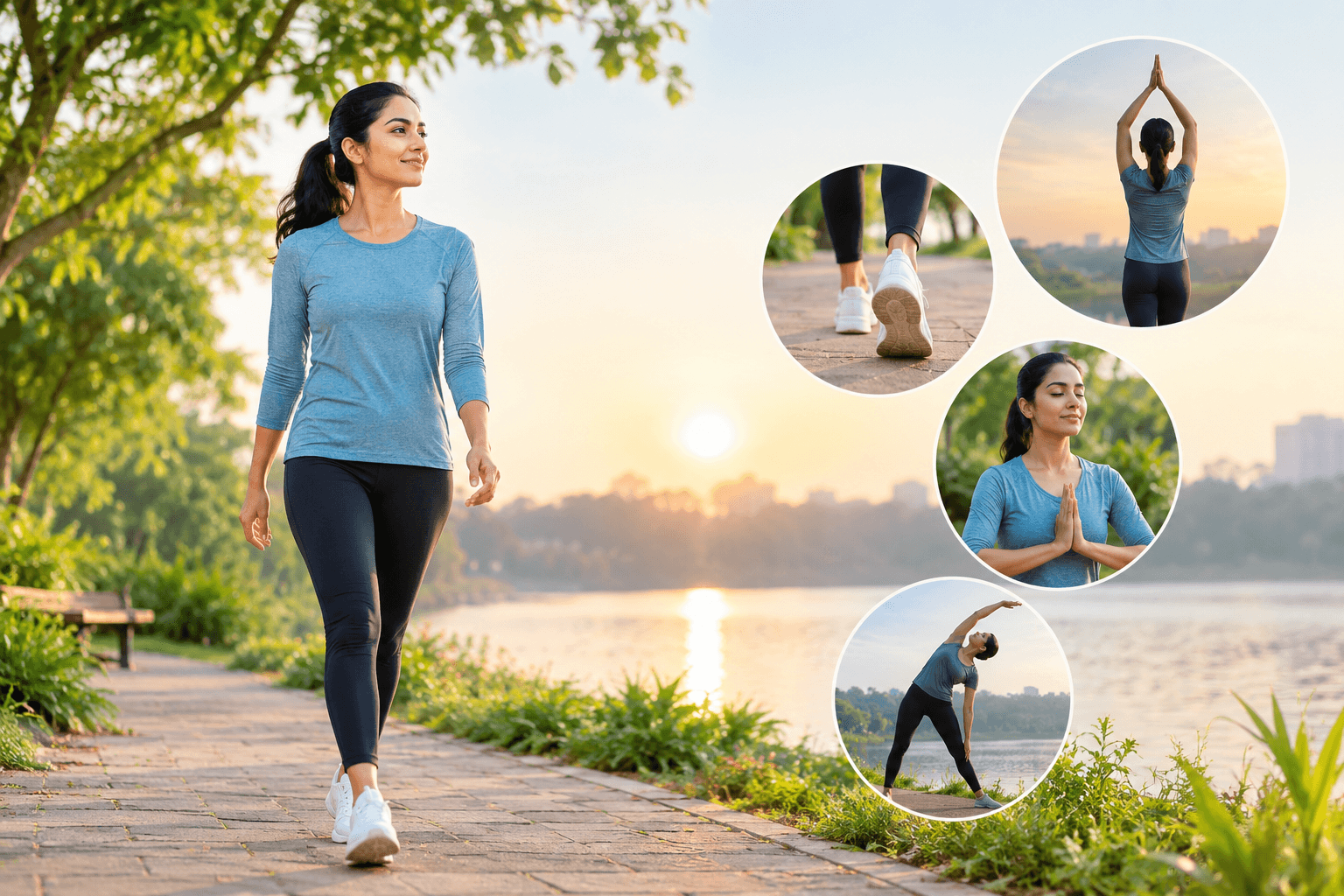
Walking Yoga: Benefits, Beginner Routine & Why It’s Trending in 2026
Introduction
In 2026, people are increasingly looking for simple ways to stay active, reduce stress, and improve their overall well-being without spending hours in a gym. One practice gaining attention is Walking Yoga—a mindful combination of walking, breathing, gentle yoga movements, and awareness.
Walking is already one of the easiest forms of physical activity. When combined with yoga principles such as mindful breathing, posture, balance, and body awareness, it can become a more intentional wellness practice.
Walking Yoga is suitable for beginners, busy professionals, older adults, and anyone who wants to add more mindful movement to their daily routine.
In this guide, we’ll explore what Walking Yoga is, its potential benefits, how to practice it safely, and a simple beginner routine you can try.
What Is Walking Yoga?
Walking Yoga is a mindful movement practice that combines elements of walking, yoga, controlled breathing, and meditation.
Unlike a traditional yoga class where you perform poses on a mat, Walking Yoga focuses on bringing yoga principles into movement. You can practice it in a park, garden, quiet street, beach, or another safe outdoor space.
A Walking Yoga session may include:
- Gentle walking
- Conscious breathing
- Good posture
- Mindful awareness
- Simple standing yoga movements
- Balance exercises
- Short periods of meditation or relaxation
The goal isn't simply to walk faster or farther. Instead, the focus is on becoming more aware of your breath, body, surroundings, and movement.
Why Is Walking Yoga Trending in 2026?
Modern lifestyles often involve long hours of sitting, screen time, busy schedules, and mental stress. As a result, many people are looking for wellness practices that are practical and easy to fit into everyday life.
Walking Yoga offers a simple approach because it doesn't necessarily require:
- Expensive equipment
- A gym membership
- Advanced yoga experience
- A large space
- Complicated movements
It can also be adapted to different fitness levels.
The growing interest in mindful movement and accessible wellness practices has made combinations of walking, yoga, breathing, and meditation increasingly appealing.
The key attraction is simplicity: you can step outside, slow down, breathe consciously, and turn an ordinary walk into a more mindful experience.
Benefits of Walking Yoga
Walking Yoga combines physical movement with mindfulness. While individual results vary, regular walking and yoga-based practices can contribute to several aspects of physical and mental well-being.
1. Supports Physical Activity
Walking is a simple way to add regular movement to your day. Combining walking with gentle yoga movements can make your routine more varied and engaging.
A consistent movement routine can support:
- General mobility
- Physical fitness
- Balance
- Flexibility
- Healthy movement habits
For beginners, Walking Yoga can be a comfortable way to start becoming more active.
2. Helps Improve Mindfulness
One of the most important elements of Walking Yoga is mindful awareness.
Instead of walking while constantly checking your phone or thinking about your next task, you focus on:
- Your footsteps
- Your breathing
- Your posture
- The movement of your body
- Sounds around you
- Your surroundings
This can help transform an ordinary walk into a mindful experience.
3. May Help Reduce Everyday Stress
Slow, conscious breathing and mindful movement can encourage relaxation.
During a Walking Yoga session, you can consciously slow your breathing and bring your attention back to the present moment whenever your mind becomes distracted.
Even a short mindful walk can provide a valuable break from work, screens, and daily responsibilities.
4. Supports Balance and Body Awareness
Yoga traditionally emphasizes body awareness and balance. Incorporating simple balance exercises into a walking routine can help you become more aware of how your body moves.
For beginners, simple exercises such as standing comfortably on one leg—while holding onto something stable if necessary—can be incorporated into the routine.
5. Encourages Better Posture
Walking with awareness can encourage you to pay attention to your posture.
Try to:
- Keep your head comfortably upright
- Relax your shoulders
- Keep your chest open without forcing it
- Engage your core gently
- Look ahead rather than constantly looking down
- Allow your arms to move naturally
Good posture should feel comfortable rather than rigid.
6. Can Complement a Healthy Weight-Management Routine
Walking is a form of physical activity that can contribute to daily energy expenditure. When combined with balanced nutrition, adequate sleep, and other healthy lifestyle habits, regular walking can support a healthy weight-management approach.
However, Walking Yoga should not be viewed as a quick weight-loss solution.
Consistency is more important than intensity.
7. May Support Better Sleep and Relaxation
Creating a relaxing movement routine can be helpful for people who struggle to switch off after a busy day.
A gentle evening Walking Yoga session can combine slow walking, relaxed breathing, and mindfulness.
If you practice in the evening, keep the session comfortable rather than highly intense.
Walking Yoga vs. Traditional Yoga
Walking Yoga and traditional yoga share several principles, but the experience is different.
Walking YogaTraditional YogaPrimarily practiced while walkingUsually practiced on a yoga matCombines walking and mindfulnessUses yoga postures, breathing and meditationEasy to incorporate into a daily walkOften requires dedicated practice timeCan be practiced outdoorsCan be practiced indoors or outdoorsFocuses strongly on mindful movementCan focus on strength, flexibility, balance and relaxation
Neither is necessarily better than the other. They can complement each other.
For example, you might practice traditional yoga in the morning and Walking Yoga later in the day.
Beginner Walking Yoga Routine
If you're new to Walking Yoga, start with 15–20 minutes.
You don't need to walk quickly. Focus on comfortable movement and relaxed breathing.
Step 1: Start With Standing Awareness — 2 Minutes
Before walking, stand comfortably.
Place your feet approximately hip-width apart.
Relax your shoulders and take several slow, comfortable breaths.
Notice:
- How your feet feel against the ground
- Your breathing
- Your posture
- The movement of your body
Don't try to change everything at once.
Step 2: Gentle Warm-Up — 3 Minutes
Perform a few simple movements:
- Shoulder rolls
- Gentle neck movements
- Arm swings
- Ankle movements
- Gentle side stretches
Keep all movements comfortable and controlled.
Step 3: Mindful Walking — 5 Minutes
Begin walking at a comfortable pace.
Pay attention to the natural rhythm of your steps.
You can use a simple breathing pattern such as:
Inhale → take a few steps → exhale → take a few steps.
Don't force your breathing to match your footsteps. Let your breathing remain natural and comfortable.
Step 4: Walking With Awareness — 5 Minutes
Now bring your attention to your surroundings.
Notice:
- The movement of your feet
- The rhythm of your arms
- Your breathing
- Sounds around you
- The temperature of the air
- Trees, buildings, or nature around you
Whenever your mind wanders, gently return your attention to your walking and breathing.
Step 5: Gentle Yoga Movements — 3 Minutes
Stop somewhere safe and perform a few simple movements.
Mountain Pose
Stand tall with your feet grounded and shoulders relaxed.
Take several comfortable breaths.
Standing Side Stretch
Raise your arms gently and lean slightly to one side. Return to center and repeat on the other side.
Gentle Standing Twist
Keep your lower body stable and slowly rotate your upper body from side to side.
Avoid forcing the movement.
Step 6: Cool Down — 2 Minutes
Finish with slow walking or comfortable standing.
Take several relaxed breaths.
Notice how your body feels compared with when you started.
This final moment of awareness helps you finish the practice calmly.
How Long Should You Practice Walking Yoga?
If you're a beginner, start with 10–15 minutes and gradually increase the duration as you become comfortable.
A simple progression could look like:
Week 1: 10–15 minutes, 3–4 days per week
Week 2: 15–20 minutes, 4–5 days per week
Week 3: 20–30 minutes, 4–5 days per week
After Week 3: Adjust duration according to your comfort, goals, and schedule.
Remember that consistency matters more than trying to do a long session occasionally.
Best Time to Practice Walking Yoga
There is no single perfect time for everyone.
Morning
Morning Walking Yoga can help you begin the day with movement and mindful breathing.
Afternoon
A short walk can provide a useful break from sitting and screen time.
Evening
A slower, relaxing session can be a pleasant way to transition away from a busy day.
Choose a time that you can follow consistently.
Where Can You Practice Walking Yoga?
Walking Yoga can be practiced in many safe environments, including:
- Parks
- Gardens
- Walking tracks
- Beaches
- Quiet residential areas
- Open spaces
- Your home or terrace, where appropriate
Nature can make the experience particularly enjoyable, but you don't need a scenic location to practice.
Mindfulness is the most important part—not the location.
Tips for a Better Walking Yoga Practice
Wear Comfortable Shoes
Choose footwear that fits properly and feels comfortable for walking.
Start Slowly
If you are new to exercise, don't immediately aim for long or intense sessions.
Keep Your Breathing Natural
Breathing should feel comfortable. Avoid holding your breath or forcing a breathing pattern.
Stay Hydrated
Drink enough water throughout the day, especially in hot weather.
Choose a Safe Route
Avoid busy roads, slippery surfaces, and areas where you cannot walk safely.
Leave Your Phone Alone
If possible, reduce distractions during your practice. Your Walking Yoga session can become a valuable screen-free period.
Who Can Try Walking Yoga?
Walking Yoga can be suitable for many people, particularly:
- Beginners
- Busy professionals
- People who enjoy outdoor movement
- Individuals looking for mindful exercise
- People who prefer low-complexity workouts
- Those who want to combine walking with yoga principles
However, if you have an existing health condition, significant pain, balance problems, or have been advised to limit physical activity, speak with an appropriate healthcare professional before starting a new exercise routine.
Common Mistakes to Avoid
Walking Too Fast
Walking Yoga isn't a race. A comfortable pace is often more appropriate for mindfulness.
Forcing Yoga Movements
Yoga should not be painful. Keep stretches gentle and within a comfortable range.
Ignoring Your Surroundings
Mindfulness means being aware of where you are. Stay alert, especially when walking outdoors.
Focusing Only on Steps
Step counts can be useful, but Walking Yoga is about more than numbers. Pay attention to your breathing, body, and surroundings too.
Expecting Instant Results
Like most healthy lifestyle habits, the benefits of regular movement develop over time.
Frequently Asked Questions About Walking Yoga
Is Walking Yoga good for beginners?
Yes. Walking Yoga can be adapted for beginners because it can involve simple walking, breathing, mindfulness, and gentle standing movements.
Can I do Walking Yoga every day?
For many healthy adults, gentle walking can be part of a regular daily routine. However, your frequency should match your fitness level, recovery needs, and overall health.
Can Walking Yoga help with weight loss?
Walking contributes to physical activity and energy expenditure, so it can support a broader healthy weight-management plan. Sustainable results also depend on nutrition, sleep, overall activity, and other lifestyle factors.
Is Walking Yoga the same as walking meditation?
They are closely related but not identical. Walking meditation primarily emphasizes mindfulness and awareness while walking. Walking Yoga can additionally incorporate yoga-inspired movements, breathing, posture, balance, and stretching.
How long should a Walking Yoga session be?
Beginners can start with 10–15 minutes and gradually build toward 20–30 minutes or longer, depending on comfort and goals.
Do I need yoga experience?
No. You don't need previous yoga experience to begin with a simple Walking Yoga routine.
Final Thoughts
Walking Yoga brings together two simple ideas: movement and mindfulness.
You don't need complicated equipment, advanced yoga skills, or a long workout schedule. A comfortable pair of walking shoes, a safe place to walk, and a few minutes of focused attention can be enough to get started.
Whether you want to become more active, take a mindful break from your screen, improve body awareness, or simply enjoy your daily walk more, Walking Yoga can be an easy practice to add to your lifestyle.
Start small, stay consistent, breathe naturally, and allow your practice to develop over time.
Your next yoga session doesn't always have to happen on a mat—it can begin with your next step.
Practice Mindful Movement With Pure Lifestyle Yoga
At Pure Lifestyle Yoga, we believe yoga is more than a physical practice. It is a way to create greater awareness, balance, and connection in everyday life.
Explore mindful yoga practices and discover a routine that fits naturally into your lifestyle.
Enjoy writing like this?
Considered pieces on practice and wellbeing — never a marketing blast.