

28 June 2026 · 6 min read
Vinyasa Yoga: The Art of Moving Breath and Body as One
By Pure Lifestyle Yoga
If you have ever watched a yoga class where poses seem to melt into one another like a single, unbroken dance, you were likely watching Vinyasa Yoga. Often called Flow Yoga, this dynamic style has become one of the most searched and practiced forms of yoga worldwide — and for good reason. It blends movement, breath, and mindfulness into one continuous rhythm, making every session feel less like a workout routine and more like a moving meditation.
A practitioner flowing through a sun salutation at sunrise, breath visibly guiding movement.
At Pure Lifestyle Yoga, we see Vinyasa as one of the clearest expressions of what yoga truly is: the union of body and breath. This guide breaks down what Vinyasa Yoga really means, how it compares to other popular yoga styles, its physical and mental benefits, who it suits best, and how expert guidance can transform your practice.
What Is Vinyasa Yoga?
Vinyasa is a Sanskrit term that roughly translates to "arranging something in a special way" — in this case, arranging movement and breath in sync. Unlike styles built around static holds, Vinyasa Yoga links each inhale and exhale to a specific movement, creating a continuous, flowing sequence rather than isolated poses.
This breath-and-movement pairing is what practitioners mean when they describe Vinyasa as "moving meditation." Every transition — from Downward Dog to Plank, from Warrior I to Warrior II — is guided by the breath, not the clock. That single principle is what separates Dynamic Yoga styles like Vinyasa from more static traditions.
How Vinyasa Differs From Other Yoga Styles
New practitioners often ask how Flow Yoga compares to Hatha, Ashtanga, or Yin. While all styles share yogic roots, their pace, structure, and intention vary significantly:
Think of yoga as music.
Every style has its own rhythm. Some are slow and soothing, some are structured and disciplined, and others are quiet and deeply restorative. Vinyasa is the style that flows.
What makes Vinyasa different is that it doesn't treat each pose as a separate exercise. Instead, every movement naturally leads into the next, guided by your breath. One inhale lifts you, one exhale grounds you. Before you know it, your body and mind are moving together in harmony.
Here's how it compares with other popular styles:
- Hatha Yoga is slower and focuses on holding poses for longer, making it ideal for beginners and those who want to refine their alignment.
- Ashtanga Yoga follows the same sequence every time, offering a disciplined and physically demanding practice.
- Yin Yoga encourages you to stay in poses for several minutes, helping release deep connective tissue and promote relaxation.
- Restorative Yoga is all about slowing down, using props to fully support the body and encourage deep rest.
Vinyasa, however, sits beautifully between movement and mindfulness. It builds strength without feeling repetitive, improves flexibility without forcing the body, and keeps the mind engaged without becoming overwhelming.
For professionals, entrepreneurs, and individuals with busy lifestyles, Vinyasa offers something unique—it doesn't just improve fitness; it helps you transition from a busy, distracted state into one of focus, balance, and presence.
At Pure Lifestyle Yoga, Vinyasa is never a one-size-fits-all practice. Every session is thoughtfully tailored to your body, your pace, and your goals, so the flow feels natural, enjoyable, and perfectly aligned with your lifestyle. After all, the best yoga practice isn't the most challenging one—it's the one that helps you feel your best, both on and off the mat.
In short: Vinyasa sits at the dynamic end of the spectrum — energetic enough to build heat and strength, yet mindful enough to sharpen your mind-body connection. It is often the bridge style between fitness-driven yoga and deeply meditative practice.
Key Benefits of Vinyasa Yoga
Physical Benefits
- Builds functional strength and lean muscle through continuous movement
- Improves cardiovascular endurance, unlike slower, static styles
- Enhances flexibility and joint mobility across the whole body
- Supports better posture and body awareness over time
- Aids calorie burn, making it a popular choice among fitness-focused practitioners
Mental & Emotional Benefits
- Strengthens focus and present-moment awareness through breath-led movement
- Reduces stress and mental clutter by anchoring attention to the breath
- Builds emotional resilience through consistent yoga practice
- Deepens the mind-body connection that many other workouts overlook
Who Is Vinyasa Yoga Best Suited For?
Vinyasa's adaptability is one of its biggest strengths. It suits a wide range of practitioners, including:
- Beginners seeking an engaging entry point into yoga for beginners that still challenges the body
- Fitness enthusiasts who want a workout that also calms the mind
- Busy professionals who need an efficient, full-body, stress-relieving yoga practice
- Anyone exploring different yoga styles before committing to a long-term practice
It is worth noting: Vinyasa is flexible by nature. A well-guided class can be paced gently for newcomers or intensified for advanced practitioners — which is why guidance quality matters as much as the style itself.
Beginner Tips for Starting Vinyasa Yoga
- Start with shorter sequences and prioritise breath control over speed
- Learn foundational poses (Downward Dog, Plank, Cobra, Warrior series) before attempting fast flows
- Focus on smooth transitions rather than perfect alignment in your first few weeks
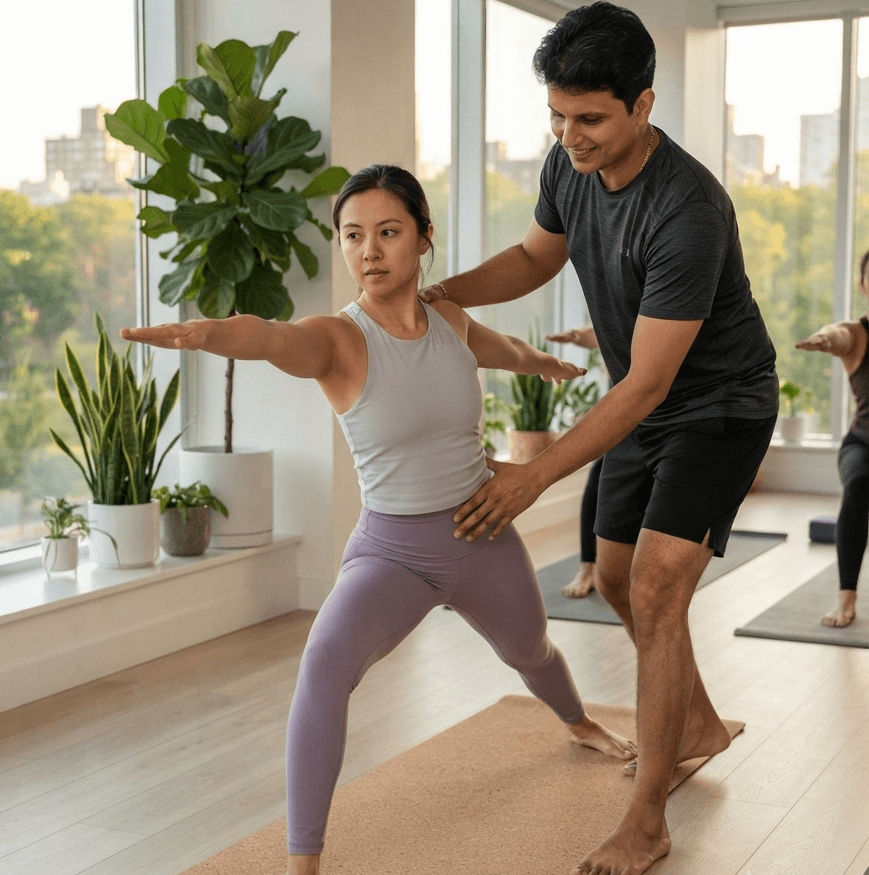
- Consider private yoga classes or home yoga sessions early on for personalised correction
- Stay consistent — Vinyasa's benefits compound with a regular yoga practice, not occasional sessions
Frequently Asked Questions
Q: Is Vinyasa Yoga good for complete beginners?
A: Yes. While it looks dynamic, sequences can be modified, slowed down, and simplified — especially under expert guidance — making it very approachable for yoga for beginners.
Q: How is Vinyasa different from Power Yoga?
A: Power Yoga is essentially a more intense, fitness-oriented offshoot of Vinyasa. Vinyasa itself keeps a stronger emphasis on breath and mindful transitions.
Q: Can I practice Vinyasa Yoga at home?
A: Absolutely. Guided home yoga sessions with a qualified instructor can replicate studio-quality instruction, correction, and pacing.
Q: How often should I practice Vinyasa Yoga as a beginner?
A: 2–3 sessions a week is a strong starting point, allowing your body to adapt to the breath-movement rhythm without overexertion.
Conclusion: Begin Where Breath Meets Movement
Vinyasa Yoga is more than a fitness trend — it is a practice that teaches you to move with intention, breathe with purpose, and stay present in your own body. Whether you are completely new to yoga or exploring different yoga styles to find your fit, Vinyasa offers a rare balance of energy and stillness.
The difference between an average flow and a transformative one often comes down to guidance. With the right instruction, Vinyasa becomes not just exercise, but a lasting mind-body practice — and that is exactly what Pure Lifestyle Yoga is built to deliver.
Enjoy writing like this?
Considered pieces on practice and wellbeing — never a marketing blast.