

8 August 2026 · 6 min read
The Spine's Four Curves and Why Yoga Must Respect Them
By Pure Lifestyle Yoga
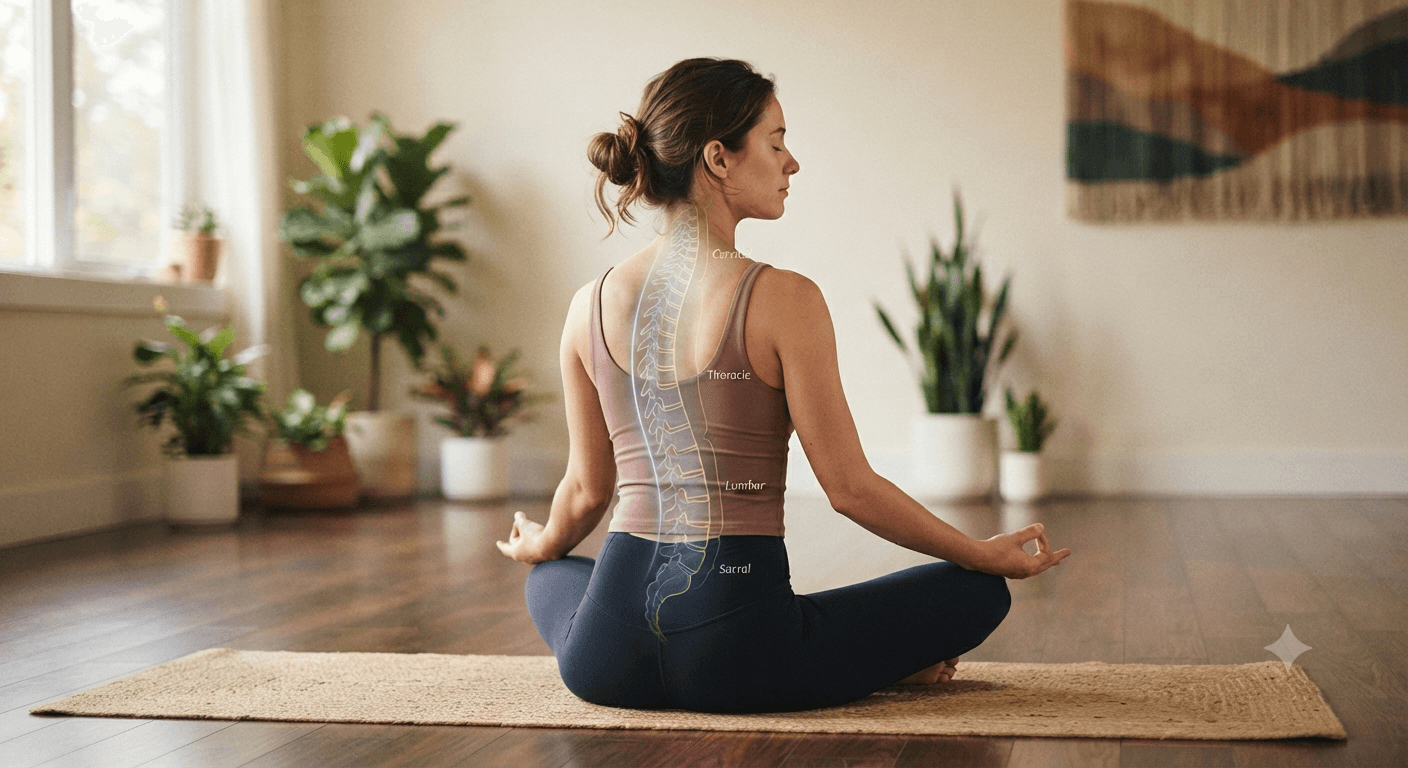
"A healthy spine isn't perfectly straight—it's perfectly balanced."
Many people assume that good posture means keeping the back completely straight. In reality, the human spine is designed with four natural curves that work together to absorb shock, support movement, and maintain balance. When these curves are respected, the body moves efficiently. When they are ignored or forced into unnatural positions, discomfort and injury can gradually develop.
Whether you practice through private yoga at home Gurugram, seek guidance from a yoga therapist at home Gurugram, participate in corporate yoga Gurugram programs, attend senior citizen yoga at Gurugram sessions, join online yoga classes India, or learn through an Indian yogis online session, understanding spinal alignment is one of the most important foundations of safe yoga practice.
Yoga should never force the spine into an idealized shape.
Instead, it should help preserve the curves that nature carefully designed.
Private Yoga at Home Gurugram: Understanding the Four Natural Curves of the Spine
The spine is made up of 33 vertebrae arranged in a gentle S-shaped pattern rather than a straight column.
Each region serves a unique purpose.
Cervical Curve
Located in the neck, this forward curve supports the head and allows smooth movement in multiple directions.
Thoracic Curve
The upper and middle back naturally curve slightly backward, helping protect the rib cage and internal organs.
Lumbar Curve
The lower back curves forward, helping distribute body weight while standing, walking, and lifting.
Sacral Curve
At the base of the spine, the sacrum provides stability by connecting the spine to the pelvis.
These four curves work together like a sophisticated suspension system, allowing the body to move efficiently while reducing stress on joints and muscles.
Why These Curves Matter
The spine's natural curves are not imperfections.
They are essential features that support healthy movement.
They help:
- Absorb impact while walking or running.
- Maintain balance.
- Protect the spinal cord.
- Distribute body weight evenly.
- Reduce unnecessary strain on muscles and ligaments.
Flattening or exaggerating these curves over time may contribute to discomfort, stiffness, and reduced mobility.
Healthy yoga practice respects the body's natural design rather than attempting to change it.
"Nature designed your spine with curves for a reason. Wellness begins by respecting that design."
Yoga Therapist at Home Gurugram: Every Spine Tells a Different Story
No two people have identical spinal alignment.
Lifestyle, occupation, previous injuries, age, and daily habits all influence posture.
Someone working long hours at a computer may develop forward head posture.
A parent carrying young children may experience increased lower back tension.
Older adults may notice reduced spinal mobility.
A qualified yoga therapist at home Gurugram begins by observing these individual patterns before recommending movements.
Instead of applying identical routines to everyone, therapeutic yoga emphasizes personalized care.
The objective isn't achieving perfect posture.
It's helping every individual move more comfortably within their own body.
Modern Lifestyle Challenges the Spine
Today's lifestyle often works against healthy spinal function.
Many people spend:
- Hours sitting at desks.
- Looking down at phones.
- Driving long distances.
- Carrying heavy bags on one shoulder.
- Sleeping in poor positions.
These habits gradually influence posture.
Over time, muscles adapt to these positions, making balanced alignment more difficult.
Yoga helps reverse many of these effects through mindful movement, mobility, strength, and breath awareness.
Consistency—not intensity—is the key.
Corporate Yoga Gurugram: Supporting Healthy Posture at Work
Modern workplaces rely heavily on computers, meetings, and prolonged sitting.
While technology has improved productivity, it has also increased postural challenges.
Many organizations now include corporate yoga Gurugram programs to support employee well-being.
Sessions often focus on:
Neck Mobility
Reducing tension created by prolonged screen use.
Thoracic Mobility
Helping counter rounded shoulders.
Core Stability
Supporting the lower back during daily activities.
Breath Awareness
Improving posture by encouraging natural spinal alignment.
Healthy posture is not created by sitting rigidly.
It develops through regular movement and muscular balance.
Good Yoga Doesn't Force Flexibility
One common misconception is that greater flexibility always means better health.
In reality, excessive flexibility without stability may increase injury risk.
Healthy yoga focuses on balance.
That means developing:
Mobility
Allowing joints to move comfortably.
Stability
Supporting movement with strength.
Control
Moving with awareness rather than momentum.
Alignment
Respecting natural spinal curves throughout every posture.
The healthiest spine is not the one that bends the furthest.
It is the one that moves safely and efficiently.
"The goal of yoga is not to reshape your spine—it is to help your spine function as it was designed."
Respecting the Spine Is Respecting the Body
The spine is more than a column of bones.
It is the body's central support system, connecting movement, balance, posture, and everyday function.
Yoga teaches us that strength and flexibility are most effective when guided by awareness.
Instead of forcing the body into extreme positions, mindful practice encourages healthy movement that supports the spine's natural design.
When the spine moves well, the entire body benefits.
"Strong posture begins with understanding—not forcing—your body's natural alignment."
Conclusion
The four natural curves of the spine are essential for balance, shock absorption, and efficient movement. Rather than trying to straighten or reshape them, yoga should help preserve and support these curves through mindful movement, strength, flexibility, and breath awareness.
Whether your wellness journey includes private yoga at home Gurugram, personalized guidance from a yoga therapist at home Gurugram, workplace wellness through corporate yoga Gurugram, gentle senior citizen yoga at Gurugram sessions, flexible online yoga classes India, or expert instruction in an Indian yogis online session, respecting your spine is one of the greatest investments you can make in your long-term health.
Because a healthy spine supports not only better posture—but also better movement, greater confidence, and a more active life.
"Protect your spine today, and it will continue to support every step you take tomorrow."
Frequently Asked Questions (FAQs)
1. What are the four natural curves of the spine?
The spine has four natural curves: the cervical (neck), thoracic (upper back), lumbar (lower back), and sacral (base of the spine). Together, they provide balance, flexibility, and shock absorption.
2. Why is spinal alignment important in yoga?
Proper spinal alignment helps reduce unnecessary strain on muscles and joints, supports healthy posture, improves movement efficiency, and lowers the risk of injury.
3. Can yoga improve posture?
Yes. A well-designed yoga practice strengthens supporting muscles, increases mobility, enhances body awareness, and encourages healthier postural habits over time.
4. Is yoga safe for people with back pain?
In many cases, yes—but it should be tailored to the individual's condition. Consulting a qualified yoga therapist or healthcare professional is recommended before beginning practice.
5. How often should I practice yoga for spinal health?
Practicing gentle yoga three to five times a week, combined with healthy daily movement habits, can help maintain spinal mobility, strength, and overall posture.
Enjoy writing like this?
Considered pieces on practice and wellbeing — never a marketing blast.