

13 May 2026 · 6 min read
The Silent Cost of Success: How Modern Work Is Quietly Damaging Your Spine, Breathing, and Energy
By Pure Lifestyle Yoga
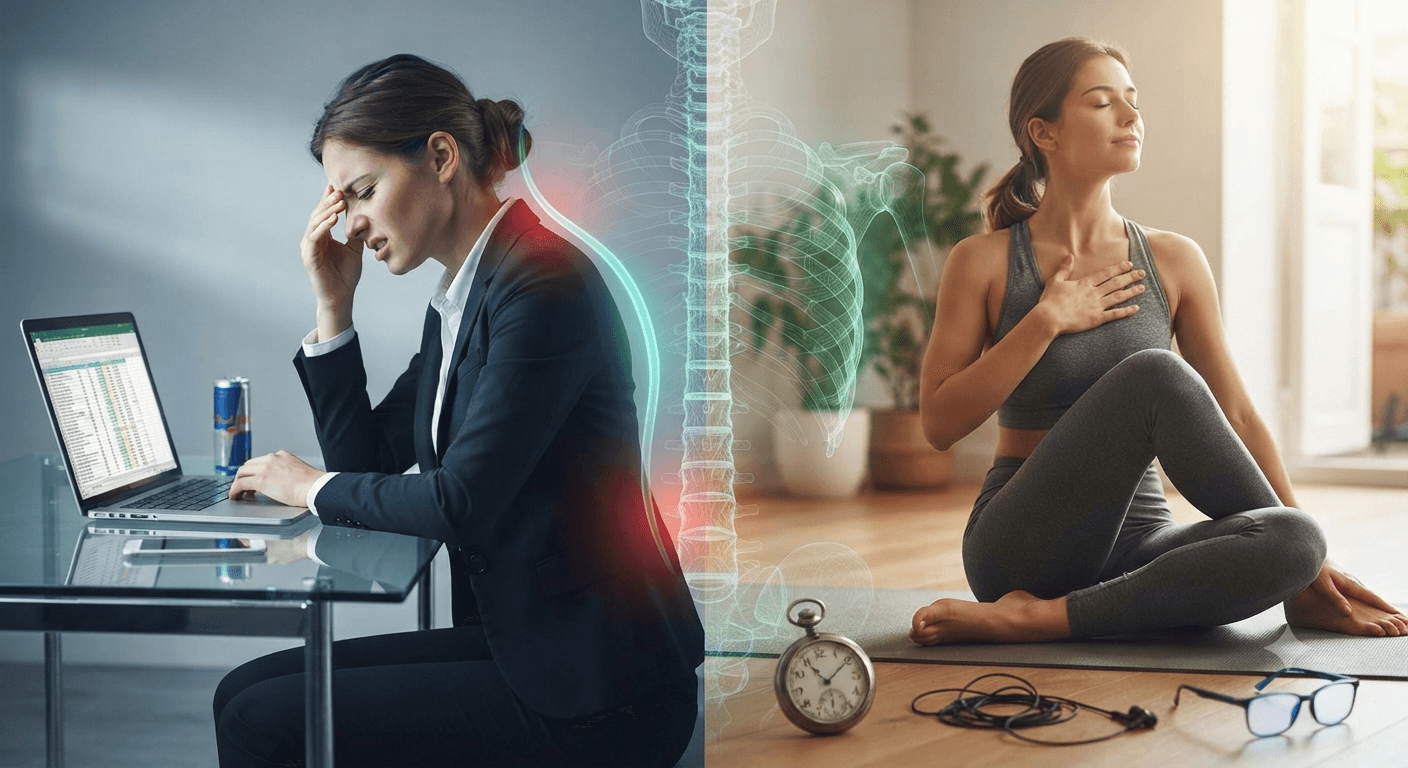
Most professionals today are not physically exhausted from movement.
They are exhausted from stillness.
Long hours at desks, back-to-back virtual meetings, constant screen exposure, performance pressure, and mentally demanding schedules have quietly changed the way the modern body functions.
What often appears externally as a successful and productive lifestyle frequently comes with hidden physiological consequences: persistent neck and shoulder tension, lower back discomfort, shallow breathing, nervous system fatigue, reduced mobility, mental exhaustion, and declining recovery capacity.
Many high-performing individuals normalize these symptoms because they gradually become part of daily life.
The problem is not simply posture.
The real issue is that the body was never designed to remain sedentary, mentally overstimulated, and physiologically alert for most of the day without sufficient recovery.
Over time, this combination affects not only the spine, but also breathing quality, energy levels, focus, emotional regulation, and long-term wellbeing.
The High-Performance Lifestyle and the Body
Modern work culture rewards productivity while quietly ignoring physical cost.
Today’s professionals often spend:
• 8–12 hours sitting daily
• extended periods looking downward at screens
• most of the day mentally stimulated
• very little time moving intentionally
• minimal time in recovery or decompression
Even premium lifestyles and luxury workspaces cannot protect the body from the effects of prolonged sitting and chronic nervous system activation.
Because the issue is not comfort.
It is prolonged immobility combined with continuous cognitive stress.
The body gradually adapts to these conditions:
• shoulders round forward
• chest mobility decreases
• spinal movement becomes restricted
• breathing becomes shallow
• neck muscles remain overactive
• hips tighten
• the nervous system remains continuously stimulated
The result is a body that appears functional externally while internally operating under constant tension.
Why Desk Life Affects More Than Just Posture
Most people assume desk-related discomfort is only muscular.
In reality, prolonged sitting affects multiple systems simultaneously.
1. Spinal Compression and Reduced Mobility
Remaining seated for extended hours places continuous pressure on the spine, particularly the neck, shoulders, and lower back.
Combined with poor posture habits and lack of movement, this gradually contributes to:
• spinal stiffness
• muscular tightness
• restricted mobility
• chronic discomfort
• reduced circulation
The body loses its natural movement variability.
Instead of moving dynamically throughout the day, it remains fixed in repetitive positions for hours at a time.
Over months and years, this creates accumulated tension patterns that the body begins to accept as normal.
2. Shallow Breathing and Reduced Energy
One of the most overlooked effects of desk-bound lifestyles is restricted breathing.
When the shoulders collapse forward and the chest remains compressed for long periods, the diaphragm cannot function efficiently.
This often leads to:
• chest-dominant breathing
• shallow inhalation
• reduced oxygen efficiency
• tension in the jaw and neck
• increased fatigue
Under stress, breathing naturally becomes shorter and faster.
The nervous system interprets these patterns as signals of pressure or urgency, reinforcing a low-grade stress response throughout the day.
Many professionals unknowingly spend years breathing in ways that continuously amplify tension and mental fatigue.
The Nervous System Is Rarely Allowed to Recover
High-pressure environments rarely allow the body to fully downshift.
Constant notifications, deadlines, multitasking, travel, digital stimulation, and performance expectations keep the nervous system in a prolonged sympathetic state — commonly referred to as “fight or flight.”
Over time, this can contribute to:
• poor sleep quality
• emotional irritability
• reduced concentration
• mental exhaustion
• low recovery capacity
• persistent fatigue despite rest
The body may remain physically still for hours while internally functioning under continuous stress activation.
That combination is deeply exhausting.
Why High Achievers Often Ignore Early Warning Signs
One of the most common patterns among ambitious individuals is adaptation.
The body slowly normalizes dysfunction.
People become accustomed to:
• tight shoulders
• lower back discomfort
• constant stiffness
• brain fog
• fatigue
• poor posture
• shallow breathing
Because these symptoms develop gradually, they are often ignored until the body begins demanding attention through burnout, pain, sleep disruption, or declining performance.
High-performing professionals are especially skilled at overriding physical signals.
But ignoring tension does not remove it.
It simply allows accumulation.
The Connection between Breathing and Mental Performance
Breathing quality directly influences focus, nervous system regulation, and emotional balance.
Under chronic stress, breathing often becomes:
• faster
• shallower
• chest-dominant
• inefficient
This creates a continuous feedback loop between stress and physiological tension.
Over time, poor breathing mechanics may contribute to:
• reduced mental clarity
• increased anxiety
• emotional reactivity
• fatigue
• lower resilience
This is one reason many professionals feel mentally exhausted despite limited physical activity.
The body rarely experiences genuine recovery.
How Yoga Helps Counter Modern Desk-Life Patterns
Yoga, when approached therapeutically, offers more than flexibility training.
It helps restore:
• spinal mobility
• breathing efficiency
• posture awareness
• nervous system balance
• muscular recovery
• mental decompression
A well-structured practice may help reduce the physical and neurological effects of prolonged sitting and chronic overstimulation.
More importantly, yoga introduces intentional movement and recovery into lifestyles dominated by stillness and cognitive overload.
This matters because chronic fatigue is not always caused by excessive physical effort.
Often, it develops because the body never fully exits stress mode.
Yogic Practices That Support Desk-Bound Professionals
1. Spinal Mobility Practices
Gentle mobility-based movements may help reduce stiffness caused by prolonged sitting.
Practices focused on:
• thoracic mobility
• spinal extension
• hip opening
• neck release
can help restore movement quality and reduce accumulated tension.
2. Breathwork for Nervous System Regulation
Slow breathing techniques help calm excessive stress activation.
Practices emphasizing:
• diaphragmatic breathing
• longer exhalation
• mindful breath awareness
may improve recovery, focus, and emotional balance.
3. Restorative Yoga and Recovery
Not every exhausted body benefits from more intensity.
For many professionals, restorative practices create greater benefit than additional stimulation.
Intentional slowing down allows the nervous system to shift from performance mode into recovery mode.
4. Consistent Movement Throughout the Day
The body responds better to frequent movement than prolonged stillness followed by short exercise sessions.
Even brief mobility breaks during work hours can support:
• circulation
• posture
• breathing
• focus
• muscular relaxation
Small interventions performed consistently often create meaningful long-term change.
Modern Wellness Is No Longer About Luxury Alone
True wellness today is increasingly defined by:
• sustainable energy
• nervous system regulation
• mental clarity
• recovery quality
• mobility
• emotional balance
Because long-term performance becomes difficult to sustain when the body remains chronically overstimulated and physiologically exhausted.
The modern professional does not only need productivity tools.
They need recovery systems.
Final Reflection
The body was designed for movement, adaptability, breath, and recovery.
Modern work culture often removes all four.
The result is a generation of highly functional individuals living inside increasingly exhausted bodies.
Desk jobs themselves are not inherently harmful.
But lifestyles built around prolonged sitting, shallow breathing, overstimulation, and minimal recovery gradually disconnect the body from balance.
Yoga cannot remove modern responsibilities or professional pressure completely.
What it can do is help the body respond differently — with greater awareness, mobility, regulation, and resilience.
And in high-performance lifestyles, that may become one of the most valuable forms of long-term wellness.
Enjoy writing like this?
Considered pieces on practice and wellbeing — never a marketing blast.