

11 August 2026 · 6 min read
Not Just Stretching—But Moving Without Pain, Without Stiffness, Without Limitation.
By Pure Lifestyle Yoga
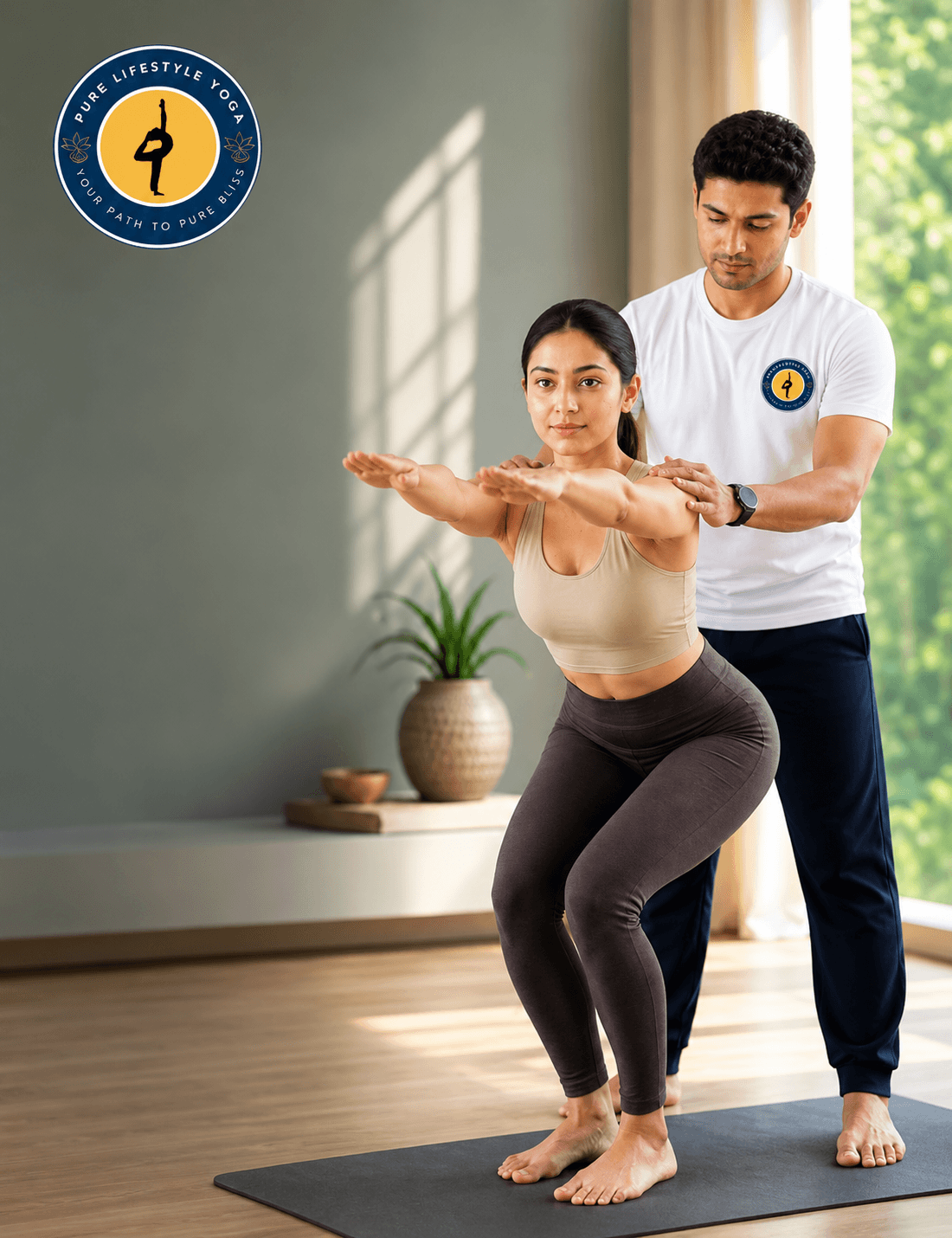
Real Problem: Why Does Your Body Feel Stiff, Restricted or Uncomfortable?
Modern life often asks the body to stay in the same position for too long. Hours at a desk, long commutes, frequent travel, screen time and everyday stress can make movement feel less comfortable.
Over time, stiffness may start to feel normal. You may notice that getting up after sitting takes more effort, certain movements feel restricted, or your body simply does not move as freely as it once did.
The answer is not always to stretch harder. Your body may need a more thoughtful approach—one that considers movement quality, mobility, breathing, alignment and your individual comfort.
Instead of asking, “How far can I stretch?” a better question is: “How can I move better, more comfortably and more consistently?”
This is where personalized private yoga can make a meaningful difference.
Useful Information: What Does “Moving Without Limitation” Really Mean?
Moving well does not mean performing advanced yoga poses or becoming extremely flexible. It means developing greater awareness of how your body moves and choosing practices that are appropriate for you.
A personalised yoga session may include:
• Gentle mobility and range-of-motion work
• Postural awareness and alignment
• Breath-coordinated movement
• Strength, balance and stability
• Flexibility without forcing
• Relaxation and mindful movement
• Body awareness and movement confidence
• A routine matched to your schedule and wellness goals
The goal is not to push your body into a pose. The goal is to create controlled, comfortable and sustainable movement that fits your current ability.
Evidence & Expertise: Why Individual Attention Matters
Everybody moves differently. Two people may both spend eight hours at a desk, yet one may feel more restriction around the hips while another notices tension around the shoulders and upper back.
Individual attention allows a yoga practice to be adapted to the person's experience, movement needs, lifestyle and goals rather than following a one-size-fits-all routine.
How Personalized Yoga Can Support Better Movement
1. Alignment Matters.
Good instruction looks beyond the final shape of a posture. How you enter, hold and leave a movement can be just as important as how it looks.
2. Breathing Matters.
Conscious breathing can help make movement more mindful and controlled. Coordinating breath with movement encourages you to stay aware rather than rushing through a routine.
3. Your Lifestyle Matters.
A practice is more useful when you can actually maintain it. Someone working long hours may need a shorter, focused routine, while someone who travels frequently may benefit from adaptable online or at-home sessions.
4. Your Experience Matters.
Beginners may need foundational movements and clear guidance. Experienced practitioners may benefit from refining control, breathing, alignment and awareness instead of simply increasing difficulty.
5. Your Wellness Goals Matter.
Whether your goal is better mobility, posture awareness, stress management, relaxation or a more consistent movement routine, the practice should be designed around the outcome you want to work toward.
Practical Tips: Start Moving Better Without Overcomplicating Your Routine
Tip 1: Identify What You Want to Improve.
Be specific. Instead of simply saying “I want to do yoga,” identify whether you want to work on mobility, posture, relaxation, movement confidence or consistency.
Tip 2: Start With Your Current Ability.
You do not need to be flexible before starting yoga. Begin with movements that feel appropriate for your current experience and comfort level.
Tip 3: Choose Consistency Over Intensity.
A realistic routine that you can maintain is often more practical than an extremely demanding plan that you do only occasionally.
Tip 4: Build Yoga Around Your Day.
If you sit for long periods, include suitable movement breaks. If you travel, consider routines that can be practised with minimal equipment.
Tip 5: Seek Individual Guidance When Needed.
One-to-one yoga can provide more focused instruction than a large group setting. For persistent pain, injury or a medical condition, appropriate healthcare guidance should come first.
Common Mistakes That Can Keep You Feeling Restricted
Mistake 1: Thinking More Stretching Is Always Better.
Stretching deeper is not automatically the same as moving better. Controlled movement and appropriate alignment matter.
Mistake 2: Copying Someone Else's Routine.
A routine that works for another person may not match your body, experience or goals. Your practice should be adapted to you.
Mistake 3: Treating Yoga as a Flexibility Competition.
Yoga can involve mobility, strength, balance, breathing, awareness and relaxation. Flexibility is only one part of a complete practice.
Mistake 4: Ignoring Breathing.
Holding your breath during a challenging movement can reduce awareness. Keep your breathing natural and conscious.
Mistake 5: Forcing a Pose.
Discomfort is not a requirement for progress. Work within an appropriate range and focus on controlled, mindful movement.
Mistake 6:
Choosing a Routine That Does Not Fit Your Lifestyle. If your practice constantly conflicts with work, family or travel, consistency becomes difficult. Design the routine around your real schedule.
FAQ:
Personalized Yoga for Better Movement Is personalised private yoga suitable for beginners?
Yes. Individual instruction can be adapted to a beginner's experience and comfort level, making it easier to learn foundational movements with guidance.
Do I need to be flexible before starting yoga?
No. Flexibility is not a prerequisite. Yoga can be used as part of a gradual process of developing mobility and body awareness.
Can yoga support posture awareness?
A personalized practice can include movement and alignment work that supports greater postural awareness. Persistent pain or diagnosed conditions should be evaluated by an appropriate healthcare professional.
Can I practice private yoga at home?
Yes. At-home private yoga can be convenient for people who prefer privacy, comfort and less travel. Can I do private yoga online? Yes. Live one-to-one online sessions can be useful for people who travel frequently or prefer practicing from home.
How often should I practise yoga?
There is no single ideal frequency for everyone. Your schedule, experience and goals should guide the routine; consistency is usually more realistic than an unsustainable schedule.
A More Personal Approach to Movement and Wellness
Not just stretching. Not just holding a pose. And not just following the same routine as everyone else.
Your body has its own movement patterns. Your workday has its own demands. Your experience, schedule and wellness goals are different too.
That is why a personalised private yoga practice can bring together movement, mobility, breathing, alignment, individual attention and lifestyle considerations in a way that feels more intentional.
The goal is not to chase the most complicated posture. The goal is to build a practice that helps you move with greater awareness, comfort and confidence—one realistic step at a time.
Soft CTA
Your body doesn't need another routine.
It may simply need the right one.
Explore a personalised yoga practice with Pure Lifestyle Yoga and take your first step toward a more balanced, comfortable and connected relationship with movement.
Enjoy writing like this?
Considered pieces on practice and wellbeing — never a marketing blast.