

1 August 2026 · 6 min read
Muscle Activation Patterns: The Hidden Work Behind a "Simple" Pose
By Pure Lifestyle Yoga
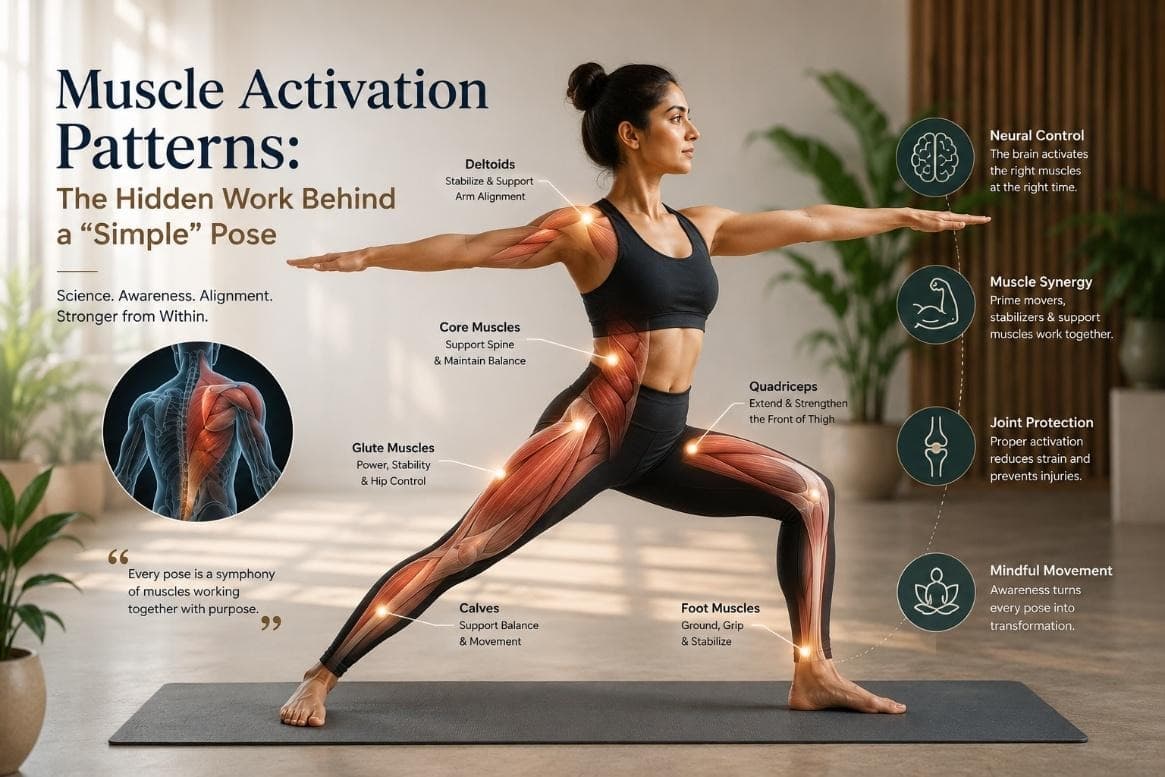
Many people believe yoga is simply about stretching, flexibility, or holding beautiful poses. In reality, every yoga posture is a carefully coordinated movement involving dozens of muscles working together. Whether you're exploring private yoga at home gurugram to improve fitness, reduce pain, or enhance athletic performance, understanding muscle activation patterns can completely change the way you approach your practice.
At Pure Lifestyle Yoga, we believe that knowing why a pose works is just as important as knowing how to perform it. Behind every seemingly simple posture lies an intelligent system of muscle coordination that strengthens the body, improves posture, protects joints, and develops lasting functional fitness.
Understanding Muscle Activation
Muscle activation refers to the process by which your brain sends signals to muscles, telling them when to contract, relax, stabilize, or support movement.
During yoga, this process is rarely limited to one muscle.
Instead, your nervous system coordinates an entire network of muscles to produce smooth, controlled movement while maintaining balance and protecting your joints.
This is why experienced yoga practitioners often appear relaxed even though many muscles are actively working beneath the surface.
Private Yoga at Home Gurugram: Why Technique Matters
Proper muscle activation begins with correct alignment.
When a pose is performed accurately, the intended muscles perform the majority of the work while surrounding muscles provide stability.
For example, in Warrior II:
- Glute muscles stabilize the hips.
- Quadriceps support the bent leg.
- Core muscles protect the spine.
- Shoulder muscles maintain arm position.
- Foot muscles improve balance.
Without proper instruction, people often compensate by overusing stronger muscles while weaker stabilizers remain inactive.
Over time, these compensations may lead to poor posture, discomfort, or injury.
What Happens Inside Your Body During a Yoga Pose?
Every yoga posture involves three major systems working together:
1. The Nervous System
Your brain constantly monitors body position and sends signals to different muscles.
2. The Muscular System
Some muscles generate movement while others stabilize joints.
3. The Skeletal System
Bones provide the framework that muscles move and support.
Rather than isolating individual muscles, yoga encourages these systems to function as one coordinated unit.
Prime Movers, Stabilizers, and Supporting Muscles
A yoga posture involves different categories of muscles.
Prime Movers
These muscles create the primary movement.
Examples:
- Quadriceps
- Hamstrings
- Gluteus maximus
- Deltoids
Stabilizers
These smaller muscles prevent unnecessary movement.
Examples include:
- Rotator cuff muscles
- Deep abdominal muscles
- Hip stabilizers
- Foot muscles
Supporting Muscles
Supporting muscles assist both movement and balance.
They ensure energy is distributed efficiently throughout the body.
A well-executed pose activates all three categories simultaneously.
Yoga Therapist at Home Gurugram: Identifying Hidden Weaknesses
Many physical discomforts are not caused by weak muscles alone but by muscles activating at the wrong time.
An experienced yoga therapist evaluates:
- Posture
- Joint mobility
- Breathing mechanics
- Balance
- Core stability
- Movement quality
Based on these observations, each session is adapted to improve coordination instead of simply increasing flexibility.
Midway through a personalized rehabilitation program, many students also benefit from online yoga classes india, helping them maintain consistency even while travelling or working remotely.
Why "Simple" Doesn't Mean Easy
Take Mountain Pose (Tadasana).
At first glance, it appears effortless.
Yet this single posture activates:
- Feet
- Calves
- Quadriceps
- Hamstrings
- Glutes
- Core
- Back muscles
- Neck stabilizers
- Shoulder stabilizers
The body constantly makes tiny adjustments to maintain balance.
These subtle muscular contractions explain why experienced practitioners feel deeply engaged even while standing still.
Simple poses often reveal weaknesses more effectively than advanced postures.
The Science of Muscle Memory
The human brain learns through repetition.
Each correctly performed yoga pose strengthens communication between the brain and muscles.
Over time:
- Balance improves.
- Coordination becomes smoother.
- Movements require less effort.
- Posture naturally improves.
- Injury risk decreases.
This process is commonly called neuromuscular adaptation.
Rather than simply building stronger muscles, yoga teaches the body to move more intelligently.
Corporate Yoga Gurugram: Correcting Modern Movement Patterns
Modern work environments encourage prolonged sitting, rounded shoulders, and limited movement.
These habits often create:
- Weak glutes
- Tight hip flexors
- Rounded shoulders
- Forward head posture
- Poor spinal stability
Corporate yoga addresses these issues by retraining muscle activation patterns.
Instead of merely stretching tight muscles, yoga helps activate neglected muscles that support healthy posture throughout the working day.
Common Muscle Activation Mistakes
Many beginners unknowingly rely on compensation patterns.
Common examples include:
Holding the Breath
This limits core stability and increases unnecessary tension.
Locking the Knees
Reduces proper muscle engagement and places excessive stress on joints.
Overusing the Lower Back
Weak core muscles often cause the lower back to compensate.
Tight Shoulders
Instead of engaging upper back muscles, many people elevate their shoulders unnecessarily.
Rushing Through Poses
Slow movement allows the nervous system to develop proper coordination.
Senior Citizen Yoga at Gurugram: Functional Strength for Everyday Life
As we age, maintaining muscle activation becomes increasingly important.
Functional strength supports everyday tasks such as:
- Walking
- Climbing stairs
- Standing from a chair
- Carrying groceries
- Improving balance
- Preventing falls
Gentle yoga encourages safe activation of stabilizing muscles without placing excessive strain on joints.
Consistent practice promotes confidence, mobility, and independence.
Building Smarter Movement Patterns
True strength is not measured by how much weight you lift.
It is measured by how efficiently your body moves.
Developing healthy muscle activation patterns offers benefits including:
- Better posture
- Reduced injury risk
- Improved athletic performance
- Greater flexibility
- Increased balance
- Enhanced coordination
- More efficient movement
- Reduced chronic pain
- Better body awareness
These improvements support both everyday activities and long-term physical health.
Frequently Asked Questions
Why do simple yoga poses feel difficult?
Because many muscles work together to maintain stability, even when movement appears minimal.
Can yoga improve muscle activation?
Yes. Regular yoga practice strengthens communication between the brain and muscles, improving coordination and balance.
Is muscle activation important for beginners?
Absolutely. Learning proper activation early helps prevent compensation patterns and reduces injury risk.
Does yoga strengthen deep stabilizing muscles?
Yes. Many yoga postures specifically engage the deep core, hip stabilizers, and spinal support muscles.
Can online yoga sessions teach proper muscle activation?
Yes. Live guidance from qualified instructors can help improve technique and body awareness, especially through Indian yogis online session programs.
Conclusion
Behind every seemingly simple yoga pose lies an extraordinary level of muscular coordination, balance, and neurological intelligence. Understanding muscle activation patterns transforms yoga from a series of stretches into a science-backed practice that builds strength, stability, and resilience from the inside out.
At Pure Lifestyle Yoga, our expert instructors focus on helping every student move with awareness and precision. Whether you're looking for private yoga at home gurugram, therapeutic rehabilitation, posture correction, or personalized wellness coaching, we create evidence-based yoga programs that help your body move better, feel stronger, and perform at its highest potential.
Enjoy writing like this?
Considered pieces on practice and wellbeing — never a marketing blast.