

8 June 2026 · 5 min read
Can Yoga Help With Cervical Pain Caused by Desk Jobs?
By Pure Lifestyle Yoga
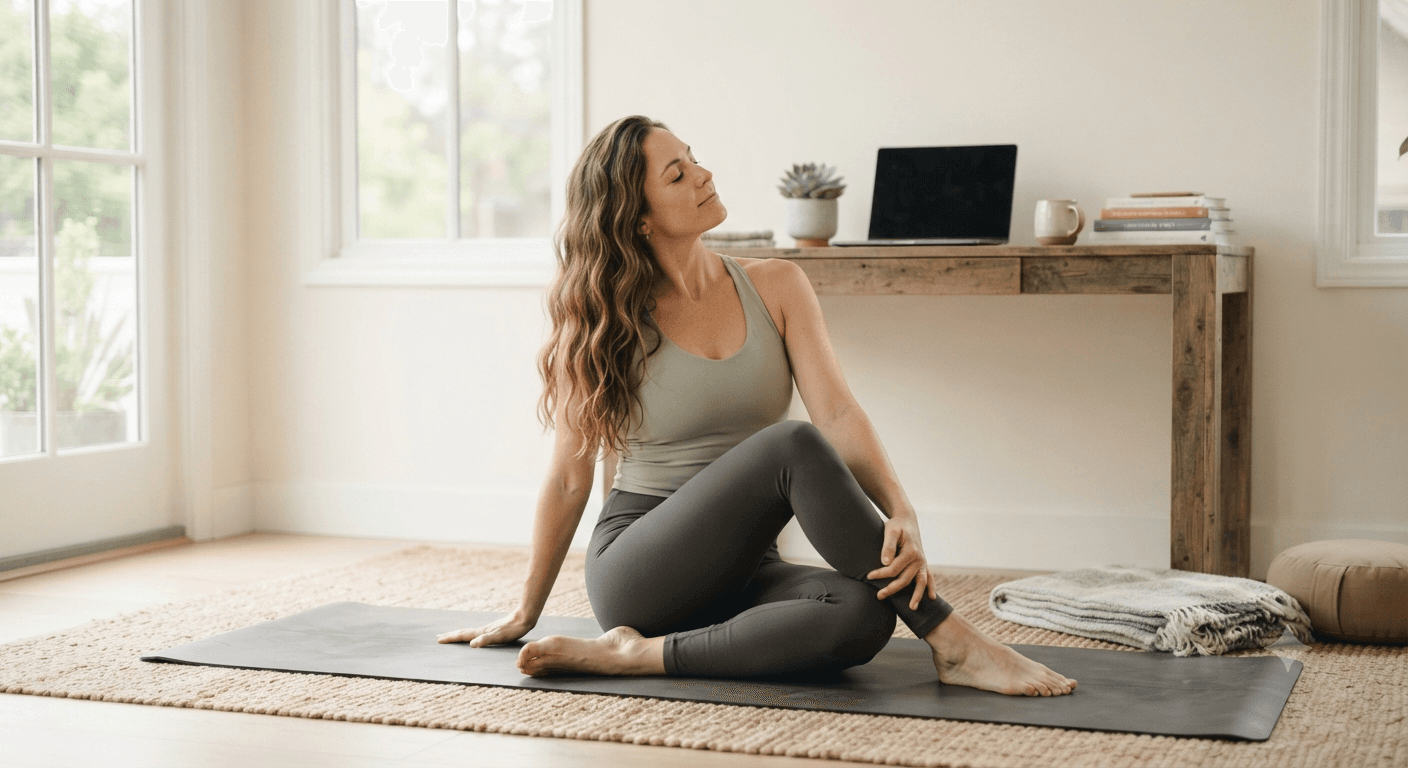
Can Yoga Help With Cervical Pain Caused by Desk Jobs?
If your neck feels stiff after a day of answering emails, attending virtual meetings, or staring at a screen, you're not alone.
Neck pain has become increasingly common in today's desk-bound lifestyle. Many people spend eight or more hours sitting in front of a computer, often without realizing how much strain they're putting on their neck and shoulders.
Over time, poor posture, limited movement, and stress can lead to cervical pain, making even simple activities like turning your head or looking down at your phone uncomfortable.
The good news? Yoga may offer a simple and effective way to ease some of that discomfort.
By combining gentle stretches, strengthening exercises, and mindful breathing, yoga can help address several factors that contribute to desk-related neck pain.
What Is Cervical Pain?
The cervical spine refers to the seven vertebrae in your neck that support your head and allow it to move in different directions.
When these structures—or the muscles surrounding them—become strained, you may experience cervical pain.
For office workers and remote professionals, the most common causes include:
- Sitting for long periods without breaks
- Looking down at laptops or phones
- Rounded shoulders and poor posture
- Weak upper back muscles
- Stress and muscle tension
Common symptoms may include:
- Neck stiffness
- Aching or soreness
- Tight shoulders
- Frequent headaches
- Difficulty turning the neck
- Pain that spreads to the upper back
Why Desk Jobs Are Tough on Your Neck
Your head weighs around 4–5 kilograms. When your posture is aligned, your neck comfortably supports that weight.
However, when you constantly lean forward toward a screen, the load on your neck increases significantly.
This position, often called "tech neck," places extra stress on the muscles, joints, and ligaments of the cervical spine.
The longer you stay in this position, the harder your neck muscles have to work.
Over time, this can lead to discomfort, stiffness, and chronic pain.
Can Yoga Actually Help?
For many people, yes.
Yoga cannot fix every underlying cause of cervical pain, but it can help address some of the most common contributors, especially those linked to posture, muscle tightness, and prolonged sitting.
Research has shown that regular yoga practice may help improve neck function, reduce pain intensity, and increase mobility in people with chronic neck discomfort.
The key is choosing gentle, appropriate movements and practicing consistently.
How Yoga Supports Neck Health
1. Improves Posture Awareness
One of yoga's biggest benefits is that it teaches body awareness.
Many people don't realize they're slouching until they experience pain.
Yoga encourages proper alignment, helping you become more conscious of how you sit, stand, and move throughout the day.
2. Releases Tight Muscles
Hours of sitting can create tension in the neck, shoulders, and upper back.
Certain yoga stretches help lengthen these muscles, reducing stiffness and improving comfort.
3. Strengthens Postural Muscles
Good posture isn't just about sitting up straight. It also requires strength.
Yoga helps strengthen the upper back, shoulders, and core muscles that support the spine and keep the neck properly aligned.
4. Reduces Stress-Related Tension
Stress often shows up physically in the body.
Many people unconsciously tighten their neck and shoulder muscles when they're overwhelmed or anxious.
Breathing exercises and mindful movement can help calm the nervous system and reduce this tension.
Yoga Poses That May Help Relieve Cervical Pain
Cat-Cow Pose
This gentle movement improves spinal mobility and helps release tension in the neck and upper back.
Child's Pose
A relaxing posture that allows the back, shoulders, and neck to release built-up tension.
Thread the Needle Pose
This pose provides a deep stretch for the shoulders and upper back, areas that often become tight from desk work.
Seated Neck Stretch
A simple stretch that targets the muscles along the sides of the neck and can even be performed during work breaks.
Bridge Pose
Bridge Pose helps strengthen the muscles that support good posture, including the glutes, core, and back.
A Quick Desk Yoga Routine
Don't have time for a full yoga session?
Try this simple five-minute routine between meetings:
- Neck stretches: 30 seconds per side
- Shoulder rolls: 10 repetitions
- Seated Cat-Cow: 10 rounds
- Seated spinal twist: 30 seconds each side
- Deep breathing: 5 slow breaths
These small movement breaks can help reduce stiffness and improve circulation throughout the day.
When Should You Be Careful?
While yoga can be beneficial, it's important not to push through pain.
If you experience:
- Severe neck pain
- Tingling or numbness in the arms
- Weakness in the hands
- Dizziness
- Pain following an injury
Consult a healthcare professional before starting a yoga practice.
Certain cervical conditions may require medical treatment or specialized rehabilitation.
Summary
If long hours at a desk are leaving your neck stiff and sore, yoga may be worth considering.
By improving posture, increasing mobility, strengthening supportive muscles, and reducing stress-related tension, yoga can help address many of the factors that contribute to cervical pain.
While it isn't a substitute for medical care when serious conditions are involved, regular yoga practice can be a valuable addition to a healthy routine for managing everyday neck discomfort.
Frequently Asked Questions (FAQs)
Is yoga good for cervical pain?
Yes. Gentle yoga may help improve mobility, posture, and muscle strength while reducing tension that contributes to neck pain.
Which yoga pose is best for neck pain?
Cat-Cow Pose, Child's Pose, Thread the Needle, and gentle neck stretches are commonly recommended.
Can yoga cure cervical spondylosis?
Yoga may help manage symptoms and improve function, but it does not cure structural conditions such as cervical spondylosis.
How often should I practice yoga for neck pain?
Practicing for 10–20 minutes most days of the week can be beneficial, especially when combined with ergonomic improvements.
Can I do yoga during office hours?
Absolutely. Short stretches and breathing exercises during work breaks can help reduce stiffness caused by prolonged sitting.
References
- National Institutes of Health (NIH)
- Harvard Health Publishing
- Journal of Pain Research
- International Journal of Yoga
- American Academy of Orthopaedic Surgeons (AAOS)
Enjoy writing like this?
Considered pieces on practice and wellbeing — never a marketing blast.