

2 August 2026 · 8 min read
Building Emotional Resilience Through Breath Awareness
By Pure Lifestyle Yoga
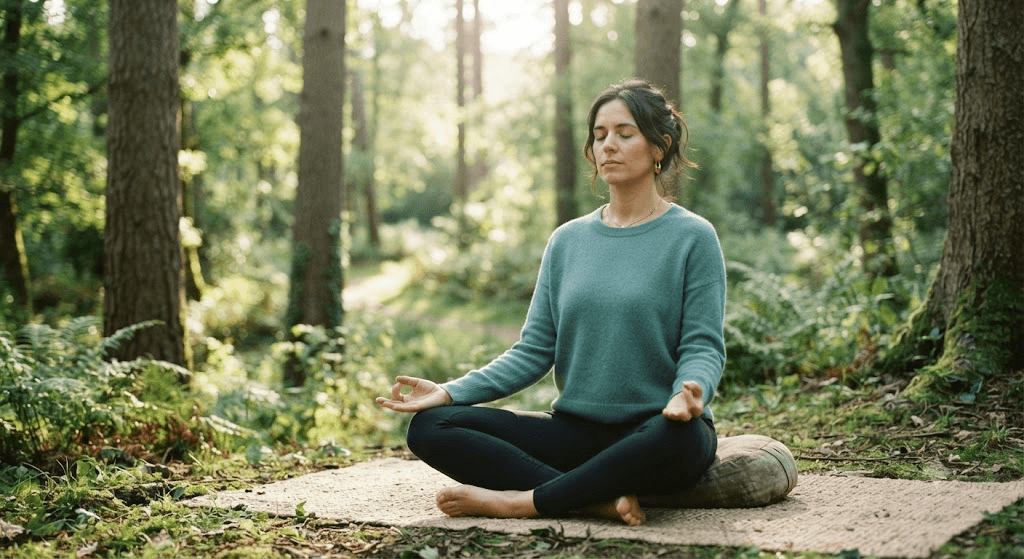
"You cannot always control life's storms, but you can learn to anchor yourself through your breath."
In today's fast-paced world, emotional resilience has become just as important as physical fitness. Every day brings new responsibilities, unexpected challenges, and moments of stress that test our patience and inner strength. While we often search for solutions outside ourselves, one of the most powerful tools for emotional balance has been with us since birth—our breath.
Across the world, people are discovering how mindful breathing can transform their mental well-being through private yoga at home Gurugram, personalized sessions with a yoga therapist at home Gurugram, workplace initiatives like corporate yoga Gurugram, therapeutic senior citizen yoga at Gurugram programs, accessible online yoga classes India, and authentic practices guided through an Indian yogis online session.
Breath awareness is not simply about inhaling and exhaling.
It is about learning how to stay calm when life feels overwhelming.
It is about responding instead of reacting.
Most importantly, it is about building emotional resilience—one conscious breath at a time.
Private Yoga at Home Gurugram: Creating a Personal Space for Emotional Healing
Our surroundings often influence our emotional state.
Noise, traffic, deadlines, notifications, and endless responsibilities can leave the mind feeling constantly occupied.
Practicing in the comfort of your own home creates a peaceful environment where you can disconnect from external pressure and reconnect with yourself.
A personalized private yoga at home Gurugram session allows your instructor to understand your emotional and physical needs while designing practices that encourage relaxation rather than performance.
Instead of focusing on perfect postures, the emphasis shifts toward:
- Gentle breathing techniques
- Mindful movement
- Stress reduction
- Body awareness
- Emotional balance
When practiced consistently, this dedicated space becomes a refuge from daily stress.
Why the Breath Reflects Your Emotional State
Have you ever noticed what happens to your breathing when you feel anxious?
It becomes short.
Rapid.
Uneven.
Now think about how you breathe when you're relaxed.
Your breath naturally slows.
It becomes deeper.
More rhythmic.
This isn't a coincidence.
The breath and nervous system constantly communicate with one another.
Every emotional experience leaves a subtle imprint on the way we breathe.
Yoga teaches us that if emotions can influence breathing, then conscious breathing can also influence emotions.
Instead of trying to suppress difficult feelings, we learn to regulate our response by calming the breath first.
The mind gradually follows.
"When your breath becomes steady, your thoughts often become gentler too."
Yoga Therapist at Home Gurugram: Understanding Emotional Patterns Through Breath
Every individual experiences stress differently.
Some people overthink.
Others become restless.
Some withdraw completely.
An experienced yoga therapist at home Gurugram observes not only posture but also breathing habits, movement patterns, and emotional responses.
Rather than offering one solution for everyone, therapeutic yoga recognizes that emotional resilience develops through personalized guidance.
Breathing exercises may help students:
Reduce Mental Overload
Slower breathing interrupts cycles of excessive thinking.
Improve Emotional Awareness
Instead of ignoring emotions, practitioners learn to observe them without judgment.
Build Patience
Mindful breathing naturally slows impulsive reactions.
Increase Self-Confidence
Calm breathing encourages a greater sense of control during stressful situations.
Resilience doesn't mean never feeling emotional.
It means learning to remain balanced even when emotions arise.
The Science Behind Breath Awareness
Modern neuroscience continues to explore what yogic traditions have taught for centuries.
Controlled breathing has been linked with several measurable benefits, including:
Reduced Stress Hormones
Slow breathing encourages the body to move away from a constant "fight or flight" response.
Improved Focus
A calm nervous system supports clearer thinking and better concentration.
Better Sleep Quality
Relaxation techniques prepare the mind for restorative sleep.
Enhanced Emotional Regulation
Mindful breathing creates space between emotional triggers and our reactions.
Although research continues to evolve, studies increasingly support breath awareness as an effective complement to overall mental wellness.
Corporate Yoga Gurugram: Emotional Intelligence in the Workplace
Today's professionals face constant decision-making, tight deadlines, digital distractions, and high expectations.
Technical skills alone are no longer enough.
Success also depends on emotional intelligence and resilience.
This is why many organizations now invest in corporate yoga Gurugram programs that include breathing techniques alongside physical movement.
Employees who regularly practice breath awareness often experience:
Greater Mental Clarity
Clear thinking supports better decision-making.
Improved Communication
A calmer mind responds with patience instead of frustration.
Better Stress Management
Breathing techniques reduce the physical effects of workplace pressure.
Stronger Leadership
Emotionally balanced leaders inspire trust and confidence.
A healthy organization begins with emotionally healthy individuals.
Resilience Is Built Before Life Becomes Difficult
Many people wait until they feel overwhelmed before practicing stress management.
Yoga teaches the opposite.
Emotional resilience is built during ordinary moments.
Every mindful breath strengthens the nervous system.
Every meditation session develops awareness.
Every quiet pause prepares us for future challenges.
Like physical fitness, emotional resilience grows through regular practice—not emergency responses.
"The strongest mind is not the one that never struggles, but the one that remembers to breathe."
How Conscious Breathing Improves Everyday Relationships
Emotional resilience doesn't only influence how we feel.
It also affects how we communicate.
Think about the moments when misunderstandings happen.
We interrupt.
We react immediately.
We raise our voice.
We assume instead of listening.
Most of these reactions occur because our nervous system is already under stress.
Mindful breathing creates a pause between emotion and response.
That pause changes everything.
Before responding during a difficult conversation, try to:
Take One Slow Breath
Allow your inhale and exhale to become smooth and comfortable.
Relax Your Body
Notice unnecessary tension in your shoulders, jaw, or neck.
Listen Without Preparing Your Response
Breath awareness encourages genuine presence.
Respond Thoughtfully
Calm breathing helps replace impulsive reactions with meaningful communication.
Strong relationships are often built not through perfect words but through calm presence.
"A peaceful breath creates space for a peaceful conversation."
Senior Citizen Yoga at Gurugram: Emotional Well-Being at Every Stage of Life
Growing older brings wisdom, but it also introduces new emotional experiences.
Retirement.
Changing family roles.
Health concerns.
Loss of loved ones.
These transitions require emotional resilience just as much as physical strength.
Programs focused on senior citizen yoga at Gurugram emphasize gentle breathing, mindful movement, relaxation, and meditation that support emotional wellness without placing unnecessary strain on the body.
Benefits may include:
Greater Emotional Stability
Breath awareness helps reduce unnecessary worry and anxiety.
Better Mental Focus
Meditation encourages clarity and concentration.
Improved Sleep
Relaxation practices help quiet the mind before bedtime.
Renewed Sense of Purpose
Yoga reminds us that personal growth continues throughout every stage of life.
Age does not limit inner development.
Awareness continues to deepen with practice.
Simple Daily Rituals That Build Emotional Resilience
Resilience is not developed during life's biggest challenges.
It grows quietly through consistent daily habits.
Consider introducing these practices into your routine:
Begin the Morning with Five Deep Breaths
Before checking your phone, spend one minute breathing consciously.
Create Small Pause Moments
Between meetings or household tasks, take three slow breaths.
Practice Gratitude While Breathing
Each evening, reflect on one positive experience from the day.
Step Away from Screens
Spend a few minutes each day without digital distractions.
End the Day with Relaxation
Allow slow breathing to prepare both body and mind for restful sleep.
These small habits require little time but create lasting emotional strength.
True Resilience Is Calm, Not Control
Many people believe resilience means suppressing emotions or appearing strong at all times.
Yoga teaches something different.
Real resilience allows us to experience every emotion without becoming overwhelmed by it.
We still feel sadness.
We still experience frustration.
We still face uncertainty.
But we respond with greater awareness rather than automatic reaction.
Breath awareness reminds us that every emotional experience is temporary.
Like every inhale and exhale, emotions rise, change, and eventually pass.
The calmer we breathe, the more clearly we see.
"Resilience is not the absence of emotion—it is the wisdom to breathe through it."
Conclusion
Emotional resilience is one of the most valuable life skills we can develop.
It influences our health, relationships, decisions, and overall quality of life.
Breath awareness offers a simple yet profound way to strengthen this resilience by calming the nervous system, improving emotional regulation, and helping us remain present during life's uncertainties.
Whether your wellness journey begins through private yoga at home Gurugram, personalized guidance from a yoga therapist at home Gurugram, workplace wellness with corporate yoga Gurugram, supportive senior citizen yoga at Gurugram sessions, flexible online yoga classes India, or the timeless teachings shared through an Indian yogis online session, remember that every calm breath is an opportunity to build greater emotional strength.
Your breath is always with you.
Learn to trust it, and it will become one of your greatest sources of resilience.
"The way you breathe today shapes the way you face tomorrow."
Frequently Asked Questions (FAQs)
1. What is emotional resilience?
Emotional resilience is the ability to adapt to stress, recover from setbacks, and maintain emotional balance during challenging situations.
2. How does breath awareness improve emotional resilience?
Conscious breathing helps regulate the nervous system, reduce stress, improve focus, and create space to respond thoughtfully instead of reacting impulsively.
3. Can beginners practice breath awareness?
Yes. Breath awareness is simple, safe, and suitable for people of all ages and fitness levels.
4. How long should I practice breathing exercises daily?
Practicing for 10–20 minutes a day can provide noticeable improvements in stress management, emotional balance, and mental clarity over time.
5. Is breath awareness supported by science?
Yes. Research suggests that slow, mindful breathing can support relaxation, reduce stress, improve emotional regulation, and enhance overall well-being.
6. Why choose Pure Lifestyle Yoga?
Pure Lifestyle Yoga offers personalized private yoga, therapeutic sessions, corporate wellness programs, senior-focused yoga, and online classes that combine mindful breathing, movement, and meditation to help individuals build lasting physical, mental, and emotional well-being.
Enjoy writing like this?
Considered pieces on practice and wellbeing — never a marketing blast.