

18 August 2026 · 7 min read
3 Trimesters, 3 Yoga Approaches: A Complete Guide to Prenatal Yoga
By pure Lifestyle Yoga
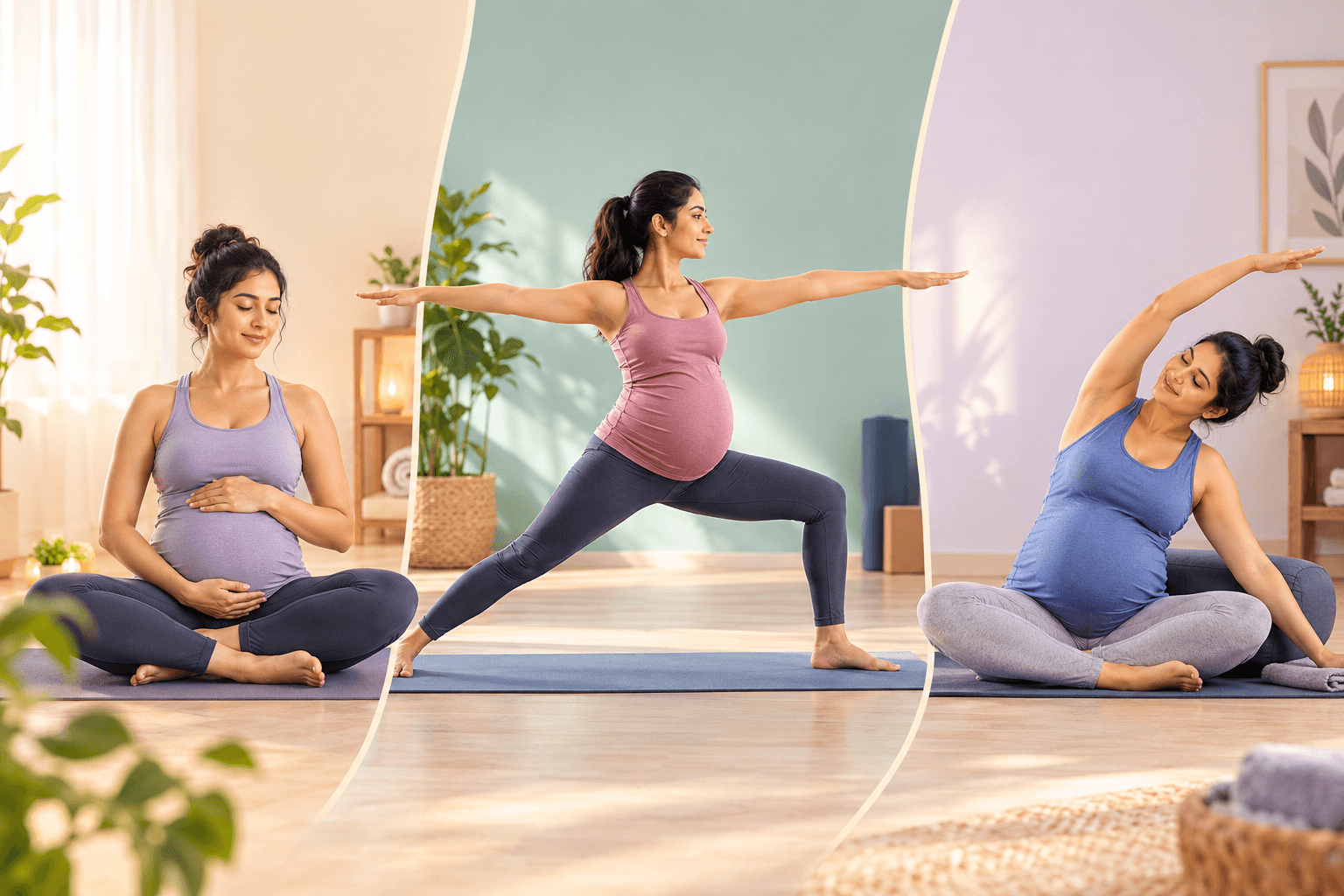
3 Trimesters, 3 Yoga Approaches: A Complete Guide to Prenatal Yoga
Introduction
Pregnancy is a beautiful journey of constant physical, emotional, and hormonal changes. As the baby grows, your body changes with it—and your yoga practice should change too.
Prenatal yoga is a gentle approach to movement, breathing, relaxation, and mindfulness that can be adapted according to the stage of pregnancy. Instead of following the same routine throughout the nine months, it is helpful to understand what your body may need during each trimester.
From gentle stretching and breathing in the first trimester to supported movement and relaxation in the third trimester, each stage calls for a different approach.
In this guide, we explore three trimesters and three yoga approaches designed around the changing needs of pregnancy.
Important: Every pregnancy is different. Before beginning or continuing yoga during pregnancy, consult your doctor or qualified prenatal yoga instructor, especially if you have a high-risk pregnancy or any medical concerns.
Understanding the Three Trimesters
Pregnancy is generally divided into three stages:
- First Trimester: Weeks 1–13
- Second Trimester: Weeks 14–27
- Third Trimester: Week 28 until birth
Your energy levels, balance, flexibility, comfort, and physical needs can change significantly from one trimester to another. Therefore, your yoga practice should focus on comfort, awareness, breathing, and safe movement rather than intensity or performance.
First Trimester: Gentle Movement & Mindful Breathing
The first trimester can bring many changes, including tiredness, nausea, emotional fluctuations, and increased sensitivity to physical activity.
During this stage, the focus should be on gentle movement and relaxation rather than pushing your body.
Suitable Yoga Approach
A gentle prenatal practice may include:
- Comfortable seated stretches
- Gentle neck and shoulder movements
- Cat-Cow movements
- Modified standing poses
- Gentle hip mobility
- Relaxation and breathing exercises
The goal is not to achieve deeper stretches or difficult poses. Instead, focus on maintaining body awareness and moving comfortably.
Why Breathing Matters
Mindful breathing can help create a sense of calm and encourage you to connect with your changing body. Slow, comfortable breathing can become an important part of your prenatal yoga routine.
Listen to your body. If a particular movement makes you uncomfortable, stop and choose a gentler alternative.
Second Trimester: Strength, Stability & Balance
For many women, the second trimester can bring changes in energy levels. At the same time, the growing belly begins to affect posture, balance, and the way you move.
This is the stage where your yoga practice can focus more on strength, stability, mobility, and balance, while still remaining gentle and pregnancy-appropriate.
Suitable Yoga Approach
A prenatal yoga session during the second trimester may include:
- Modified Warrior poses
- Supported squats
- Gentle standing sequences
- Hip-opening movements
- Side stretches
- Pelvic-floor awareness
- Gentle back and shoulder movements
- Breathing and relaxation
Using a wall, chair, yoga blocks, or other supports can make certain movements more comfortable and stable.
Focus on Stability
As your centre of gravity changes, balance can become different from what you're used to. Supported yoga poses can help you feel more stable while reducing the need to challenge your balance unnecessarily.
Remember, pregnancy is not the time to compete with your previous flexibility or yoga practice. Comfort and stability come first.
Third Trimester: Support, Mobility & Relaxation
During the third trimester, the growing baby can make everyday movements more physically demanding. You may experience increased pressure, tiredness, changes in balance, and difficulty finding comfortable positions.
At this stage, prenatal yoga should become increasingly focused on support, mobility, breathing, and relaxation.
Suitable Yoga Approach
Gentle practices may include:
- Supported standing poses
- Gentle hip movements
- Side stretches
- Cat-Cow variations
- Pelvic mobility
- Comfortable seated movements
- Supported relaxation
- Mindful breathing
Props can be particularly useful during this stage. A bolster, blocks, pillows, chair, or wall can provide additional support.
Preparing the Body and Mind
The third trimester can also be a valuable time to develop mindfulness and relaxation skills. Gentle breathing and relaxation practices may help you become more aware of your body and prepare mentally for the upcoming transition into motherhood.
The emphasis should be on being comfortable rather than achieving a particular pose.
The Benefits of Prenatal Yoga
When appropriately adapted and medically suitable, prenatal yoga can be a valuable part of a healthy pregnancy routine.
Potential benefits may include:
1. Gentle Physical Activity
Pregnancy can change the way your body moves. Gentle yoga provides an opportunity to maintain mobility while adapting movements to your changing body.
2. Improved Body Awareness
Yoga encourages you to pay attention to posture, breathing, balance, and physical sensations.
3. Relaxation and Stress Management
Breathing exercises, mindfulness, and relaxation can help create moments of calm during a physically and emotionally changing period.
4. Better Mobility
Gentle movement can help maintain comfortable movement around areas such as the hips, shoulders, and spine.
5. Connection With Your Changing Body
Pregnancy can sometimes make you feel disconnected from your body. A mindful yoga practice can provide an opportunity to slow down and appreciate the changes taking place.
Yoga Poses to Approach With Caution During Pregnancy
Not every yoga pose is appropriate during pregnancy, and modifications may be necessary as pregnancy progresses.
Depending on your individual circumstances, you may need to avoid or modify:
- Deep twists that compress the abdomen
- Poses that put significant pressure on the belly
- Advanced inversions
- Movements that create discomfort
- Activities with a significant fall risk
- Overly intense or exhausting sequences
- Poses that require lying flat on the back for extended periods later in pregnancy
The appropriate modifications depend on the individual and the stage of pregnancy. A qualified prenatal yoga instructor can help adapt your practice safely.
Listen to Your Body
One of the most important principles of prenatal yoga is simple:
Your body is your guide.
Pregnancy is not the time to force flexibility, hold challenging poses for longer, or compare your practice with someone else's.
If you feel pain, dizziness, unusual shortness of breath, bleeding, fluid leakage, contractions, or any other concerning symptoms, stop exercising and seek appropriate medical advice.
Your yoga practice should leave you feeling comfortable, supported, and calm—not exhausted.
Creating a Safe Prenatal Yoga Routine
A simple prenatal yoga routine can include:
1. Start with breathing
Take a few comfortable breaths and bring your attention to your body.
2. Warm up gently
Use simple neck, shoulder, spine, and hip movements.
3. Add pregnancy-appropriate movement
Choose gentle standing, seated, or supported poses suitable for your trimester.
4. Use props when needed
Blocks, chairs, bolsters, cushions, and walls can provide additional support.
5. Finish with relaxation
End your practice with comfortable breathing and a few minutes of mindful relaxation.
Most importantly, don't feel that you need to practice for a long time. Consistency and comfort are more important than intensity.
3 Trimesters, 3 Different Needs
Pregnancy doesn't look the same from beginning to end—and your yoga practice doesn't have to either.
TrimesterMain FocusYoga ApproachFirst TrimesterAwareness & relaxationGentle movement + breathingSecond TrimesterStrength & stabilitySupported standing + mobilityThird TrimesterComfort & relaxationSupported movement + mindful breathing
The key is to adapt rather than push.
Final Thoughts
Prenatal yoga is not about maintaining your pre-pregnancy yoga routine. It is about creating a practice that respects your body's changing needs.
From the early weeks of pregnancy to the final trimester, your practice can evolve—from gentle movement and breathing to supported mobility and relaxation.
Three trimesters. Three approaches. One goal: helping you move mindfully through your pregnancy.
At Pure Lifestyle Yoga, we believe yoga is not about forcing the body into a pose. It is about developing a deeper connection between the body, breath, and mind.
Move gently. Breathe mindfully. Embrace every stage of your journey.
Frequently Asked Questions
Is yoga safe during pregnancy?
For many healthy pregnancies, appropriately modified yoga can be a suitable form of physical activity. However, every pregnancy is different. Consult your healthcare provider before starting or continuing a yoga practice during pregnancy.
Which yoga is best during pregnancy?
Prenatal yoga is specifically designed or modified to accommodate the physical changes of pregnancy. A qualified prenatal yoga instructor can help you choose appropriate movements for your trimester.
Can I do yoga in all three trimesters?
Yoga may be practiced throughout pregnancy when medically appropriate, but the exercises, intensity, positions, and use of props should be adapted as the pregnancy progresses.
Can beginners do prenatal yoga?
Yes, beginners can often participate in prenatal yoga when medically appropriate. Starting with gentle, pregnancy-specific practices under qualified guidance is recommended.
Should I practice yoga if I feel uncomfortable?
No. Yoga during pregnancy should not cause pain or significant discomfort. Stop any movement that feels wrong and consult your healthcare provider if you experience concerning symptoms.
Enjoy writing like this?
Considered pieces on practice and wellbeing — never a marketing blast.