

18 June 2026 · 7 min read
The Science of Aging Well: Where Yoga Fits In
By Pure Lifestyle Yoga
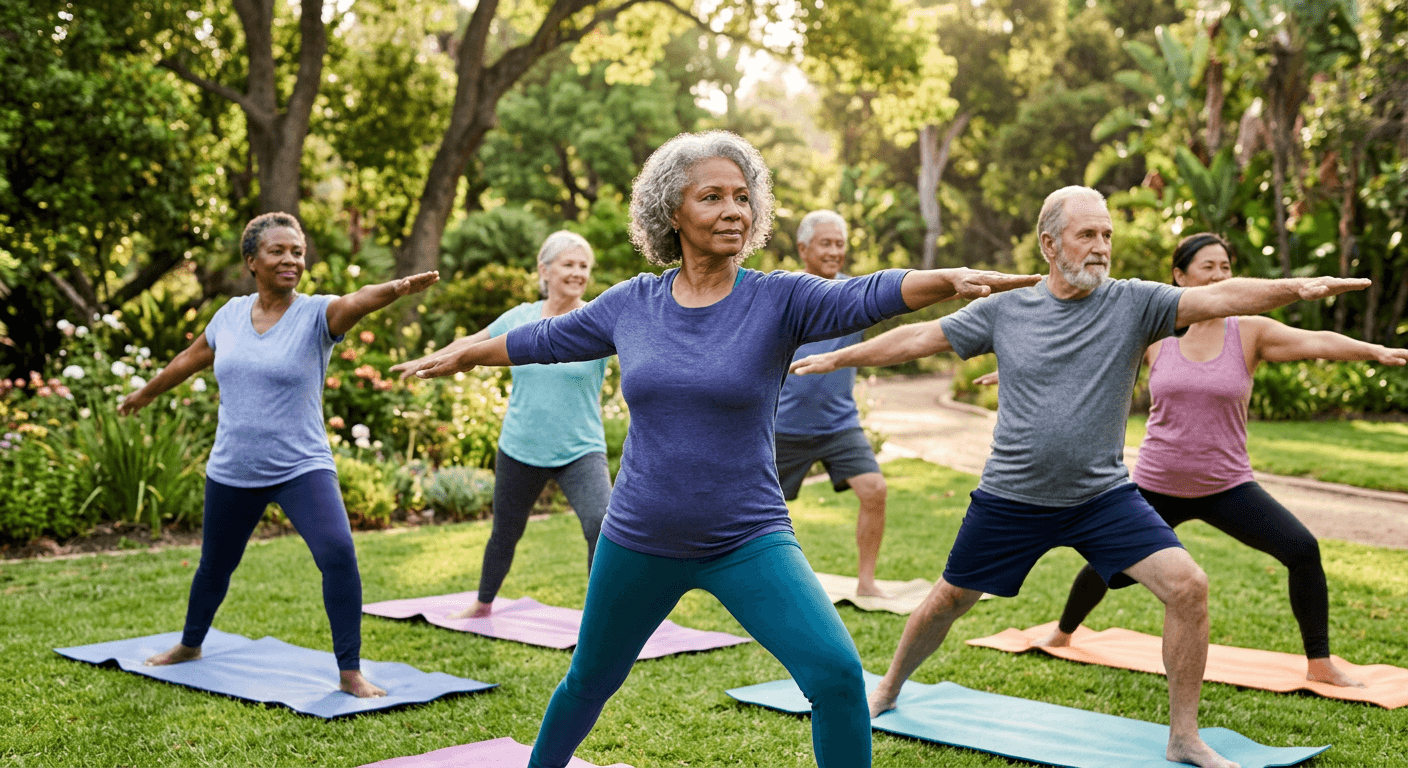
The Science of Aging Well: Where Yoga Fits In
Discover the science behind healthy aging and how yoga supports mobility, balance, stress management, and overall well-being. Learn why yoga is becoming a key practice for longevity and quality of life.
Introduction
For a long time, aging was viewed as something that simply happened to us.
You got older, slowed down, developed aches and pains, and gradually accepted that certain limitations were part of life.
Today, science tells a different story.
While aging is inevitable, how we age is influenced by many factors within our control. Our daily habits, movement patterns, stress levels, sleep quality, and overall lifestyle play a significant role in shaping our health as the years go by.
This has led to a growing interest in the concept of healthy aging—not just living longer, but maintaining the physical, mental, and emotional capacity to enjoy life.
Among the many wellness practices associated with longevity, yoga continues to stand out.
Not because it promises to stop aging, but because it supports many of the systems that help us age well.
From mobility and balance to stress resilience and recovery, yoga offers a practical approach to caring for the body and mind at every stage of life.
What Does It Really Mean to Age Well?
When people hear the word longevity, they often think about lifespan.
But healthy aging is about much more than adding years to your life.
It's about maintaining your ability to live independently, stay active, and continue doing the things that matter most to you.
For many people, aging well means:
- Moving comfortably without constant stiffness or pain
- Having enough energy to enjoy daily life
- Staying mentally sharp and engaged
- Managing stress effectively
- Maintaining strong relationships and emotional well-being
- Remaining independent for as long as possible
In simple terms, healthy aging is about preserving quality of life.
And that's where lifestyle choices become incredibly important.
What Science Tells Us About Aging
Aging affects every system in the body.
Over time, we naturally experience changes such as:
- Reduced muscle mass
- Decreased flexibility
- Lower bone density
- Changes in balance and coordination
- Slower recovery
- Increased sensitivity to stress
While these changes are normal, they don't happen at the same rate for everyone.
Research consistently shows that people who stay physically active, manage stress, prioritize recovery, and maintain healthy habits tend to experience better outcomes as they age.
In other words, growing older doesn't automatically mean becoming less capable.
The way we care for our bodies matters.
Why Movement Becomes More Important With Age
One of the most common mistakes people make is becoming less active as they get older.
Unfortunately, this often creates a cycle.
Less movement can lead to:
- Increased stiffness
- Reduced strength
- Poorer balance
- Loss of mobility
- Lower energy levels
These changes can make physical activity feel more difficult, leading to even less movement.
Yoga offers a gentle yet effective way to break that cycle.
Rather than focusing on intensity, yoga encourages consistent movement, body awareness, and mindful exercise that can be adapted to different ages and abilities.
Where Yoga Fits Into Healthy Aging
1. Yoga Helps Maintain Mobility
Mobility is one of the strongest predictors of independence as we age.
Simple movements like bending down, reaching overhead, or getting out of a chair require healthy joints and functional movement patterns.
Yoga helps keep the body moving through a comfortable range of motion by encouraging flexibility and joint mobility.
Regular practice can support movement in key areas such as:
- Hips
- Spine
- Shoulders
- Ankles
- Hamstrings
Maintaining mobility today can make everyday life easier years from now.
2. Yoga Supports Balance and Stability
Balance naturally changes with age.
Without regular practice, coordination and stability can gradually decline.
Many yoga poses require you to engage stabilizing muscles and develop greater body awareness.
Over time, this can help improve:
- Coordination
- Postural control
- Stability
- Confidence in movement
Good balance isn't just about preventing falls.
It's about maintaining the confidence to stay active and engaged in everyday life.
3. Yoga Encourages Functional Strength
Strength plays a major role in healthy aging.
Daily activities such as carrying groceries, climbing stairs, lifting objects, or standing up from a chair all require muscular strength.
Yoga builds strength differently from traditional gym workouts.
Using your own body weight, yoga develops functional strength that supports real-life movement.
Areas commonly strengthened through yoga include:
- Core muscles
- Legs
- Back
- Shoulders
- Postural muscles
This type of strength helps support independence as you age.
4. Yoga Supports Stress Resilience
Healthy aging isn't only about physical health.
Chronic stress affects nearly every system in the body.
Over time, unmanaged stress may contribute to:
- Poor sleep
- Fatigue
- Reduced recovery
- Mood changes
- Lower overall well-being
Yoga combines movement with mindful breathing, helping activate the body's relaxation response.
Many practitioners report feeling calmer, more centered, and better able to manage daily challenges after regular practice.
In today's fast-paced world, this may be one of yoga's most valuable benefits.
5. Yoga Encourages Better Recovery
One of the most overlooked aspects of healthy aging is recovery.
The body repairs and restores itself during periods of rest.
However, modern lifestyles often leave little room for genuine recovery.
Yoga encourages slowing down, paying attention to the body's needs, and creating space for rest and restoration.
This balance between movement and recovery becomes increasingly important over time.
Small Daily Practices That Can Support Healthy Aging
The good news is that you don't need an advanced yoga practice to experience benefits.
Simple habits performed consistently can make a meaningful difference.
Start the Day With Gentle Movement
Spend 5–10 minutes moving your:
- Neck
- Shoulders
- Spine
- Hips
This can help reduce stiffness and improve circulation.
Prioritize Breath Awareness
Take a few moments during the day to focus on slow, steady breathing.
This simple practice can help reduce stress and improve focus.
Break Up Long Periods of Sitting
If you work at a desk, take regular movement breaks to stretch and reset your posture.
Include Balance-Focused Poses
Simple standing poses can help maintain coordination and stability over time.
Wind Down With Gentle Evening Yoga
A short evening routine can help release tension and prepare the body for restful sleep.
The Future of Healthy Aging
Perhaps the biggest shift happening in wellness today is the realization that longevity isn't just about adding years to life.
It's about maintaining vitality, independence, and enjoyment throughout those years.
People are increasingly investing in habits that support long-term health rather than chasing quick fixes.
Yoga fits naturally into this approach.
It's sustainable.
It's adaptable.
And it supports many of the physical and mental qualities associated with healthy aging.
Summary
The science of aging well continues to highlight the importance of movement, recovery, stress management, and overall lifestyle habits.
Yoga brings all of these elements together in one practice.
By supporting mobility, balance, strength, body awareness, and emotional well-being, yoga offers a practical way to care for your health at every stage of life.
You don't need to practice perfectly or spend hours on a mat.
What matters most is consistency.
Because when it comes to aging well, the small things you do every day often have the greatest impact over time.
Frequently Asked Questions (FAQs)
Can yoga support healthy aging?
Yes. Yoga may help maintain mobility, balance, flexibility, strength, and stress resilience, all of which contribute to healthy aging.
Is yoga effective for longevity?
While no practice can stop aging, yoga supports many lifestyle factors associated with long-term health and quality of life.
How often should older adults practice yoga?
Even short sessions several times a week can provide benefits when practiced consistently.
What type of yoga is best for healthy aging?
Gentle styles such as Hatha Yoga, Restorative Yoga, and therapeutic yoga are often well-suited for supporting long-term well-being.
Is it too late to start yoga later in life?
Not at all. Yoga can be adapted for different ages, fitness levels, and physical abilities, making it accessible to many people.
References
- National Institutes of Health (NIH)
- Harvard Health Publishing
- International Journal of Yoga
- Frontiers in Aging Neuroscience
- Journal of Alternative and Complementary Medicine
- American College of Sports Medicine
Enjoy writing like this?
Considered pieces on practice and wellbeing — never a marketing blast.