

20 June 2026 · 4 min read
The Human Reset – Day 1: In a World That Knows Everything, Why Do We Feel So Lost?
By Pure Lifestyle Yoga
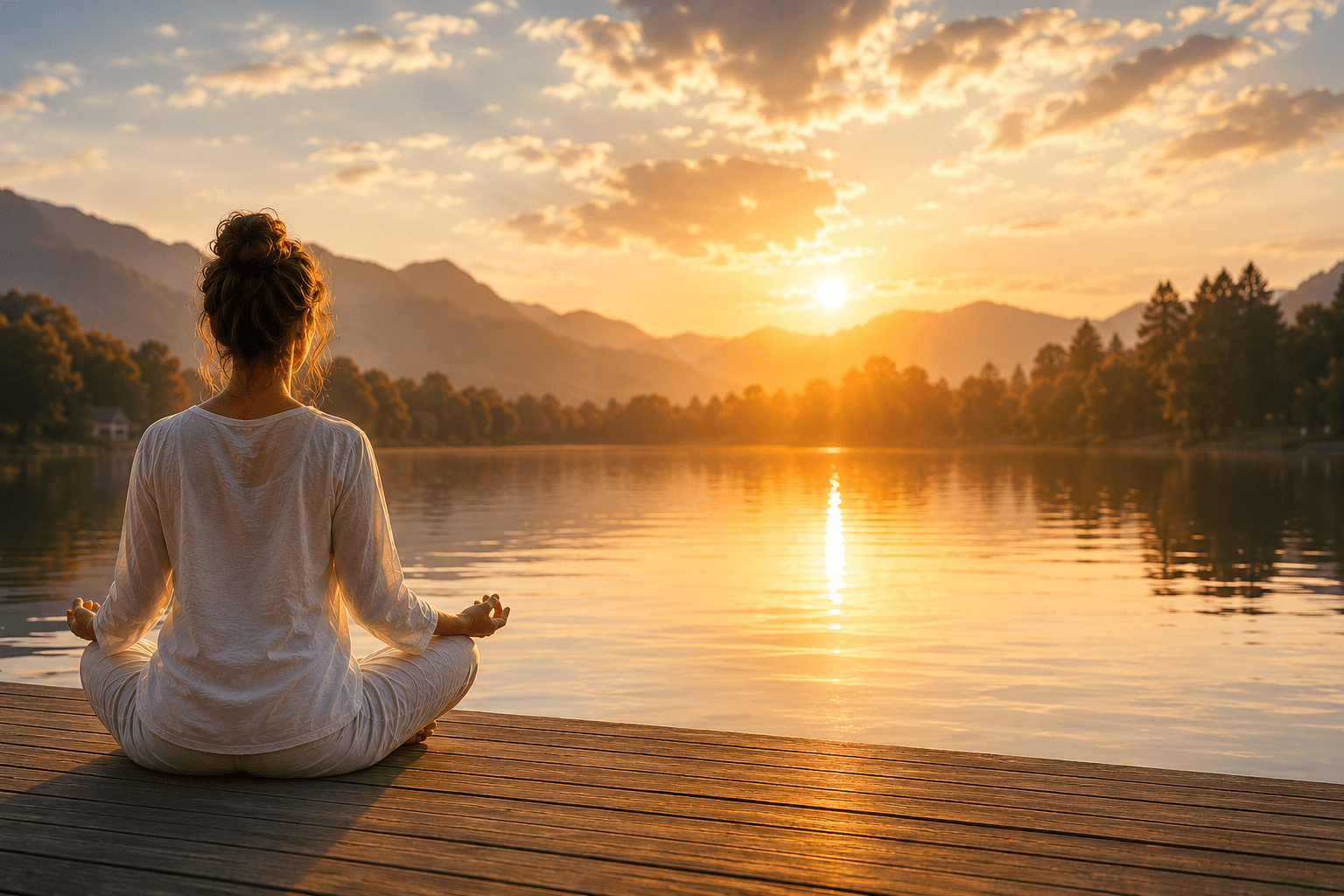
As we celebrate International Yoga Day 2026 and begin this Reflection Journey inspired by this year's theme, "Yoga for Healthy Ageing," let us start with a simple question:
How is it that we live in the most connected age in human history, yet so many of us feel disconnected from ourselves?
There is something unique about the times we are living in.
For the first time in human history, knowledge is available at our fingertips. We can speak to someone across the globe within seconds. We can learn almost anything online. We can work, shop, entertain ourselves, and stay informed without leaving our homes.
By many measures, life has become more convenient than ever before.
Yet convenience does not always translate into well-being.
Many of us wake up feeling tired despite sleeping. We find ourselves distracted despite wanting to focus. We carry stress even when there is no immediate danger. We often feel mentally occupied, constantly thinking about the next task, the next notification, the next responsibility.
And perhaps the most surprising part is that we have started accepting this as normal.
A few decades ago, waiting was a natural part of life. People waited for letters, for news, for photographs, for answers. Today, even a few moments of silence can feel uncomfortable. At a traffic signal, in a queue, or while waiting for someone, our hands instinctively reach for a screen.
Without realizing it, we have become accustomed to a life filled with continuous stimulation.
Somewhere along the way, we became deeply connected to the world around us.
But have we remained connected to ourselves?
This question feels particularly relevant as we reflect on the theme of International Yoga Day 2026: Yoga for Healthy Ageing.
When we hear the word ageing, many of us think about old age. We imagine a stage of life that lies decades ahead. But healthy ageing does not begin at sixty or seventy.
It begins much earlier.
- It begins with how we live today.
- The quality of our sleep.
- The amount of stress we carry.
- The way we nourish our bodies.
- The way we move.
- The way we respond to challenges.
- The way we care for our mental and emotional well-being.
In many ways, healthy ageing is not simply about adding years to life. It is about adding vitality, resilience, clarity, and purpose to the years we are already living.
This understanding is reflected in this year's International Yoga Day theme. It reminds us that health is not something we suddenly begin to think about later in life. It is shaped by the choices we make every day, often in small and unnoticed ways.
Perhaps this is where the wisdom of Yoga becomes especially relevant.
In the Bhagavad Gita, Lord Krishna says:
"समत्वं योग उच्यते"
Samatvam Yoga Uchyate
"Yoga is the state of balance and equanimity."
In a world that constantly pulls us in different directions, this teaching feels remarkably contemporary.
Balance does not mean withdrawing from life.
It does not mean escaping responsibilities.
- It means remaining centred amidst change.
- It means responding rather than reacting.
- It means finding steadiness in a world that rarely stands still.
Perhaps healthy ageing, at its heart, is not only about maintaining the body. It is also about cultivating this inner balance through every stage of life.
What makes this reflection even more meaningful is that we are asking these questions in the very land where Yoga was born. For thousands of years, Indian wisdom traditions explored the nature of the human mind. Long before modern psychology began studying stress, attention, and emotional well-being, sages and seekers were asking profound questions:
- Why does the mind remain restless?
- What creates suffering?
- What brings clarity?
- What leads to lasting peace?
Yoga emerged from this inquiry.
Not as a fitness trend.
Not as a performance.
But as a way of understanding ourselves more deeply.
Today, while the world often encourages us to look outward, Yoga gently invites us to look inward.
And perhaps that invitation is more relevant now than ever before.
One of the most meaningful ideas associated with International Yoga Day this year is the vision of "Yoga 365"—the understanding that Yoga is not meant to be celebrated only on one day of the year. Its true value is experienced when it becomes part of everyday living.
The same may be true for self-awareness.
It cannot be practiced once a year.
It is something we return to, day after day.
Moment after moment.
Choice after choice.
As we begin this seven-day reflection journey, there is no need to change anything today.
No challenge.
No resolution.
No checklist.
Only a question.
When was the last time you sat quietly with yourself—not scrolling, not planning, not consuming information, not solving a problem—but simply being present?
Take a moment to reflect on that.
Sometimes transformation does not begin with action.
It begins with awareness.
Tomorrow, we continue this journey with another question:
How did we become so connected to the world around us, yet increasingly disconnected from ourselves?
Because before we can find balance, we must first understand what has taken it away.
The Human Reset – A Reflection Journey
Day 1 | Pure Lifestyle Yoga
Enjoy writing like this?
Considered pieces on practice and wellbeing — never a marketing blast.